

Introduction
I still remember the afternoon I found the mat. Luna was stretched across the back of the couch doing her “decorative object” impression, and I was giving her an absentminded scratch when my fingers hit what felt like a small, dense pillow fused to her side. I parted her fur, and there it was a tight, ugly clump of tangled hair pressed against her skin that had no business being there.
I’d been brushing her. I really had. But apparently not the right way, and certainly not in the right spots. That mat taught me more about Maine Coon grooming than any article I’d read up to that point. If you’re dealing with Maine Coon matting or trying to prevent it before it starts I want to save you the learning curve I went through. This guide covers everything: why it happens, where to look, how to safely remove existing mats, and how to build a routine that actually keeps your cat’s coat in beautiful shape long term.
Why Maine Coons Are So Prone to Matting
Before we get into solutions, it helps to understand the problem. Maine Coon matting isn’t some random bad luck, it’s a direct result of the breed’s unique coat structure.
Maine Coons have a semi long, multi layered coat: a dense, soft undercoat sits beneath longer, coarser guard hairs. That combination is gorgeous, but it’s also a tangle waiting to happen. The undercoat sheds continuously, and when those loose hairs don’t get brushed out, they weave into the longer topcoat. Add a little friction, moisture, or static electricity, and what started as loose fur becomes a mat.
The Role of Coat Blow
Twice a year in spring and fall Maine Coons go through what’s called a coat blow, where large amounts of undercoat release all at once. This is when matting risk shoots up dramatically. If you’re not increasing your grooming frequency during these seasons, mats can form within days, not weeks.
Body Size Makes It Worse
Here’s something that doesn’t get talked about enough: Maine Coons are big cats. The constant movement of a large, muscular body creates friction zones that smaller or lighter coated breeds simply don’t deal with at the same intensity. Every time Luna jumps, stretches, or curls up, her coat is shifting against itself. That mechanical friction is mat fuel.
Health and Diet Play a Role Too
A dry, brittle coat is far more prone to tangling than a healthy, well moisturized one. If your Maine Coon’s diet is lacking in omega 3 fatty acids and quality protein, you’ll see it in the coat dull texture, increased shedding, and yes, more mats. I noticed a real difference in Luna’s coat after I switched her to a higher protein food. The fur felt softer, and tangles became much easier to work through during grooming sessions.
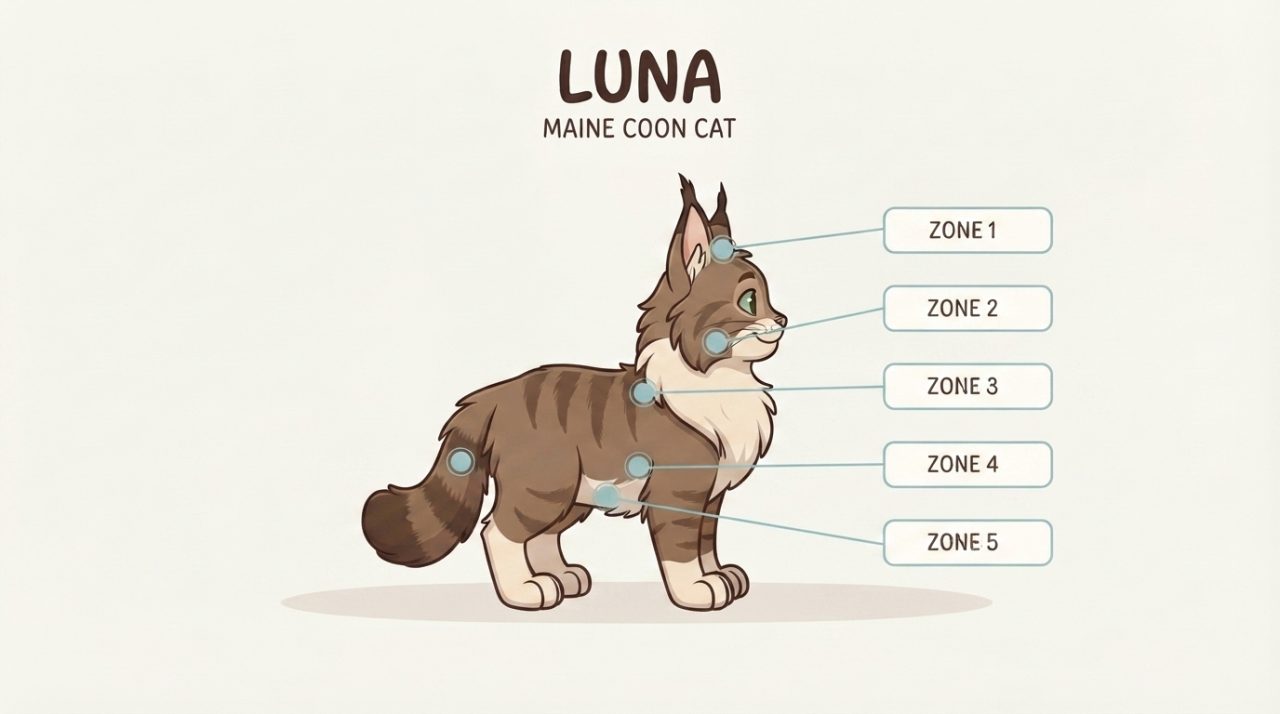
Where Mats Hide: The High Risk Zones
Maine Coon matting doesn’t happen randomly across the body. It follows predictable patterns based on where friction, moisture, and coat density intersect. Once you know where to look, you can catch problems early before a tangle tightens into a full mat pressed against the skin.
Behind the Ears and Under the Chin
This is the most commonly missed area, and it’s where I found Luna’s first serious mat. The fur here is soft and dense, and it gets compressed every time your cat rubs their face on things (which, as you know, is constantly). Check this area at every grooming session.
The Armpits
I know it sounds weird. But the “armpit” area where the front legs meet the chest is a prime matting zone. The skin folds there create friction with every step, and cats can’t easily groom this spot themselves. Part the fur and check carefully.
The Belly and Groin
Long haired belly fur lies flat and gets compressed when your cat sleeps. This area also gets damp from litter box visits and self grooming, and moisture is a major mat accelerant. Luna is not thrilled when I groom her belly, but I do it anyway carefully, quickly, and with lots of treats nearby.
The Base of the Tail
The area where the tail meets the body collects a surprising amount of loose fur and is easy to miss during a standard grooming session. Run your comb right along the base of the tail every time.
Behind the Back Legs
The “pants” that gorgeous poof of fur on Maine Coon hindquarters is beautiful but tangle prone. The fur here gets pulled and twisted with every stride. It’s also an area that can get soiled if your cat has a bout of digestive issues, which makes mats form fast.
The Right Tools for Maine Coon Matting Prevention
You can brush your Maine Coon every single day and still end up with mats if you’re using the wrong tools. I learned this the hard way. The tools that work on surface level grooming aren’t the same ones you need to reach the undercoat where tangles actually start.
Here’s what actually belongs in your grooming kit:
Stainless Steel Wide Tooth Comb
This is your workhorse. A quality stainless steel comb with both wide and medium teeth is the single most important tool for preventing Maine Coon matting. The wide teeth work through tangled areas; the medium teeth smooth and follow up. Skip cheap plastic combs, they create static, don’t reach the undercoat, and break down fast.
Slicker Brush
Great for surface grooming and removing loose fur before it gets a chance to mat. I use the slicker brush first in every grooming session to clear the topcoat, then follow up with the comb to reach deeper.
Dematting Comb / Mat Splitter
Once a tangle has formed but before it’s tight, a dematting comb can break it up safely. Look for one with serrated teeth that cut through the mat rather than ripping it. This is different from your regular comb. It’s specifically designed to deal with problem areas.
Detangling Spray
A cat safe detangling spray or leave in conditioner makes a real difference, especially during shedding season. It reduces static, softens the coat, and makes the comb glide through rather than drag. Spray lightly on problem areas before combing and never saturate the fur.
What to Avoid
Do yourself (and your cat) a favor and avoid cheap pin brushes that don’t reach the undercoat, and anything with rigid plastic teeth that will just pull and snap rather than work through tangles. And please never use scissors to cut out a mat at home unless you are trained to do so. The skin under a tight mat is pulled close to the surface and it’s incredibly easy to accidentally cut your cat. More on safe mat removal in a moment.
Building a Grooming Routine That Actually Prevents Maine Coon Matting
The honest truth is that no single grooming session prevents mats’ consistency does. The goal is to remove the loose undercoat before it has a chance to weave into the topcoat and tighten.
How Often Should You Brush?
Outside of heavy shedding seasons, most Maine Coons do well with grooming three to four times per week. That’s the baseline. During coat blow in spring and fall, bump that up to daily sessions, even short ones. A ten minute daily session during peak shedding is more effective than a forty five minute session once a week.
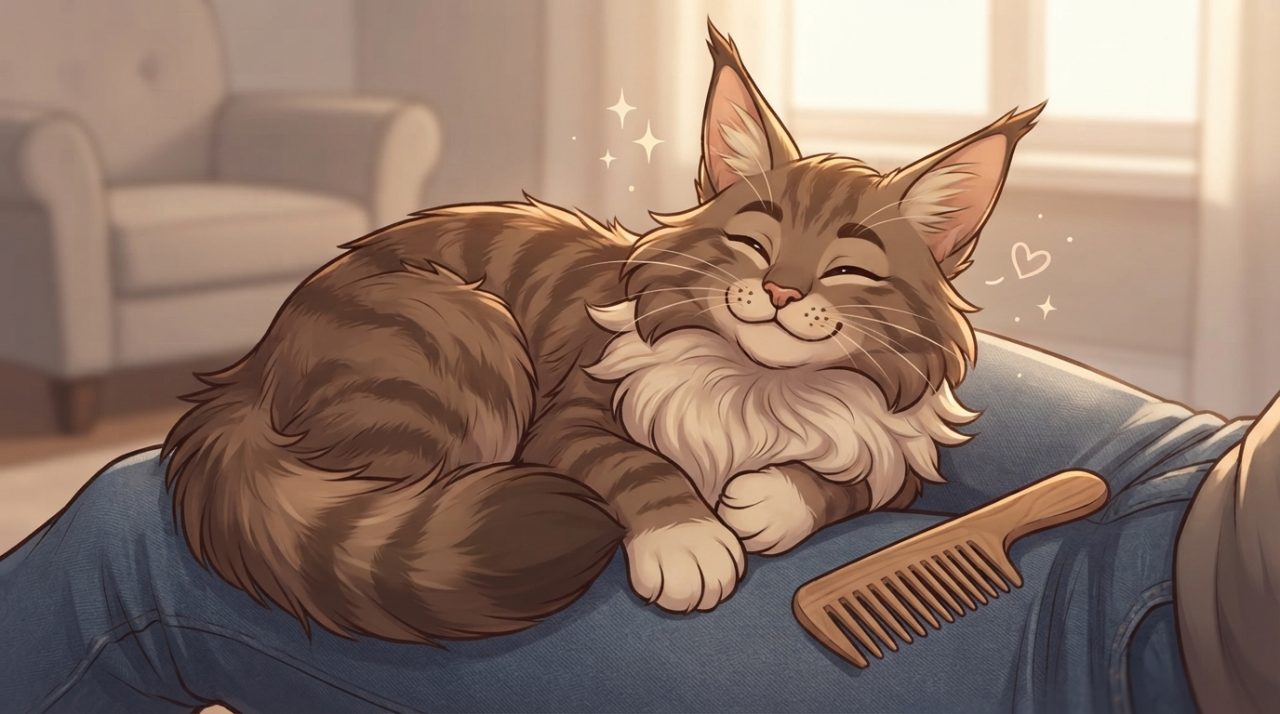
Luna has her own grooming schedule at this point. She knows the routine so well that she’ll actually come find me and flop down near her grooming tools when she wants a session. We got here by starting when she was a kitten and keeping sessions positive and consistent.
The Right Order of Operations
This matters more than most people realize:
- Start with your hands before any tools, run your fingers through the coat and feel for any early tangles or resistance. Catch them now, not after you’ve dragged a brush through them.
- Slicker brush first – sweep through the topcoat to remove loose debris and surface fur.
- Wide tooth comb second work section by section, starting from the tips of the fur and working toward the skin. Never start at the root and drag through that’s what causes pain and resistance.
- Check the high risk zones last – give extra attention to armpits, belly, base of tail, and behind the ears.
Make It a Positive Experience
I cannot stress this enough. A cat who associates grooming with stress will fight you every time, which means shorter sessions, rushed combing, and you guessed it more mats. Build up gradually. Use high value treats. Keep sessions short and pleasant, especially at first. End on a good note, always.
How to Safely Remove Existing Mats
Okay, so you’ve found a mat. Don’t panic and don’t immediately reach for the scissors. Here’s how to approach removal depending on how bad the situation is.
Stage 1: Early Tangles
If you catch it early, a soft, loose tangle that hasn’t pressed against the skin yet you can often work it out with your fingers and a comb. Apply a small amount of detangling spray. Use your fingers to gently separate the outer edges of the tangle, working from the outside in. Follow up with your dematting comb, using short, careful strokes from the tip toward the root. Patience here pays off. Rushing causes pain, and pain causes your cat to never trust grooming again.
Stage 2: Formed Mats
A mat that’s tightened but isn’t yet pressed flat against the skin requires more patience and a dematting tool. Hold the base of the mat firmly between your fingers is crucial, because it stops the pulling sensation from reaching the skin. Work the dematting comb through the mat from the outer edges inward, using short, controlled strokes. Never saw back and forth. Keep sessions short; take breaks if your cat is getting stressed.
Stage 3: Severe Mats
If a mat is tight against the skin, covering a large area, or has been there a while, do not attempt to remove it yourself. This is the moment to call a professional groomer experienced with Maine Coons or in serious cases, your vet. Severely matted cats sometimes require sedation for safe mat removal. It’s not a failure on your part to need professional help. Skin under a tight mat can be fragile, irritated, and even infected.
The Scissors Question
I know it’s tempting. But cutting out mats with household scissors is genuinely dangerous the skin under a mat tents upward with the mat, and it’s nearly impossible to see where the mat ends and the skin begins. Professional groomers who do use scissors for mats are trained specifically for this, and they use blunt tipped shears. If you’re not trained, please skip the scissors.
When a Lion Cut Is the Right Call
Sometimes, after an extended bout of matting maybe your cat was sick, or you went through a busy stretch and grooming slipped the mats are too numerous or too severe for piecemeal removal. In those cases, a “lion cut” (shaving the body coat while leaving the head, legs, and tail) can give you a fresh start. It looks dramatic, but most Maine Coons tolerate it well and their coat grows back beautifully. I’ve known owners who go with a lion cut once a year as a proactive reset, especially for cats with particularly dense or cottony coats.

Special Situations: When Matting Gets Extra Complicated
Seniors and Less Mobile Cats
As Maine Coons age, they often groom themselves less effectively. Arthritis and reduced flexibility make reaching certain spots difficult. If you have a senior Maine Coon, you’ll need to pick up the slack in your grooming routine and be especially gentle, since older cats can have more sensitive skin. Shorter, more frequent sessions are better than longer ones for aging cats.
Cats Who Hate Being Groomed
Some Maine Coons are just not cooperative about grooming, full stop. If you have one of these cats, a few strategies can help:
- Desensitization over time: Touch the body parts associated with grooming without the tools, pair with treats, build up gradually.
- Grooming gloves: Some resistant cats tolerate a grooming glove better than a comb it feels more like petting.
- Professional groomer: A skilled groomer who specializes in cats (not just any dog groomer) can be invaluable for difficult cases.
- Ask your vet: If your cat becomes truly distressed during grooming, your vet may be able to recommend a mild anti anxiety option for particularly challenging sessions.
After a Bath
Bathing a Maine Coon isn’t strictly necessary for mat prevention, but monthly baths do help remove deep seated oils and dander that can make the coat more prone to tangling. The critical thing to know: always comb out your Maine Coon before bathing, not after. Water tightens tangles dramatically. A tangle that was manageable before a bath can become a tight mat after one if you didn’t address it first.
After the bath, dry thoroughly a partially damp coat is prime mat territory. Use a low heat dryer on a diffuser setting if your cat tolerates it, or towel dry and then use a brush to keep the fur from clumping as it dries.

Frequently Asked Questions About Maine Coon Matting
How often should I brush my Maine Coon to prevent matting?
Three to four times per week is the standard baseline, but during spring and fall shedding seasons, daily brushing is ideal. The key is consistency short frequent sessions do more to prevent matting than occasional marathon grooming days.
Can mats hurt my Maine Coon?
Yes. Tight mats pull on the skin, causing discomfort, restricted movement, and sometimes skin irritation or infection underneath the mat. In severe cases, untreated mats can lead to permanent skin damage or scarring. This is why catching mats early and preventing them with regular grooming matters so much.
What should I use to remove mats from a Maine Coon at home?
A dematting comb and a cat safe detangling spray are your best tools for at home mat removal. Always hold the base of the mat firmly while working to minimize skin pulling, and work from the outer edges inward. For mats that are tight against the skin or covering a large area, see a professional groomer rather than attempting removal at home.
Are there home remedies for loosening cat mats?
Gentle application of unscented baby powder or a small amount of coconut oil can help soften and loosen minor mats before combing. However, these are best used on early stage tangles, not tight mats. Rinse out any oil product after use to prevent the coat from attracting more debris.
Why does my Maine Coon mat so quickly even when I brush regularly?
The most common causes are: using tools that don’t reach the undercoat (like soft pin brushes), brushing only the topcoat and missing the dense underlayer, skipping the high friction zones (armpits, belly, behind the ears), and not increasing grooming frequency during coat blow seasons. A stainless steel wide tooth comb is essential if you’re not using one, that may be your issue.
When should I take my Maine Coon to a professional groomer for matting?
Go to a professional when mats are tight against the skin, are large or numerous, or when your cat becomes too distressed for you to work safely on them at home. A groomer experienced with Maine Coons or long haired cats is preferable and in cases of severe widespread matting, your vet is the right first call.
One More Thing Before You Go From One Maine Coon Mom to Another
Maine Coon matting is one of those things that feels overwhelming until you understand it and then it becomes very manageable. The coat that makes this breed so strikingly beautiful is the same coat that needs your consistent attention. The right tools, the right technique, the right frequency, and a cat who trusts the process: that’s the whole formula.
Luna still occasionally surprises me with a tangle in some unexpected spot. But now I catch it early, work it out calmly, and move on. Our grooming sessions have become something I genuinely enjoy fifteen minutes of quiet bonding time where she purrs and I keep her coat in the shape it deserves to be.
That first mat taught me a lot. Hopefully this guide means you learn a little faster than I did.
Have a mat removal tip that’s worked for you, or a Maine Coon who’s particularly dramatic about grooming (looking at you, every Maine Coon ever)? Drop a comment below, I’d love to hear from you. And if you found this helpful, share it with another Maine Coon owner who might be pulling their hair out right along with their cat’s.
Nellie J. Wilson, Editor & Maine Coon Mom
