

Introduction
I still remember the first spring after I brought Luna home. She was about a year and a half old, finally starting to grow into that massive, glorious coat, and I woke up one April morning to find what looked like a second cat’s worth of fur on my couch cushion. Just piled there. Like she’d been moonlighting as a ghost cat and left her coat behind.
I panicked. I genuinely thought something was wrong with her. Called the vet, got talked down off the ledge, and came home armed with a new brush and a lot more information about Maine Coon shedding than I’d had the night before.
If you’re asking do Maine Coons shed a lot, the honest answer is: yes, but probably not in the way you’re imagining. Their shedding is different from what you’d see with a short haired breed, and once you understand the patterns seasonal and otherwise it becomes a lot less overwhelming. I’ve been through four plus years of fur seasons with Luna now, and I want to walk you through everything I’ve learned, from what’s completely normal to when you should actually worry.
Understanding the Maine Coon Coat (And Why Shedding Works Differently)
Before we get into the specifics of how much Maine Coons shed, it helps to understand what we’re actually dealing with here. This isn’t your average tabby coat.
Maine Coons have a double layered coat: a dense, insulating undercoat and longer guard hairs on top. The undercoat was built for the brutal winters of the northeastern United States. This is a breed that was literally surviving New England snowstorms before we decided to bring them inside and give them heated floors. That undercoat is thick, soft, and a genuine engineering marvel. It’s also the primary source of the shedding you’ll be managing.
The guard hairs that have long, water resistant outer hairs have their own separate growth cycle. They’re tougher, less likely to just float off onto your furniture, and they’re what give Maine Coons that signature shaggy, lion-like appearance. When people say a Maine Coon has a “semi longhaired” coat, they’re really talking about this outer layer.
Here’s the thing that surprised me most when I was new to Maine Coon ownership: a lot of their shed fur stays trapped in the coat rather than flying loose around the house. Short haired cats release sharp little hairs that embed into every fabric surface you own. Maine Coon fur tends to clump and stay put within their own coat until you brush it out. That’s why regular grooming is so non-negotiable, it’s essentially a controlled shed, done on your terms instead of the cat’s.
The undercoat and guard hairs also have different lifespans, which is why you’ll see more intense shedding at certain times of year. During seasonal transitions, the undercoat sheds more vigorously as the coat readjusts to changing temperatures and light levels.
How Much Do Maine Coons Actually Shed?
Let me give you a real number here, because I think it helps to have something concrete. Maine Coons can shed somewhere in the range of 20 to 30 grams of fur per week – roughly the equivalent of a handful of cotton balls. That’s meaningful volume, especially when you consider that these cats are also, you know, enormous.
But here’s the honest nuance: Maine Coons don’t shed constantly in that visible, chaotic way some breeds do. Their shedding tends to be moderate and steady most of the year, punctuated by those intense blow out periods I’ll get to in the next section. On a regular Thursday in November, Luna doesn’t leave dramatic fur drifts around the house. What she leaves is totally manageable, a few long hairs on the couch, some fur caught in her ruff when I run my fingers through it, a small collection in the corners of the hallway.
The shedding becomes more noticeable simply because of the length and volume of the individual hairs. One Maine Coon hair is, like, four times the length of a shorthair hair. Visually, it looks like more. It collects differently. It drapes over things. You find it in your coffee. (Luna has no remorse about this.)
For indoor Maine Coons specifically, which most of ours are, the picture is slightly different from what you’d see in an outdoor cat. Indoor cats live in climate controlled environments with stable temperatures and artificial lighting, which disrupts the natural seasonal signal that tells a coat to shed heavily twice a year. The result is often low grade, year round shedding rather than dramatic seasonal dumps. Some owners find this actually easier to manage. Others just feel like the fur never stops.
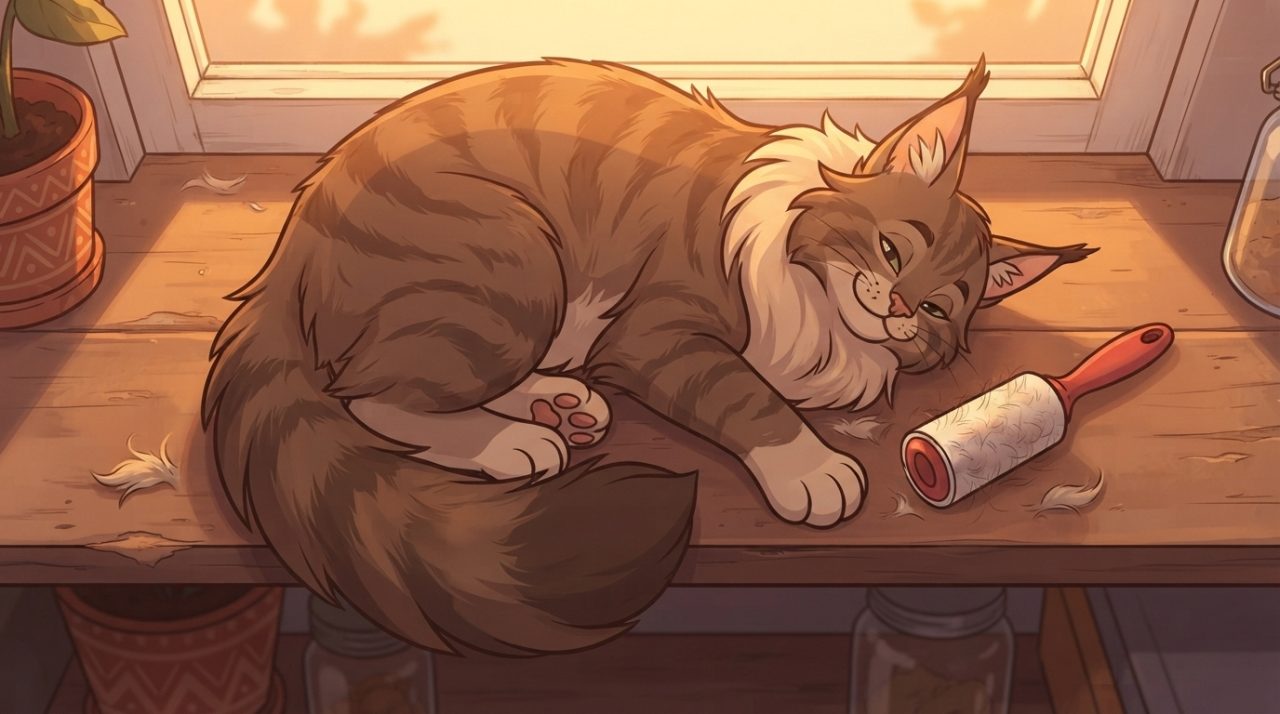
The Seasonal Shedding Calendar: What to Expect Month by Month
This is the part I really wish someone had laid out for me before Luna’s first spring. Knowing what’s coming makes such a difference in how prepared you are.
Spring: The Great Blow Out
Spring is the big one. If you’ve heard the term “blowing a coat,” this is what it refers to. As temperatures rise and daylight increases, your Maine Coon starts shedding their thick winter undercoat to prepare for warmer months. This can last several weeks, and it is legitimately intense.
During Luna’s first spring blow out, I was brushing her every single day and still finding fur tumbleweeds in corners. Her ruff thinned noticeably, and for about three weeks she just looked slightly less majestic than usual. Then her summer coat came in and she was back to full glory.
This is the season to increase brushing to daily sessions if you can manage it. Your vacuum cleaner will be your best friend. Don’t panic, it’s completely normal.
Summer: Settled and Manageable
By midsummer, things calm down considerably. The heavy shedding tapers off once the coat has fully transitioned. You’ll still see fur Maine Coons always leave their mark but it’s nothing like the spring explosion. Brush two to three times a week and you’ll stay on top of it without much drama.
Luna tends to look her sleekest in July and August. Less ruff, lighter overall coat, and she seems genuinely more comfortable in the heat.
Fall: Round Two
September and October bring another round of heavier shedding as your cat starts growing in their winter coat. It’s not usually as intense as the spring blow out, but it’s notable. The undercoat starts thickening up, the old fur that’s been cycling through needs to come out, and you’ll notice brushing sessions yielding more than they did during summer.
Ramp grooming back up to daily or near daily during fall peak weeks. Stay ahead of it and it won’t feel overwhelming.
Winter: The Quiet Season
This is when things ease up the most. Your Maine Coon’s coat is at its fullest and most dense, and the natural signal to shed has quieted. You’ll still brush regularly to prevent matting more on that shortly but you’re not fighting a losing battle against a pile of loose undercoats.
I always use winter as a chance to really assess Luna’s coat health. I run a wide tooth comb through section by section, checking for any mats that formed when things were more chaotic, and making sure her skin looks healthy underneath all that glorious fur.
The Real Reasons Your Maine Coon Might Be Shedding More Than Normal
Seasonal patterns aside, there are a handful of things that can crank up the shedding volume beyond what’s expected. I’ve run into most of these with Luna at one point or another.
Diet and Nutrition
This was a big one for us early on. I was feeding Luna a mid range dry food and her coat was just… fine. Not bad, but not that magnificent Maine Coon coat I’d been picturing. Once I switched to a high protein diet with adequate omega fatty acids, the difference in her coat quality within a few months was genuinely striking.
Poor nutrition is one of the most common causes of excessive shedding. A diet that doesn’t support healthy skin and coat will result in more loose fur, more dryness, and a coat that just doesn’t hold together the way it should. If your Maine Coon’s shedding seems out of proportion to the season, food is the first place I’d look.
Stress and Environmental Changes
Cats are creatures of habit, and Maine Coons are no different. Big changes a move, a new pet, construction next door, a change in your schedule can trigger noticeable increases in shedding. Luna went through a period of extra shedding when we had a houseguest for three weeks. She wasn’t sick. She was just stressed.
If you’ve recently changed something in your home environment and your cat’s fur seems to be everywhere, that’s probably why.
Age and Life Stage
Kittens shed less their coats are still developing and the full double coat density isn’t there yet. Adult Maine Coons hit their shedding peak. Senior cats may see changes in shedding as their skin becomes less elastic or if underlying health issues start to develop.
Worth noting: hormonal changes around spaying or neutering can temporarily increase shedding as well. Totally normal, usually resolves within a few weeks.
When to See the Vet
Normal shedding and problematic hair loss are different things. If you’re seeing bald patches, broken hairs, skin irritation, constant scratching, or a sudden dramatic change in shedding that doesn’t line up with the season, that warrants a vet visit. Parasites, fungal infections, allergies, and thyroid issues can all present through coat changes. Luna gave me a little scare one fall with some thinning near her tail that turned out to be a mild flea issue we dealt with quickly but I’m glad I didn’t just chalk it up to seasonal shedding and move on.
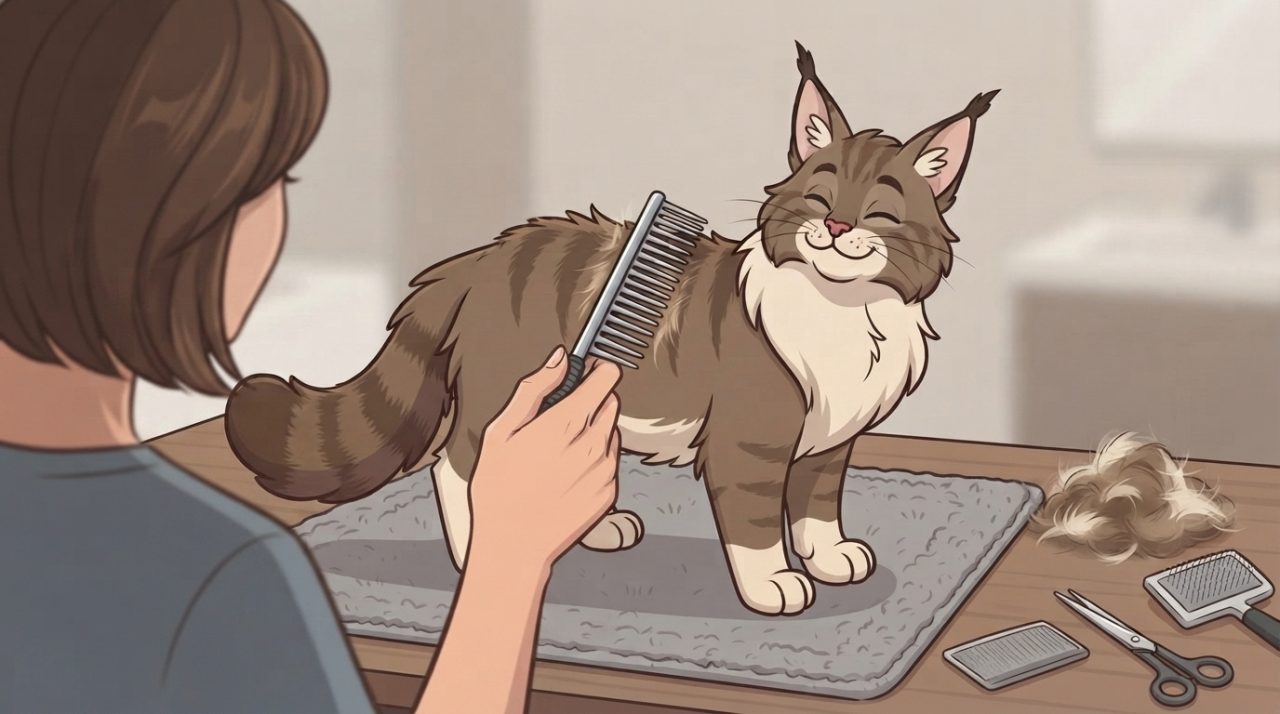
Your Maine Coon Grooming Toolkit: What Actually Works
I’ve tried a lot of brushes over the years. A lot. Let me save you the time and money and just tell you what’s worth having.
The FURminator Long Hair Cat Deshedding Tool
This is the workhorse. The FURminator has a stainless steel edge that penetrates through the outer coat to pull loose fur from the undercoat directly. It claims to reduce shedding by up to 90% with regular use, and in my experience it really does make a significant dent.
A few caveats: use it 2–3 times a week during heavy shedding season, but don’t overdo it. Used too aggressively or too often, it can damage the guard hairs. And yes do not use this over furniture or carpet unless you enjoy spending 20 minutes cleaning up afterward. Luna and I do FURminator sessions in the bathroom.
A Wide Tooth Metal Comb
Hands down the most underrated tool in the lineup. A wide tooth metal comb gets through Maine Coon fur in a way that brushes can’t always replicate, it detects mats before they become serious problems, and it’s gentler for everyday maintenance. I use one before every brush session to work through any tangles and assess coat condition.
A Slicker Brush
Great for the outer coat and for finishing sessions. The fine, densely packed wires capture loose surface hairs and leave the coat looking smooth and shiny. I use this as my “daily light maintenance” brush on non FURminator days about a five minute once over that keeps things tidy between deeper grooming sessions.
An Undercoat Rake
Specifically useful during the blow out seasons when the undercoat is coming out in volume. Unlike the FURminator, an undercoat rake is designed for the dense undercoat without disturbing the topcoat. Tools like the Safari undercoat rake are designed so the tines glide over the top layer while pulling out the loose undercoat underneath.
A Dematting Comb
Mats happen. Even with consistent grooming, Maine Coons can develop mats in the armpits, chest, belly, and behind the ears the spots that are harder to reach and easier to skip. A dematting comb cuts through tangles without requiring you to shave the area. Start at the ends of the mat and work upward. Never try to yank a mat out from the root you will lose the trust of your cat instantly and permanently.
Practical Shedding Management: Keeping Your Home Livable
Okay, let’s talk about the actual fur storm management. Because even with perfect grooming, Maine Coon owners live with some level of fur and we might as well be strategic about it.
Brush Before the Fur Hits Your Furniture
The most effective thing I do is simple: brush Luna before she settles in for her couch nap. Loose fur that I capture in a brush is loose fur that doesn’t end up embedded in my upholstery. Getting into a routine at the same time, same place, making it a bonding thing means you’re consistently intercepting fur before it becomes a house problem.
During heavy shedding months, I aim for daily sessions of 10–15 minutes. Off peak, three sessions a week keeps things under control.
Invest in a Good Vacuum
You need something with actual suction designed for pet hair. This is not the place to cheap out. A vacuum with a HEPA filter and a motorized pet hair attachment will handle Maine Coon fur in a way that a regular vacuum simply won’t. I also keep a lint roller stash at every exit of my house because there’s no getting through a door without evidence of Luna on my jacket.
Wash Bedding and Covers Regularly
Cat hair embeds into fabric in a way that surface vacuuming won’t fully address. Washing pet friendly blankets and covers weekly during shedding season, and every two weeks off peak, keeps things manageable. I keep a designated “Luna blanket” on the couch that gets washed most often and sacrifices itself so the couch itself stays cleaner.
Consider Washable Furniture Covers
Not glamorous, but genuinely useful. Removable, washable slipcovers on sofas and chairs mean you’re dealing with fur the easy way (washing machine) rather than the hard way (hour of vacuuming). Luna has strong opinions about furniture access and I’ve stopped fighting it.
Support Coat Health From the Inside Out
Diet is grooming. I know I mentioned this above, but it’s worth repeating in the practical section: omega 3 and omega 6 fatty acids support healthy skin and a coat that sheds less excessively. A high protein diet keeps the coat strong. If you’re seeing more shedding than seems right, check the food label before you buy another brush.
Frequently Asked Questions
Do Maine Coons shed more than other cats?
Maine Coons shed a moderate to heavy amount, but their shedding can look more dramatic than it actually is because of the length of their individual hairs. In terms of actual volume, many short haired breeds shed comparable amounts, you just notice Maine Coon fur more because it’s longer and more visible. With consistent grooming, most owners find Maine Coon shedding very manageable.
When do Maine Coons shed the most?
The heaviest shedding periods are spring and fall, corresponding to seasonal coat transitions. Spring is typically the most intense, as Maine Coons shed their thick winter undercoat in preparation for warmer months. This “blowing a coat” phase can last several weeks. Indoor cats may experience more even, year round shedding due to stable indoor temperatures and artificial lighting.
Is it normal for a Maine Coon to shed year round?
Yes, especially for indoor Maine Coons. Climate controlled homes with stable temperatures disrupt the natural seasonal shedding cycle, which can result in low grade, continuous shedding throughout the year instead of concentrated seasonal dumps. This is completely normal and not a cause for concern on its own.
How often should I brush my Maine Coon to manage shedding?
During peak shedding seasons (spring and fall), daily brushing is ideal. During calmer periods, two to three times per week is generally sufficient. The key is consistency, irregular grooming lets mats form and allows loose undercoat to build up, which actually makes the shedding harder to manage over time.
Can diet affect how much my Maine Coon sheds?
Absolutely. A diet deficient in protein or essential fatty acids is one of the most common causes of excessive shedding in Maine Coons. Switching to a high quality, high protein food with omega fatty acids often makes a visible difference in coat quality and shed volume within a few months. If your cat is shedding more than seems normal, evaluating their diet is a smart first step before assuming something is medically wrong.
What’s the difference between normal shedding and hair loss I should worry about?
Normal shedding is fairly even across the coat, follows seasonal patterns, and doesn’t leave bald patches. Concerning hair loss includes bald spots, broken hairs, skin redness or irritation, constant scratching or over grooming, or a sudden dramatic change not explained by the season. If you’re seeing any of these signs, a vet visit is warranted to rule out parasites, skin conditions, allergies, or underlying health issues.
One More Thing Before You Go From One Maine Coon Mom to Another
Do Maine Coons shed a lot? Yes but “a lot” covers a wide range, and Maine Coon shedding is, in my experience, more manageable than the reputation suggests. What they shed heavily, they also shed on a mostly predictable schedule. Spring blow outs are real and they are dramatic, but they end. Fall is a secondary spike. Summer and winter are your breather periods.
The cats that seem impossible to manage are usually the ones whose owners haven’t yet found their grooming rhythm. Once you have the right tools, a good deshedding brush, a wide tooth comb, a slicker for maintenance days and you’re brushing consistently, you’re mostly just intercepting the fur before it reaches your furniture. That’s the whole game.
Luna and I have our routine down. She’s become weirdly enthusiastic about brush sessions, which I think is part Maine Coon personality (they like being attended to) and part conditioning (treats are involved). Four years in, the fur is just part of the deal. And honestly? I wouldn’t have it any other way.
Got tips that have worked for your Maine Coon? I’d love to hear them in the comments. And if you’re in the middle of your first spring blow out wondering if you made a terrible mistake you didn’t. I promise it calms me down.
Nellie J. Wilson, Editor & Maine Coon Mom
