
Estimated read time: 12 – 15 minutes
Introduction
The first time Jasper climbed into my lap and pressed his flat little face against my arm, I knew I was done for. Not just smitten done for. There was something in the way he settled in so completely, like he had decided this was simply where he belonged, that told me Persian cats weren’t just pretty faces. There was depth there. A personality all their own.
If you’re curious about Persian cat personality traits before bringing one home or you already share your space with one of these velvet pawed wonders and want to understand them better you’re in exactly the right place. After years of living with Jasper, researching the breed, and connecting with other Persian cat lovers, I’ve got a lot to share. Let’s dig in.
The Hallmark Trait – Persian Cats Are Calm Like No Other Breed
If you’ve ever spent time around a high energy cat the kind that rockets off the walls at 2 a.m. and treats your ankles like prey you’ll understand why the Persian cat’s signature calm is genuinely extraordinary.
Persian cats are widely regarded as one of the most placid, gentle natured breeds in the entire cat world. They don’t chase, race, or demand constant stimulation the way some breeds do. They’re not aloof, either, that’s a misconception I want to clear up right away. Persians are calm, but they are present. They want to be near you. They just prefer to express that by sitting beside you rather than bouncing off your shoulders.
This temperament makes them ideal for quieter households. Apartment dwellers, work from home folks, people who want a companion that matches a slower, more intentional pace of life Persians slot into that lifestyle like they were made for it. Because, in many ways, they were. Centuries of selective breeding have shaped a cat that genuinely thrives in peaceful, predictable environments.
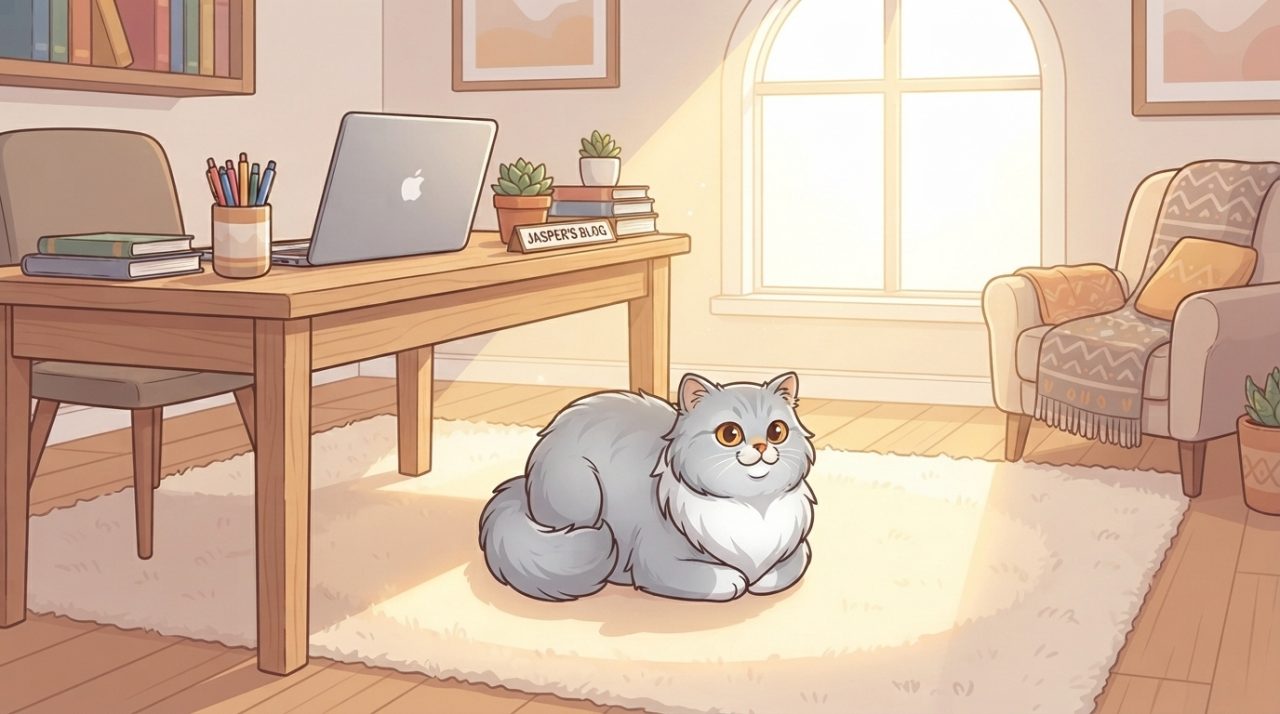
Jasper is the perfect example of this. When I work at my desk, he doesn’t knock things off the edge or bat at my keyboard (well, almost never). He finds a sunny patch nearby, arranges himself into a loaf shape, and just… coexists. Contentedly. It’s one of my favorite things about living with him.
That said, calm doesn’t mean inactive. Persians do play, they enjoy gentle, low impact play sessions, particularly with toys they can bat at from a comfortable position. They’re just not going to turn your house into a racetrack. Think of them as the yoga practitioners of the cat world.
Persian Cats Are Deeply Affectionate On Their Own Terms
Here’s something new Persian owners sometimes misread, Persians show love quietly.
They won’t typically follow you from room to room like a puppy. They won’t meow at full volume to remind you they exist. But they will position themselves near you with remarkable consistency. They will look for you when you’ve been gone. And when they decide it’s cuddle time? You’ll feel it in your whole chest.
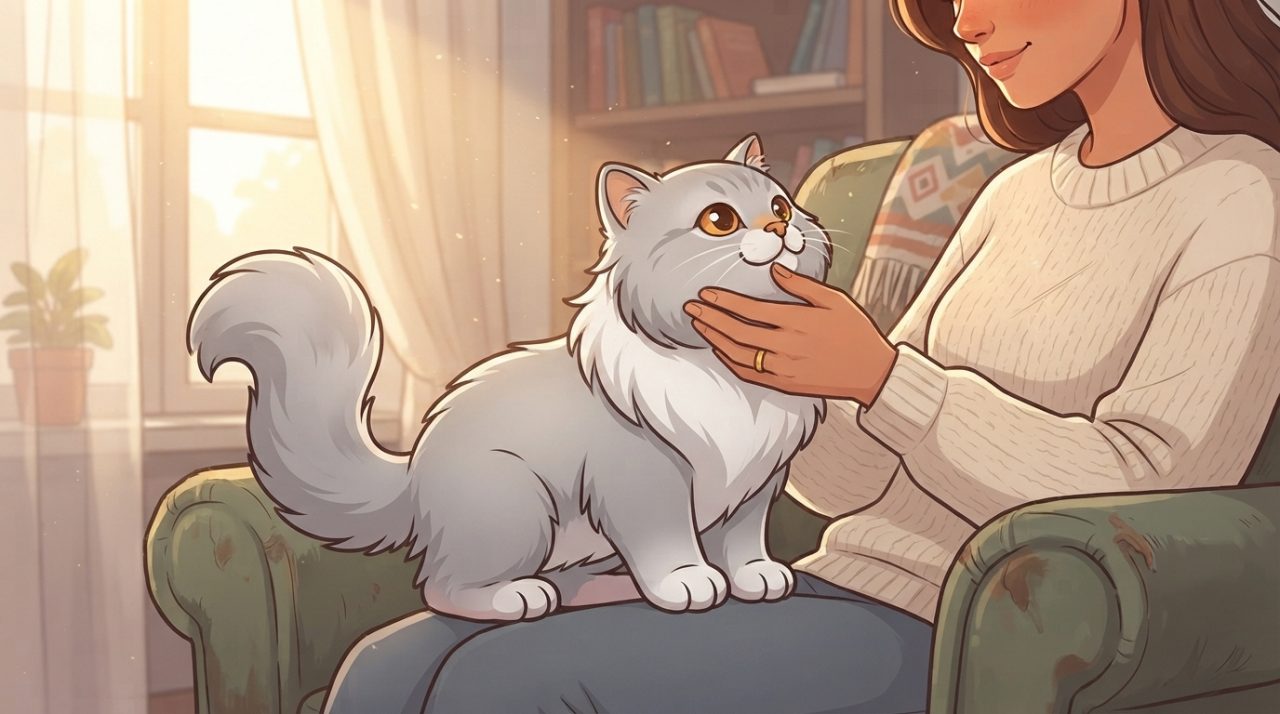
Persian cat affection is sincere, considered, and a little regal. Jasper has a particular habit of walking up to me slowly, sitting down about six inches from my hand, and staring at me until I pet him. No meowing. No pawing. Just this calm, patient expectation. It took me a few weeks to realize that was his way of saying I love you, now please scratch behind my ears.
Once a Persian bonds with you, that bond is real and enduring. They tend to attach to one or two people in the household most strongly, though they’re generally warm with everyone they trust. They appreciate consistency, the same routines, the same people, the same comfortable spaces.
This is why Persians can be sensitive to change. Moving, new people, loud disruptions these things can throw them off balance. They don’t adapt as quickly as more adventurous breeds. But if you can offer them a stable, loving home, they will repay you with a depth of companionship that’s hard to put into words.
What this means for you – If you’re looking for a lap cat who’ll curl up during movie nights and sit quietly beside you while you read, a Persian is an almost perfect match. If you need a highly interactive, play at all hours companion, you might want to consider whether a Persian’s pace will feel like enough.
Are Persian Cats Good With Kids and Other Pets?
This comes up constantly, and the honest answer is: it depends on the environment more than the cat.
Persian cats have the temperament to coexist beautifully with gentle, respectful children. They are patient and not quick to scratch or bite out of irritation, they’re much more likely to simply walk away when they’ve had enough, which is actually the ideal response. Teach your kids to read that signal and let the cat have space, and a Persian child relationship can be genuinely sweet.
Where it gets complicated is with very young children or kids who haven’t yet learned how to handle animals gently. Persians are not fans of being grabbed, chased, or picked up abruptly. Their calm exterior can be mistaken for tolerance, but there’s a limit. Supervision matters, especially early on.
With other pets, Persians tend to do well with animals who match their energy level. Another calm cat? Often wonderful. A high energy dog who wants to play chase? That’s going to stress your Persian out. They’re not confrontational by nature, they’ll just retreat and become anxious, which isn’t good for anyone.
I’ve heard from readers whose Persians have formed lovely friendships with mellow dogs, particularly breeds like Cavalier King Charles Spaniels or older, calmer dogs who’ve lost some of their puppy energy. The key is always a slow, patient introduction and letting the Persian set the pace.
The Persian Cat’s Quiet Communication Style
One of the most distinctive Persian cat personality traits is how little they vocalize compared to other breeds.
If you’ve ever lived with a Siamese or a Bengal, you know what a chatty cat sounds like. Persians are almost their polar opposite. They have soft, gentle voices when they do speak a quiet trill, a soft chirp, an occasional gentle meow. They’re not going to narrate, their day at you. They’re not going to wake you up with demands.
This is a feature, not a bug. Many people, especially those in apartments or shared living spaces genuinely love the peaceful quality of life a Persian provides. You can have a full, rich relationship with a cat who communicates mostly through proximity, eye contact, and body language rather than constant vocalization.
Learning to read a Persian’s body language is one of the great pleasures of owning one. Slow blinking is affection. Tail held low but not tucked means contentment. Sitting with their back slightly turned to you means they feel safe enough to not watch the room that’s actually a compliment. Ears back and tense body means they want to be left alone, and you should honor that.
Jasper has this particular slow blink he does when I come home after a long day. It’s so subtle most people would miss it. But I know it now. It’s his hello.
Persian Cats and the Indoor Lifestyle – A Perfect Match
Persian cats are not outdoor cats. I want to say that clearly, because it matters for their wellbeing and, honestly, their survival.
Their flat faces (a trait called brachycephaly) make them less efficient at temperature regulation than most cats. Their long coats pick up debris, mats, and parasites quickly outdoors. And their trusting, non-aggressive nature makes them vulnerable in a way that a street smart tabby simply isn’t.
But here’s the thing, Persians don’t want to go outside. They want a warm window perch, a soft bed, and the comfort of a familiar home. Their personality is perfectly calibrated for indoor living. They’re not pacing the walls wishing they were outside. They’re genuinely, authentically content indoors.
This makes them ideal for apartment living in cities, for households where outdoor access isn’t possible, for people who don’t have a yard. You don’t need acreage to make a Persian happy. You need warmth, comfort, consistency, and love.
What they do need indoors is vertical space and cozy spots at various heights. A good cat tree with wide, cushioned platforms, not just narrow perches is ideal for a Persian. They like to survey their kingdom from a comfortable position. A window with a bird feeder outside it? Jasper considers that premium entertainment.
Persian Cat Behavior Quirks You’ll Grow to Love
Every breed has its quirks, and Persians are no different. These are the little behavioral signatures that make Persian owners smile once they understand what they’re seeing.
The Stare – Persians make eye contact differently than other cats. Prolonged, calm, unblinking eye contact from a Persian is a sign of trust and comfort, not aggression. Jasper will sometimes just sit across the room and look at me for a full minute. It used to unsettle me. Now I take it as the compliment it is.
The Loaf – Persians are champion loafers. They tuck all four paws underneath themselves and become perfect, self contained bread shaped creatures. This is a comfort posture a Persian in full loaf mode is a happy, relaxed cat.
The Slow Walk – Persians don’t rush. They amble. They consider each step. Watching Jasper cross a room is like watching someone stroll through a garden unhurried, deliberate, dignified. It’s one of those small things that makes Persian ownership feel different from other cats.
The Nap Loyalty – Once a Persian finds a nap spot they love, they will return to it with remarkable devotion. Jasper claimed one particular corner of the couch as his about three days after I brought him home. Four years later, it is still, without question, His Corner.
The Gentle Bat – When Persians play, they do it softly. A gentle paw extended to bat at a toy dangling in front of them, not frenzied jumping, not teeth and claws going everywhere. It’s charming every single time.
These little quirks add up to a personality that is deeply consistent, warmly predictable, and endlessly endearing. Persians are creatures of habit who find joy in the familiar. There’s something really beautiful about that.
What New Persian Cat Owners Often Don’t Expect
Let me be real with you for a minute, because I wish someone had told me a few of these things before I brought Jasper home.
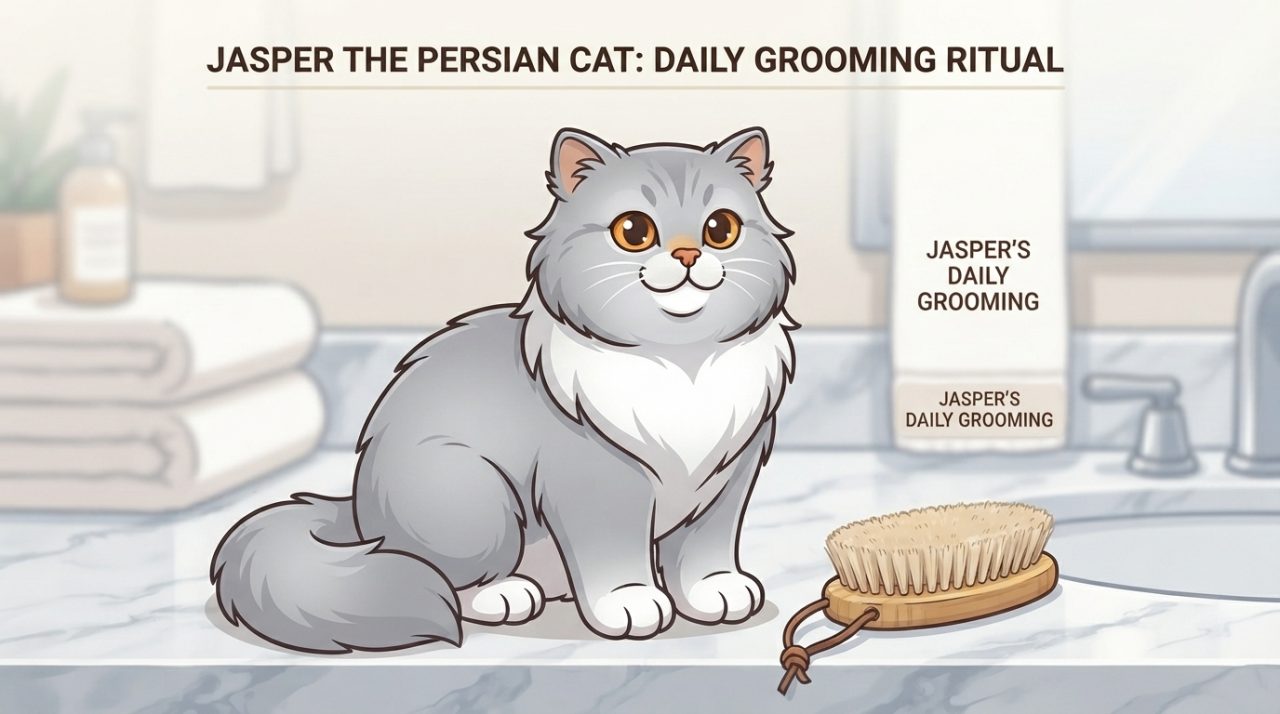
They need more grooming than you think – This isn’t a personality trait, exactly, but it shapes how you interact with your Persian every single day, so it belongs here. Daily brushing isn’t optional it’s part of the relationship. The good news is that most Persians, when introduced to grooming gently and patiently, come to tolerate or even enjoy it. Jasper now ambles over when he sees me get the brush out. It’s become a bonding ritual.
They get attached to routine – Persians don’t love surprises. If your schedule is chaotic and unpredictable, your Persian will feel that. Feeding at consistent times, keeping their space stable, introducing changes slowly these things genuinely matter to this breed.
They’re sensitive to your mood – Persian cats are remarkably tuned in to human emotion. On my hard days, Jasper tends to station himself closer to me than usual. I don’t know exactly how he reads it, but he does. If you’re the type who finds animals emotionally supportive, a Persian will give you that back.
They’re not demanding but they do need connection – Some people misread the Persian’s quiet nature as independence. It’s not. They don’t vocalize their needs loudly, but they do need your time and attention. Regular play, daily interaction, and genuine presence all matter. A Persian left alone too much will become withdrawn.
FAQ: About Persian Cat Personality
Are Persian cats affectionate?
Absolutely just in a quieter, more understated way than some other breeds. Persians express affection through proximity, slow blinks, and gentle presence rather than loud meowing or constant physical contact. Once they bond with you, that love is genuine and lasting.
Do Persian cats like to be held?
Many do, though it varies by individual cat and how they were handled early in life. Persians generally enjoy being close to their people, and some become true lap cats. Others prefer to sit beside you rather than on you. It’s worth noting that because of their build, holding them comfortably (supporting their back legs) makes a difference.
Are Persian cats good for first time cat owners?
They can be a wonderful choice, especially for people who want a calm, low drama companion. The main consideration is grooming daily coat care is non-negotiable, and first time owners need to be prepared for that commitment. Beyond that, their gentle, patient nature actually makes them quite forgiving companions.
Do Persian cats get along well with other cats?
Often yes, particularly with other calm cats who match their energy. Persians don’t tend to be territorial or aggressive. A slow, supervised introduction is always the right approach. They may take time to warm up, but once comfortable, many Persians enjoy having a feline companion.
Are Persian cats high maintenance in terms of personality?
Not particularly, they’re actually quite easygoing temperamentally. The maintenance of Persian ownership is mostly about grooming, not behavior. They’re not destructive, not loud, not overly demanding. What they do need is consistency, gentle handling, and quality time with their people.
A Little Love Before You Go, From a Fellow Persian Cat Mama
If I had to sum up what makes Persian cat personality traits so special in just a few words, I’d say this: Persians are proof that quiet can be profound.
They won’t demand your attention. They won’t perform for you. They won’t be the cat who does viral worthy acrobatics across your living room. But they will show up. Every day, in their calm, deliberate, deeply loyal way they will be there.
Jasper has been my companion through moves, through difficult seasons, through ordinary Tuesdays and extraordinary ones. His personality hasn’t changed. He’s still my steady, loaf shaped, slow blinking constant. And I wouldn’t trade that for anything.
If you’re thinking about welcoming a Persian into your life, I hope this helped you understand what you’re really getting: not just a beautiful cat, but a genuinely special one.
I’d love to hear about your Persian in the comments. What personality quirks have you discovered that caught you by surprise? Drop a note below and let’s talk about it. And if this was helpful, go ahead and bookmark or pin this for when your friends start asking you why your cat is so impossibly calm.
About the Author
Tabitha P. Bean is a Persian cat enthusiast, writer, and the proud owner of Jasper, her beloved male Persian cat. Through her love for Jasper, she enjoys sharing helpful tips and insights to help fellow cat parents give their fluffy companions a happy, healthy, and comfortable life.
