

Estimated read time: 10 – 12 minutes
Introduction
Last summer, my neighbor asked me a question about Persian cats that stopped me cold, had they always looked the way they do now, with that round, plush face and those big sleepy eyes? I didn’t have a confident answer, even after years of living with Jasper, my own fluffy roommate. That gap in my knowledge bothered me enough to dig into the real history and biology behind the breed, and what I found turned into this list of interesting facts about Persian cats. Ten things that genuinely surprised me, and I think they’ll surprise you too.
Some of these facts are historical, some are about the genetics hiding under all that fur, and a few are about the quiet, sleepy personality traits that don’t get talked about nearly enough. I’ve grouped them into six sections so they’re easy to skim, but I’d encourage you to read the whole thing front to back. A handful of these connect in ways that actually changed how I think about caring for Jasper day to day, especially once I understood where his coat, his temperament, and even his face shape actually came from.
I’ve been writing about Persian cats long enough to think I’d heard most of what there was to know, and this list still managed to humble me a little. So if you’ve ever found yourself searching for fun facts about Persian cats to share with a fellow cat person, or you’re simply curious why your own Persian acts the way they do, you’re in good company. Grab a cup of coffee, get comfortable, and let’s get into it.
Their Royal Persian History Goes Back Centuries
Before we get into personality quirks and genetics, it helps to understand where this breed actually came from. The backstory is a lot older, and a lot more interesting, than most people assume, and it sets up almost everything else on this list.
Fact 1 – Persians Trace Back to 17th Century Persia (Not Just a Catchy Name)
The name isn’t a marketing gimmick. Most breed historians trace the earliest longhaired cats that would eventually become Persians back to the historic Persia region, which is modern day Iran. Travelers and merchants are widely credited with bringing these long coated cats into Italy and France sometime in the 1600s, where they crossed paths with another longhaired import from Turkey, the Angora. Over the following centuries, European breeders worked with these long haired lines, gradually shaping the look we recognize today through careful, patient selection rather than any single deliberate plan.
It’s a strange thing to sit with Jasper on a Tuesday afternoon and realize his ancestors made a journey across continents centuries before anyone thought to put a cat in a show ring. That kind of history adds a little weight to all that fluff, and it’s part of why I find myself a little more patient during marathon brushing sessions than I probably should be.
Fact 2 – They Were Cat Show Royalty From the Very Beginning
The Crystal Palace cat show in London, held in 1871, is widely credited as one of the first major organized cat shows in the world, and longhaired cats direct ancestors of today’s Persians were among the star attractions. That means this breed’s show pedigree stretches back more than 150 years, long before most of the cat breeds we know today were even formally recognized. Persians weren’t a trendy newcomer to the cat fancy world. They were there near the very start of it, and that early popularity helped cement their reputation as one of the most recognizable long haired breeds anywhere in the world.
By the time formal cat associations started forming in the early twentieth century on both sides of the Atlantic, Persians were already considered an established, beloved breed rather than an emerging one. That head start matters more than people realize, because it gave breeders generations of extra time to refine coat quality, temperament, and structure long before many other popular breeds had even been standardized. Few breeds can claim that kind of continuous popularity stretching across three different centuries, and it’s a big part of why the Persian still feels like such a familiar, almost iconic shape when you picture a long haired cat.
That “Smushed” Face Wasn’t Always the Look
This is the fact that started my whole research rabbit hole, so it felt right to put it front and center. The Persian face you picture probably isn’t the original Persian face at all, and the difference between old photographs and modern show cats is bigger than most people expect.
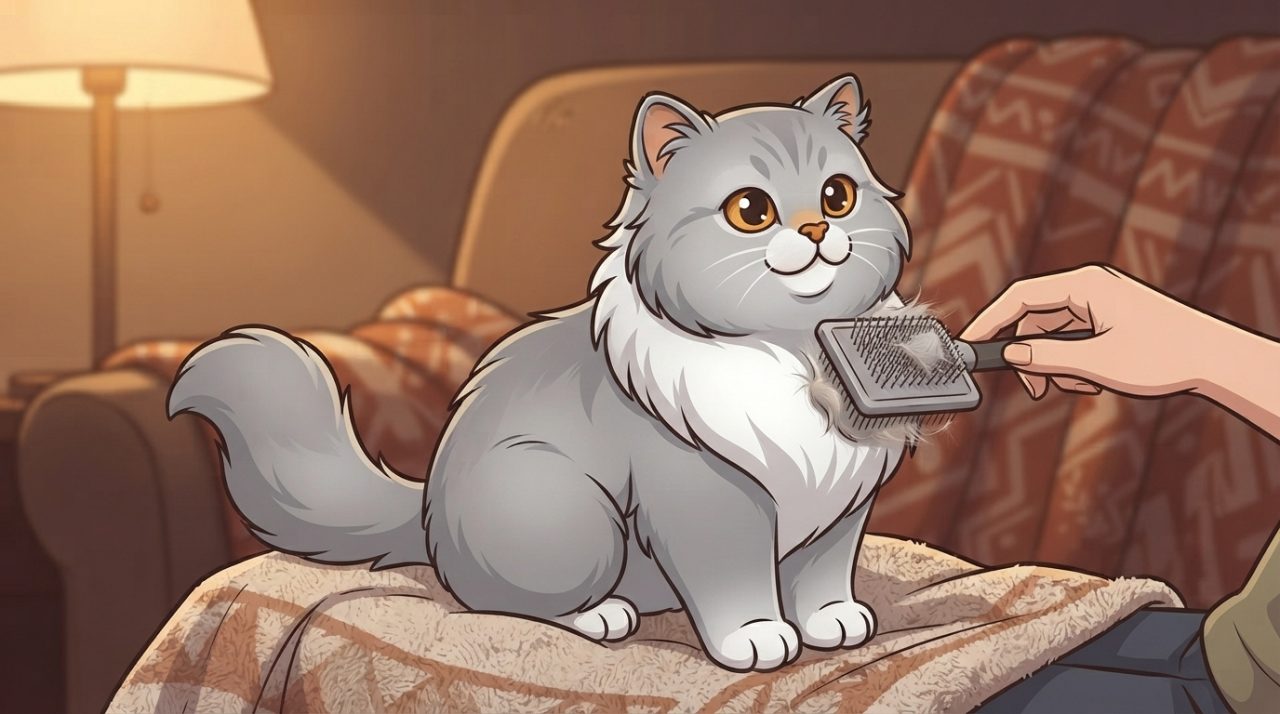
Fact 3 – The Flat “Doll Face” Look Is a Relatively Modern Development
Early Persians had a noticeably longer, more moderate nose than the extremely flat profile many people associate with the breed today. The very flat, round faced “peke faced” look became popular through decades of selective breeding, especially as show standards in the United States evolved through the mid to late 1900s. So if you’ve seen old photographs of Persians from the early 1900s and thought they looked a little different from the cats you see now, you weren’t imagining it. Breed standards shift over generations, and the Persian’s face is one of the clearest examples of that slow, steady drift.
This shift didn’t happen overnight, and it wasn’t driven by any single breeder or club. It built up gradually as show judges, breeders, and the cat loving public all gravitated toward an increasingly rounded, flat faced ideal, until that look became the standard most people now think of as the “true” Persian face.
Fact 4 – There’s a Whole “Traditional Persian” Camp That Looks Totally Different
Partly in response to that shift, a separate group of breeders and fans kept favoring the older look, often called a “traditional” or “doll face” Persian. These cats have a noticeably gentler slope to the nose and a face that reads as a little less extreme than the modern show standard. Some cat associations recognize this look informally, while others stick strictly to the flatter modern standard, which means two cats can both be full blooded Persians and still look surprisingly different from each other.
Jasper actually falls more into this traditional camp himself. People are sometimes surprised when I tell them he’s a full blooded Persian, because his profile doesn’t match the ultra flat face they picture from cat show photos. I’ll admit, that gentle slope to his nose was part of what drew me to him in the first place. It gives him an expression that always looks a little curious, even when he’s doing absolutely nothing more exciting than staring at a closed cabinet door.
Their Coat Hides Some Genetic Surprises
Persians are basically famous for their coats, but what’s actually happening underneath all that fluff is more interesting than most people realize, and it touches everything from eye color to how the breed handles temperature.
Fact 5 – Eye Color Is Tied Directly to Coat Genetics
Persian eye color isn’t random. It’s closely linked to specific coat color genes, in a way that genuinely surprised me the first time I read about it. Chinchilla and shaded silver Persians, for example, very often have green or blue green eyes because of the genetics tied to that particular coloring. Pure white Persians, meanwhile, frequently carry blue eyes, or sometimes one blue eye and one of another color, thanks to the same gene responsible for the white coat itself. Even golden Persians tend to lean toward green or gold green eyes, following that same underlying pattern.
It’s a small thing, but once you know it, you start noticing the pattern in every Persian photo you scroll past. Coat color and eye color stop feeling like two separate traits and start looking like two expressions of the same underlying genetics, which is exactly what they are.

Fact 6 – Underneath the Fluff Is a Double Coat Built for a Cooler Climate
That famous Persian coat is actually a double coat, a soft, dense undercoat layered beneath the long, flowing topcoat everyone notices first. Breed historians generally connect this structure to the breed’s origins in the cooler plateau regions of Iran, where a heavier coat would have offered real protection from the cold. It’s part of why grooming and shedding feel like such a bigger commitment than people expect, even with a cat who spends their whole life indoors with the air conditioning running.
That dense undercoat is also why a quick once over with a brush rarely gets the job done the way it might with a shorthaired cat. The topcoat can look perfectly smooth on the surface while the undercoat underneath is quietly working itself into mats, which is something I learned the hard way during Jasper’s first full coat change as a kitten, when a coat that looked totally fine on Monday turned into a tangled mess by the weekend.
Persians Communicate Differently Than You’d Think
If you’ve spent time around a vocal breed like a Siamese, a Persian’s communication style might genuinely catch you off guard. It’s one of the quieter, gentler corners of cat personality, and it tends to surprise new owners the most.
Fact 7 – They’re Known as One of the Quietest Breeds
Persians have a long standing reputation, among breeders and longtime owners alike, as one of the more soft spoken cat breeds. Rather than loud, demanding meows, many Persians lean toward quiet chirps, soft trills, and a kind of gentle muttering that’s almost more felt than heard. Jasper’s loudest sound is a tiny chirp he makes right before dinner, and even that feels more like a polite reminder than an actual demand.
That quieter communication style doesn’t mean Persians are unaffectionate or distant. It just means they tend to express themselves through presence rather than noise, things like sitting close, following you from room to room, or settling onto whatever surface you happen to be using at the moment.
Fact 8 – Persians Are Some of the Most Laid Back Sleepers in the Cat World
Persians are typically described as a calmer, lower energy breed compared to more athletic, high activity cats. They tend to be perfectly content with a quiet household, long stretches of lounging, and shorter bursts of play rather than nonstop activity. It’s one of the reasons they tend to do so well in calm, settled homes, including ones with older owners or households that already keep a slower, steadier pace.
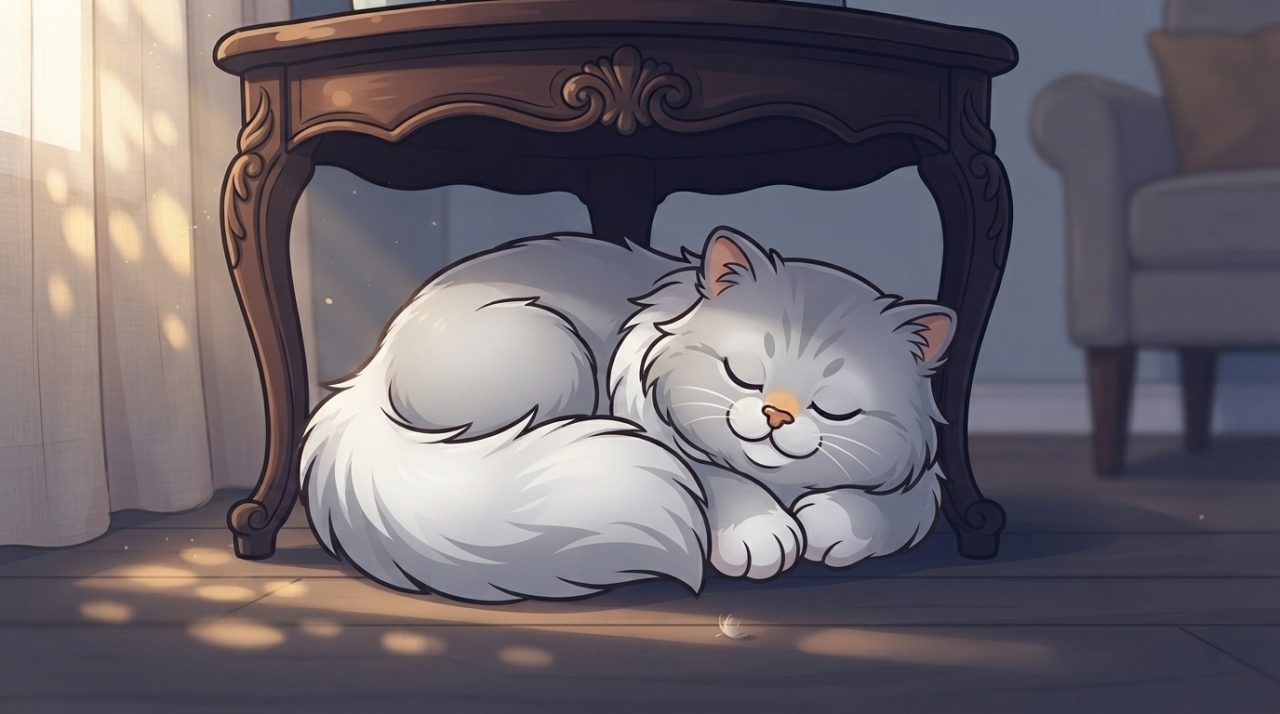
Jasper has three favorite napping spots in our house, and he rotates between them with the seriousness of someone keeping a very important schedule, the sunny corner of the living room in the morning, the cool spot under the side table by early afternoon, and his usual perch on the back of the couch once evening rolls around. Watching him move between them has genuinely become one of the small, quiet joys of my day.
A Little Hollywood (and Royal) History
This is the section where the Persian’s reputation for elegance really comes through, both on screen and across actual history books. It turns out this breed has been quietly shaping our idea of what an elegant cat looks like for a very long time.
Fact 9 – Persian Cats Have Long Been Hollywood’s Go To “Elegant Cat”
For decades, filmmakers have leaned on white, longhaired cats as visual shorthand for refined, sometimes mysterious characters. You’ve probably seen the exact trope yourself in classic spy films, where a calm white longhaired cat sits draped across a character’s lap. That image stuck so firmly in pop culture that it’s been referenced and parodied in movies and TV for generations since, all because of how striking a Persian type cat looks on camera, calm and composed even in the middle of a dramatic scene.
It’s a funny kind of fame, when you think about it. An entire visual shorthand for elegance and mystery built largely on the strength of one breed’s calm expression and flowing coat. It says something about how distinctive Persians really are that they could carry an entire cinematic mood almost single handedly, just by sitting still and looking composed.
Fact 10 – Queens, Empresses, and European Nobility Have Loved Them for Generations
Persians have a long association with royal and aristocratic households throughout European history. Queen Victoria is frequently cited by cat historians as having kept Persian cats, which helped cement the breed’s reputation as a fashionable, high status companion throughout the Victorian era. That reputation followed the breed for more than a century, and you can still feel a little of that old world elegance every time a Persian saunters across a room like they own it.
That royal association is part of why Persians still carry such a distinct sense of presence, even in an ordinary living room. There’s something about a breed with this much history behind it that makes everyday moments, like Jasper supervising me from the arm of the couch, feel just a little more dignified than they probably should.
What These Facts Mean for Life With a Persian
Knowing the history is fun on its own, but it actually changes a few things about how I think about life with Jasper day to day, and I’d guess it might do the same for you.
The heavier double coat makes more sense once you remember it was built for a cooler climate, which is part of why regular brushing isn’t just about appearances. It genuinely keeps a Persian more comfortable, especially through the parts of the year when that thick undercoat starts to shed in earnest.
The quiet, low key personality also explains why Persians tend to thrive in calmer households rather than busy, high traffic ones. If you’re trying to figure out whether this breed fits your lifestyle, that gentle, homebody temperament is usually the deciding factor, more than coat color or face shape ever will be.
Even the eye color genetics end up being more than just a fun trivia fact. Once I understood how closely tied coat and eye color really are, I started paying a lot more attention to Jasper’s particular shading and what it might say about his background, which led me down an entirely new research rabbit hole I wasn’t expecting.
And honestly, knowing that Jasper’s calm, soft spoken nature is basically baked into the breed makes me appreciate our quiet evenings together even more. He’s not aloof. He’s just being a Persian, exactly the way generations of breeding history shaped him to be, and there’s something genuinely comforting about understanding the “why” behind a personality you already love. It turns ordinary moments, like him watching me cook dinner from his perch on the kitchen chair, into small reminders of just how much history is wrapped up in that one quiet, fluffy face.

Frequently Asked Questions
A few more quick questions tend to come up whenever I talk about this breed, so I’ve answered the most common ones here.
Are Persian cats actually from Persia (Iran)?
Yes, most breed historians trace their roots back to longhaired cats from the historic Persia region, which were brought to Europe centuries ago and gradually developed into the breed we recognize today. The name has stuck with the breed ever since, even as the cats themselves were shaped almost entirely by European breeders.
Why do some Persian cats have flatter faces than others?
It largely comes down to breeding lines. Modern show-style Persians were bred toward an extremely flat “doll face” profile over the past several decades, while traditional Persians keep a more moderate, gently sloped nose closer to the breed’s earlier look.
Are Persian cats loud or quiet?
Persians are widely known as one of the quieter breeds, communicating more through soft chirps and trills than loud or frequent meowing. Many owners describe their Persian as having only one or two distinct sounds they make regularly.
Do Persian cats need a lot of attention?
They enjoy companionship, but they tend to be calm, low-key cats who are just as happy curled up near you as they are being actively entertained. That makes them a comfortable fit for plenty of different lifestyles.
Why does my Persian cat sleep so much?
It’s pretty typical for the breed. Persians lean toward the laid-back, lower-energy end of the cat spectrum, so long naps are simply part of their normal rhythm rather than a sign that anything is wrong.
A Little Love Before You Go, From a Fellow Persian Cat Mama
I’ll admit, putting this list together made me look at Jasper a little differently this week. Every time he chirped at me instead of meowing, or picked his third nap spot of the afternoon, I found myself thinking about just how much breed history was quietly playing out in my living room. It’s easy to take a cat’s personality for granted, but there’s something kind of wonderful about realizing those quirks have centuries of breeding history behind them.
If you live with a Persian, I’d genuinely love to hear which of these facts surprised you the most, or if you’ve got a favorite quirky detail about your own cat’s personality. Drop it in the comments below, I read every single one. And if you’re the kind of person who likes to keep a list like this handy, go ahead and bookmark this page, or pin it for later so you’ve got it next time someone asks you the same question my neighbor asked me.
Jasper says hello, mostly from his favorite napping spot, where he has absolutely no plans to move anytime soon.
About the Author
Tabitha P. Bean is a Persian cat enthusiast, writer, and the proud owner of Jasper, her beloved male Persian cat. Through her love for Jasper, she enjoys sharing helpful tips and insights to help fellow cat parents give their fluffy companions a happy, healthy, and comfortable life.
