
Estimated read time: 13–15 minutes
Introduction
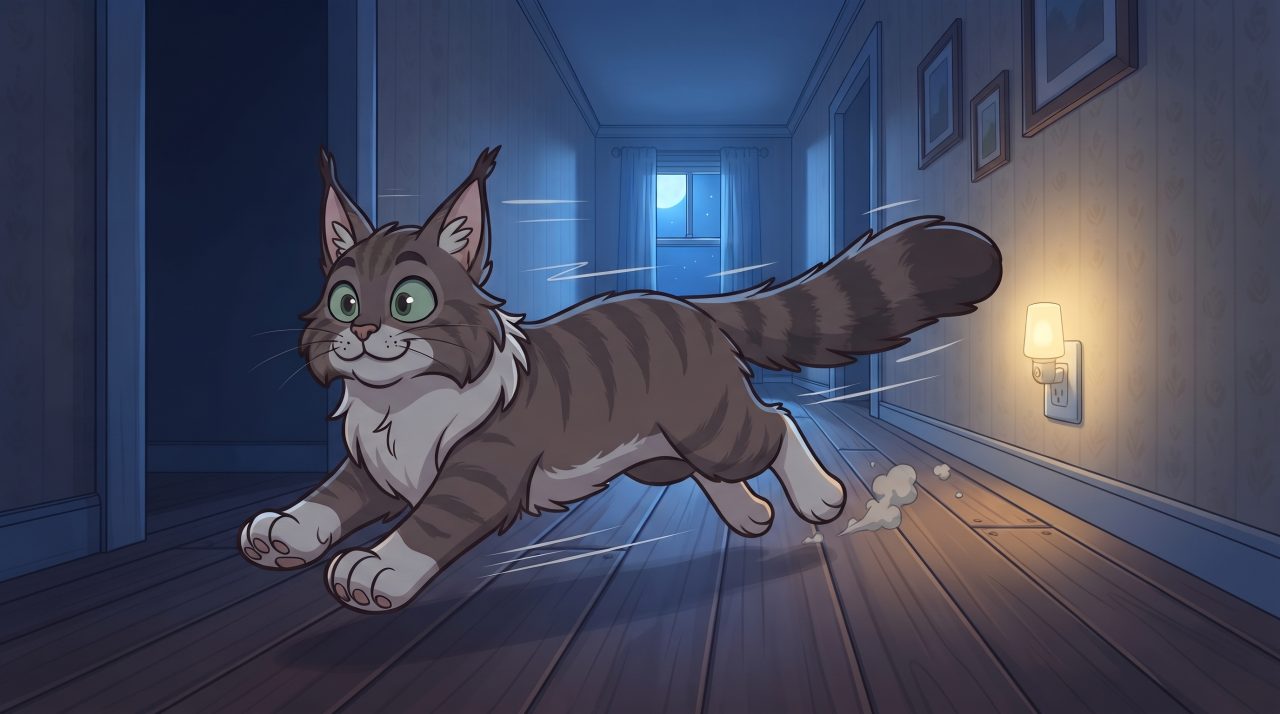
Luna has a schedule, and nobody asked me about it. Around 3 a.m., my Maine Coon turns into a furry freight train and thunders down the hallway like she’s late for something important. If you have an indoor cat, you probably know the feeling.
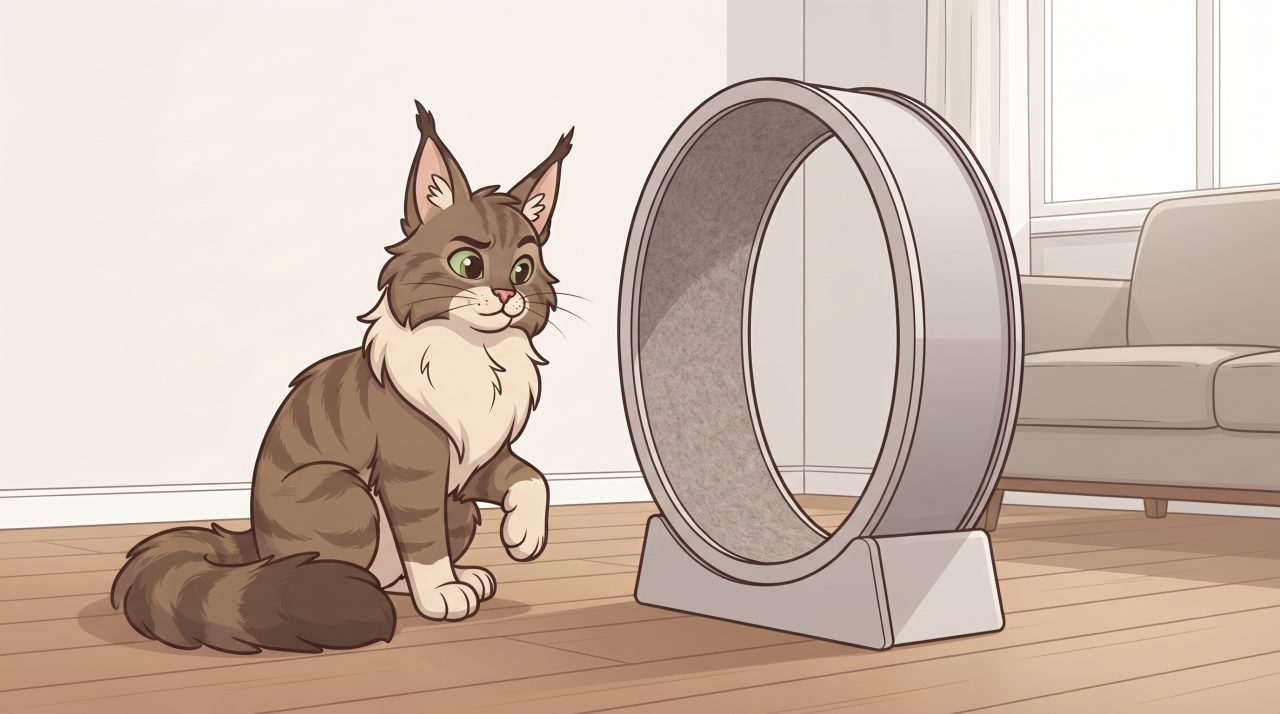
That’s exactly why I started researching the cat exercise wheel. It’s a big rotating track that lets your cat run in place, and plenty of owners swear by it. Plenty of cats also look at it like it’s a haunted bicycle.
So is a cat exercise wheel worth buying? What size do you need? Is it safe? I’ll walk you through how these wheels work, what to look for, how to introduce one, and what to do if your cat wants nothing to do with it.
What Is a Cat Exercise Wheel?
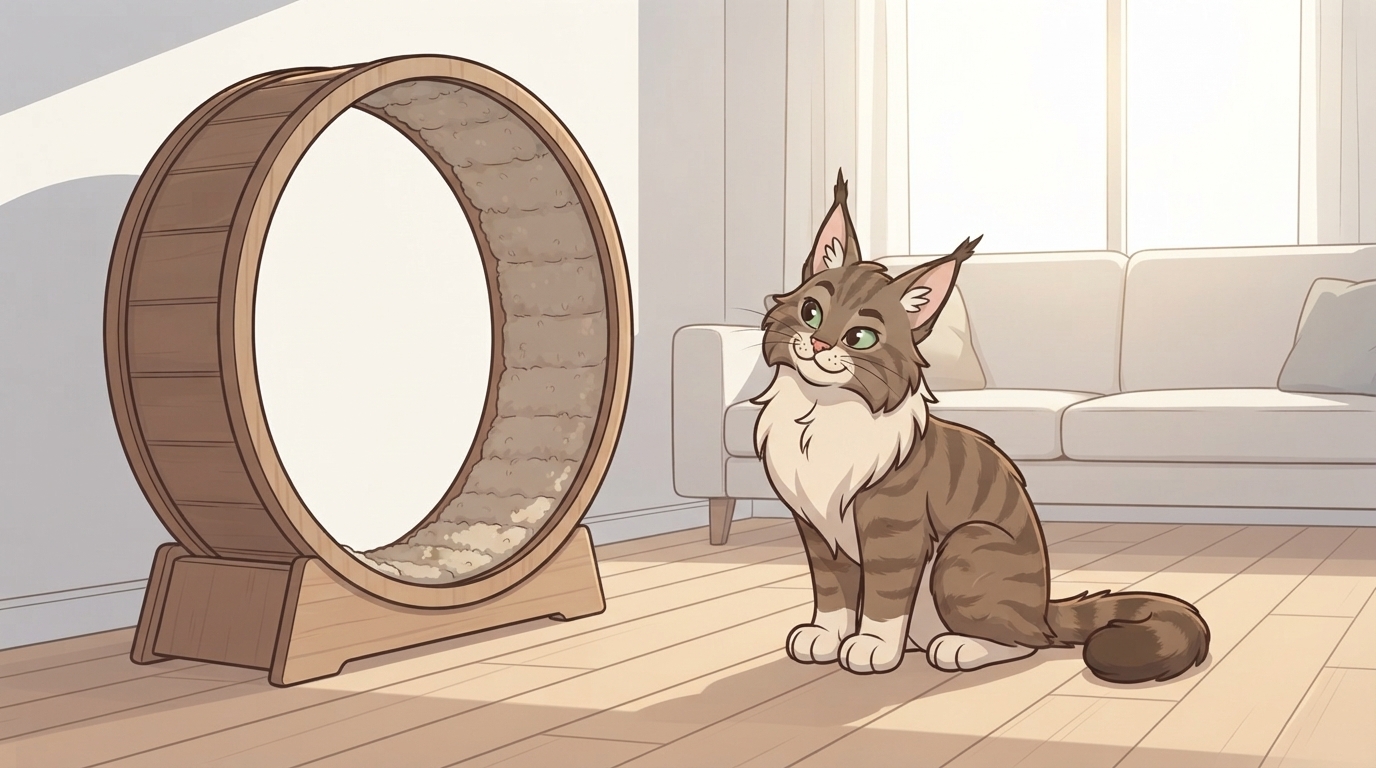
A cat exercise wheel is a large, upright wheel your cat can walk or run inside. Think hamster wheel, but built big enough and sturdy enough to carry a full grown cat. When your cat moves forward, the track rotates beneath their paws.
Most models have a circular running track attached to a supporting frame. Some people call them cat treadmills, though they work differently from the motorized treadmills you’d find at a gym. There’s no motor here. Your cat powers it.
Here’s the part I want to be honest about, a wheel isn’t essential for every cat. Some cats love sprinting. Others would rather stalk a wand toy, climb a cat tree, or nap in a sunbeam like it’s their full time job. The best exercise equipment is whatever your cat actually chooses to use.
Are Cat Exercise Wheels Worth Buying?
A cat exercise wheel can be worth it if your cat is energetic, curious, and not easily spooked by new objects. It gives them another way to burn energy without needing outdoor access.
That said, it’s a real purchase. Before you spend the money, let’s look at both sides.
Reasons a Cat Wheel May Be Worth It
- It gives indoor cats a place to run. Cats without outdoor access have fewer chances for long bursts of movement. A wheel fills that gap for the cats who like it.
- It adds mental stimulation. Learning a new object, especially with treats involved, keeps a curious cat’s brain busy.
- It works as one piece of a daily routine. Regular movement matters for any cat, and a wheel can sit alongside play sessions and climbing.
- It’s an outlet for high energy cats. If your cat zooms around the house at all hours, a running track may help them release some of that energy.
- It suits small spaces. If you live in an apartment, a wheel gives your cat a place to run without needing a hallway.
Reasons You Might Skip It
A cat exercise wheel isn’t a magic fix. Keep these in mind,
- Some cats are frightened by moving equipment.
- Some lose interest after a few days.
- Full size wheels take up serious floor space.
- Quality models can be expensive.
- Training takes patience and supervision.
- A wheel can’t replace interactive play or other enrichment.
Think about your own cat’s personality. A playful, confident cat is a better candidate than a cat who hides when the vacuum comes out. (Luna falls somewhere in the middle. She’s brave until something makes a new noise.)
Benefits of Using a Cat Exercise Wheel
When a cat does enjoy the wheel, there are some real upsides.
Encourages Physical Movement
Cats are built for short bursts of running, chasing, and jumping. A wheel gives them one more place to do that indoors, which can support muscle tone and general fitness.
Just don’t expect miracles overnight. Buying a wheel doesn’t make a cat active. It has to be introduced slowly, and your cat has to choose to use it.
Gives Indoor Cats Another Exercise Option
Not every home has a yard, catio, or safe outdoor area. A wheel is one way to offer extra enrichment without leaving the house.
Helps Channel Extra Energy
A restless cat can be a handful. They race around at night, climb the curtains, and demand attention the second you sit down.
A wheel may help cats who love to run. Still, it works best alongside daily interactive play and climbing spots, not instead of them.
Adds Variety to Playtime
Cats get bored with the same toys, just like we get bored with the same workout. A wheel adds something new to the mix.
Try pairing it with puzzle feeders, wand play, and a good cat tree. The more variety your cat has, the better.
Taps Into Natural Running Behavior
Running and chasing come naturally to cats. A wheel lets some of them practice that movement in a controlled indoor setting.
Not every cat will take to it, so let yours explore at their own pace.
How to Choose the Best Cat Exercise Wheel
The best cat exercise wheel is the one that fits your cat’s size, your home, and your budget. A poorly designed wheel can be uncomfortable or hard to use, so it pays to compare a few key features before you buy.
1. Wheel Diameter
Diameter is one of the most important specs. Your cat needs enough room to run without hunching or arching their back.
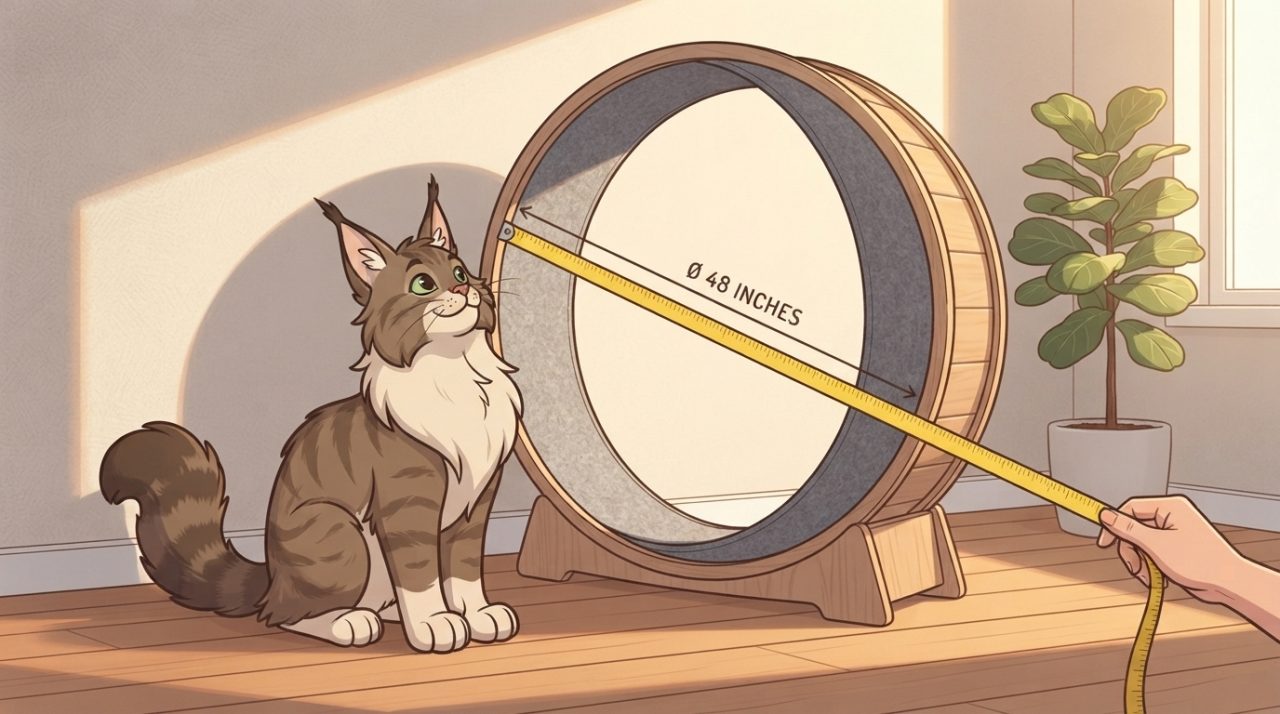
Don’t go by the outside measurement alone. Check the internal running diameter, because that’s the space your cat actually gets. Many popular full size wheels advertise an outer diameter of around 48 inches, but the usable inner space is smaller.
Measure your cat and compare their natural standing and running posture to the manufacturer’s dimensions. And remember, bigger isn’t automatically better if the stability or running surface is poor.
2. Running Track Width
The track is where your cat’s paws land. A wider track gives more room to move and usually feels more comfortable.
Make sure your cat can walk naturally without feeling squeezed. This matters even more for large breeds.
3. Running Surface Material
Wheels use different running surfaces. Common options include,
- EVA foam pads
- Felt traction pads
- Carpeted tracks
- Rubber based surfaces
You want grip without catching claws. Check whether the material is easy to clean and whether replacement pads are sold separately. Skip anything that gets slippery, loose, or worn.
4. Stability and Construction
A good wheel stays steady while your cat runs. Look for,
- A strong supporting base
- Securely connected parts
- Smooth rotation
- A stable frame
- Clear assembly instructions
- No exposed sharp edges
A wheel that wobbles or lurches can scare a cat for good. Always test it yourself before your cat gets on.
5. Noise Level
Some wheels are noisy. That matters if you live in an apartment or want to put the wheel in a bedroom or living room.
Skim customer reviews for mentions of scraping, roller noise, vibration, wobbling, or noise at higher speeds. A quieter wheel is easier on both of you.
6. Weight Capacity
Every wheel has a weight limit. Check it before you buy, and don’t assume a wheel built for an average cat will handle a bigger breed.
Capacity alone doesn’t tell you whether the wheel gives your cat enough running space. Look at width and internal diameter too.
7. Cleaning and Maintenance
Cats shed, leave paw prints, and drag litter onto everything. Pick a wheel that’s easy to clean.
Removable pads, accessible surfaces, and replaceable parts make life much easier. Check that the manufacturer sells replacement pads and rollers.
8. Warranty and Return Policy
This one matters more than people think, because some cats simply never warm up to a wheel. Before you buy, find out,
- How long the warranty lasts
- What parts are covered
- Whether returns are accepted after assembly
- Whether used traction pads affect returns
- Who pays return shipping
Also, don’t assume a manufacturer’s return policy applies if you buy through a third party seller.
Popular Cat Exercise Wheels to Consider
I want to be upfront here. I haven’t personally tested every wheel on this list, and the specs below come from manufacturer information, not independent Pettiy testing. Prices and availability change, so always double check the current listing.
1. One Fast Cat Exercise Wheel
The One Fast Cat Exercise Wheel is one of the most recognizable names in this category. It’s designed for indoor cats who love to run and need an extra activity outlet.
Key specifications (per the manufacturer),
- Outer diameter: 48 inches
- Inner diameter: 43 inches
- Running track width: 11 inches
- Maximum pet weight: 25 lbs
- Material: ABS plastic
- Steel support bar in the base
- Replaceable traction pads (EVA foam and felt options)
One thing I like is that the company publishes detailed specs and sells replacement parts. The downside is size. This is a big piece of equipment, so measure your floor space first.
Read the return policy carefully too. The advertised 90 days window and free return shipping apply to eligible orders, so check the current terms before you order.
Best for: Owners who want an established full size wheel with published specifications.
2. Wooden Cat Exercise Wheels
Wooden wheels are another option if you like a different look or build. Some use plywood or solid wood frames with carpeted running surfaces.
Possible advantages,
- A solid, furniture style look
- Different interior designs
- Wide running surfaces on some models
- Replaceable running mats on select products
Quality varies a lot from brand to brand, though. Check the wood construction, wheel balance, running surface, weight capacity, and assembly instructions before you commit.
Best for: Owners who prefer wood and find a model with the right dimensions.
3. Budget Cat Exercise Wheels
Budget models are tempting, and I get it. But price shouldn’t be your only filter.
Before choosing a cheaper wheel, check the internal diameter, track width, weight limit, frame stability, customer reviews, replacement parts, and return terms. A wheel that’s too small or wobbly is a waste of money, no matter how cheap.
Best for: Owners who find a properly sized, stable wheel within their budget.
Cat Exercise Wheel Comparison
Feature | One Fast Cat | Wooden Wheel | Budget Wheel |
Construction | ABS plastic, steel support | Wood based | Varies |
Running surface | EVA or felt options | Often carpeted | Varies |
Size | Published specs | Model dependent | Model dependent |
Maintenance | Replaceable pads | Depends on model | Depends on model |
Price | Check current price | Varies | Varies |
Main consideration | Space and return terms | Build quality | Stability and dimensions |
Always verify the current listing before you buy. A product name or photo doesn’t guarantee the specs are the same across sellers.
Are Cat Exercise Wheels Safe?
A properly designed, correctly assembled, and appropriately sized wheel can be a good enrichment option for many healthy cats. But safety depends on both the equipment and how you introduce it.
Choose the right size. Your cat should be able to run without an awkward posture. Check internal diameter and track width before buying.
Check the running surface. It should grip without snagging claws. Inspect it regularly for loose, damaged, or worn spots.
Look for gaps and moving parts. Watch for any spot where a paw or tail could get trapped. Follow the manufacturer’s safety instructions for covering or positioning moving parts.
Secure the wheel. Set it on a stable, level surface and make sure every connection is tight. Stop using it if it starts wobbling, making odd noises, or showing damage.
Supervise early sessions. Don’t leave your cat alone with a new wheel until you know how they handle it. Never force your cat to run.
Think about your cat’s health. Kittens, seniors, and cats with mobility problems may need different options. If your cat has joint issues, an injury, or breathing trouble, talk to your vet before introducing any high intensity exercise.
How to Train Your Cat to Use an Exercise Wheel
Getting your cat interested is the hardest part. Some cats hop on right away. Others take weeks to get comfortable. The trick is making every step feel positive.
Step 1 – Let Your Cat Explore
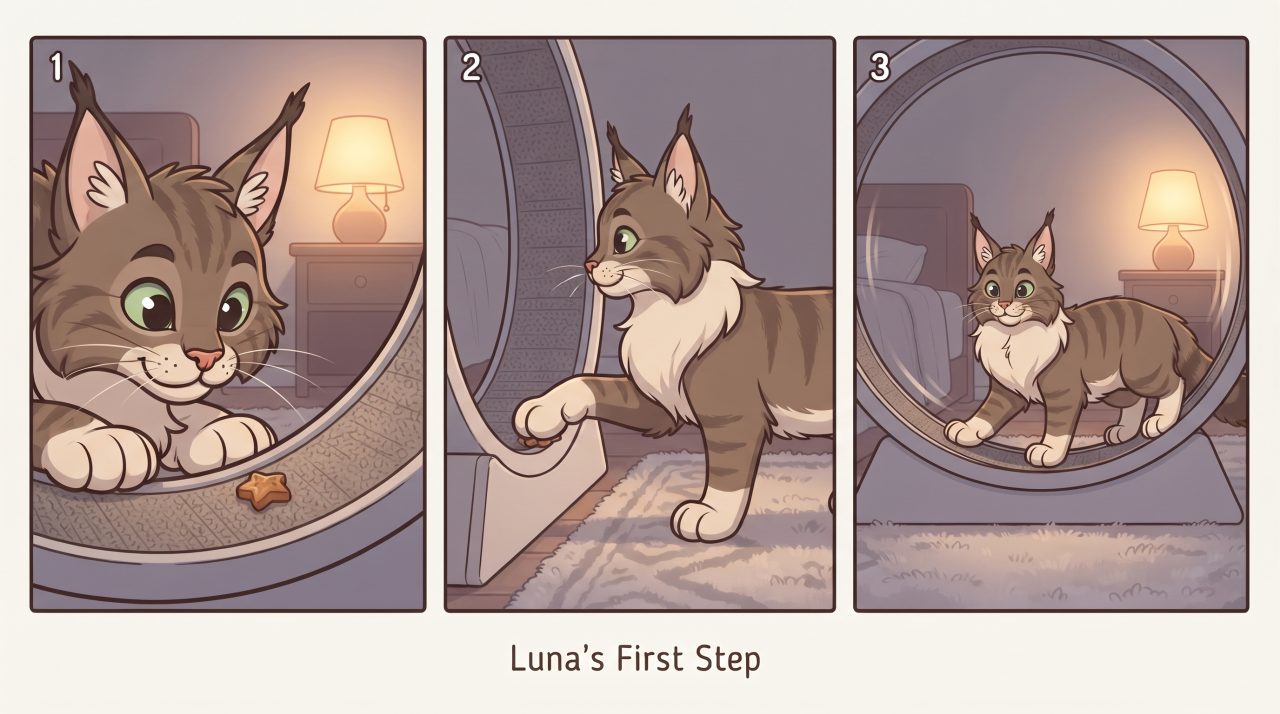
Put the wheel in a quiet spot where your cat feels relaxed. Let them sniff and investigate on their own terms. If you can, keep the wheel stationary for the first few days.
Never pick your cat up and place them inside.
Step 2 – Add Favorite Treats
Put a few small treats near the wheel. Once your cat is comfortable, place treats on the stationary running surface. Reward any voluntary exploring.
Step 3 – Bring In a Wand Toy
A wand toy can draw your cat closer. Move it slowly near the wheel and let your cat follow it. The goal is to invite them, not to lure them in against their will.
Step 4 – Encourage Small Movements
Once your cat is comfortable standing or walking on the track, encourage a few natural steps. Keep the wheel movement slow and controlled, and reward your cat for voluntary interaction.
Step 5 – Keep Sessions Short
Start with very short sessions. Some cats only walk for a few seconds at first, and that’s totally fine. Build up gradually as your cat’s confidence grows.
Step 6 – Build a Routine
Try offering the wheel when your cat is already feeling playful. Short, happy sessions beat long training attempts every time. If your cat walks away, let them.
Sample Cat Wheel Training Schedule
Period | Training goal |
Days 1 – 2 | Explore the stationary wheel |
Days 3 – 4 | Approach and investigate the running surface |
Days 5 – 7 | Encourage voluntary steps |
Week 2 | Practice short, supervised sessions |
Week 3 onward | Continue at your cat’s own pace |
Treat this as a rough guide, not a promise. Some cats move faster, some need much longer, and some never enjoy it.
Which Cats Are Most Likely to Enjoy a Cat Exercise Wheel?
Personality matters more than breed, but some cats are better candidates than others.
Bengals are often energetic and curious, and many enjoy running and climbing. Not every Bengal will love a wheel, but they’re a good bet.
Savannahs tend to be active and curious as well. If you have one, choose a wheel sized for their adult height and stride.
Abyssinians are playful explorers who may enjoy learning a new trick.
Domestic shorthairs run the whole spectrum. Some will sprint on a wheel and some would rather chase a feather. Their individual personality matters most.
What About Maine Coons?
This is the one close to my heart. Maine Coons are one of the largest domestic breeds, so a wheel that works for a smaller cat may feel cramped to them. Pay close attention to internal diameter, track width, and weight capacity.
Don’t pick a wheel based only on the advertised maximum weight. Luna isn’t a small cat, and I’d want to see exactly how much room she’d have to stretch out before I’d bring one home. Our big, fluffy girls and boys need space.
What If Your Cat Refuses to Use the Wheel?
Don’t stress. Cats have strong opinions, and “no thank you” is a perfectly valid answer. (Luna once ignored a $40 toy for a week and then fell in love with the cardboard box it came in.)
If your cat won’t touch the wheel, try these,
- Move it to a quieter spot
- Give it more time
- Use favorite treats
- Try a different interactive toy
- Keep it stationary during early introductions
- Take a break if your cat seems scared
And never force it. If your cat keeps avoiding the wheel, another activity may suit them better. You don’t need a wheel to give your cat a happy, healthy indoor life.
Best Alternatives to a Cat Exercise Wheel
If a wheel isn’t for your cat, plenty of other options get them moving.
Interactive Wand Toys
Wand toys let your cat stalk, chase, and pounce, which is how they’re wired to play. Supervise play with strings or feathers, and put the toy away when you’re done.
Cat Trees and Climbing Towers
Cat trees give your cat places to climb, jump, and explore. Pick a stable one with sturdy platforms and scratching surfaces, and place it where your cat can reach it easily.
Puzzle Feeders
Puzzle feeders make cats work for part of their food. That adds mental stimulation and a little movement. Start with an easy design and move up to harder ones.
Tunnel Toys
Tunnels are perfect for hiding, exploring, and ambush play. They’re a hit with cats who love to pounce on toys from cover.
Indoor Obstacle Courses
You can build a simple course with tunnels, low platforms, and toys. Keep the area free of sharp objects and unstable furniture.
For more ideas, check out our guide to [INTERNAL LINK: cat care and enrichment → Pettiy cat enrichment guide].
How Much Space Does a Cat Exercise Wheel Need?
A cat wheel is much bigger than a typical cat toy, so measure before you order. For example, the One Fast Cat wheel is listed at roughly 48 inches long, 13 inches deep, and 50 inches high when assembled.
You’ll also want extra room for your cat to approach, hop in, and hop out. Think about,
- Available floor space
- Ceiling clearance
- Nearby furniture
- Cords and outlets
- A level, stable floor
- Room to move safely around the wheel
Don’t park it in a narrow walkway where someone could bump it. And if you’re in an apartment, tape out the footprint on the floor before you buy. It’s a quick way to see whether it’ll really fit.
Frequently Asked Questions About Cat Exercise Wheels
Do cats actually use exercise wheels?
Yes, some do, especially curious, energetic cats. Others need gradual training, and some never take to it.
What size cat exercise wheel should I buy?
Choose a wheel with enough internal running space for your cat to move naturally. Check the manufacturer’s dimensions and compare them to your cat’s size and posture.
Are cat exercise wheels suitable for Maine Coons?
Some models may work, but check the internal diameter, track width, and maximum weight carefully. Larger cats often need a bigger running surface.
How long does it take to train a cat to use a wheel?
There’s no fixed timeline. Some cats are comfortable within days, while others need weeks or never enjoy it. Use gradual, reward based training and never force your cat.
Are cat exercise wheels safe?
They can be when they’re the right size, stable, and correctly assembled. Check for paw trapping gaps, damaged surfaces, and wobbling, and supervise the first sessions.
Do cat wheels help cats lose weight?
A wheel may increase activity in a cat who enjoys it, but weight management also depends on diet and overall health. Ask your vet for a safe activity and weight plan.
So, Is a Cat Exercise Wheel Right for Your Cat?
Honestly? It depends on your cat. A cat exercise wheel can be a great addition for a curious, energetic indoor cat, but it’s not a must have for every household.
Before you buy, think about your cat’s personality, size, health, and your available space. Pick a stable wheel with a good running surface, enough internal room, and a clear return policy. Above all, keep it fun for your cat.
Whether you go with a wheel, a wand toy, a cat tree, or a puzzle feeder, the goal is the same, a home that gets your cat moving and playing. Luna’s proof that a happy cat doesn’t need fancy gear, just the right kind of fun for her personality.
Have you tried a cat exercise wheel? Tell me how it went in the comments, and check out our other enrichment guides for more ideas.
Nellie J. Wilson, Editor & Maine Coon Mom
