
Estimated Read Time: 11–12 minutes
Introduction
I still remember the first time I tried to scoop Luna up for a proper cuddle. She was about six months old, fluffy beyond belief, and I was convinced that a cat this beautiful had to love being held. I wrapped my arms around her, brought her up to my chest and she immediately gave me this look. You know the one. The deeply unimpressed stare that says, “Put me down, human.”
So I did what any anxious new Maine Coon mom does: I spiraled. Had I gotten the wrong cat? Were Maine Coons not actually affectionate? Was Luna secretly plotting my downfall?
Turns out, I just didn’t understand how Maine Coons like to be held or more accurately, when and on whose terms. If you’ve been wondering whether Maine Coons like to be held is even the right question to ask, you’re in the right place. Because the answer is nuanced, fascinating, and honestly, kind of adorable once you get it.
Let’s talk about what Maine Coon cuddle habits actually look like in real life, no fluff (okay, a little fluff, because have you seen these cats?), just the honest truth.
What Does It Mean for a Maine Coon to Be “Affectionate”?
Before we get into the holding question specifically, I think it’s worth reframing what affection looks like in Maine Coon world because it’s not the same as what you might expect from, say, a Ragdoll or a Siamese.
Maine Coons are often described as “dog-like” cats, and that comparison is actually spot on when it comes to how they show love. They follow you around. They want to be near you constantly. Luna has never once let me go to the bathroom alone in five years. Not once.
But “near you” doesn’t always mean “on you.” Maine Coons are what I’d call proximity affectionate. They want to be in the same room, often at your feet, sometimes pressed against your leg but they tend to prefer their four paws on solid ground.
This is different from being cold or independent. Maine Coons are genuinely social cats. They bond deeply with their people, they’re curious about everything you do, and they’ll greet you at the door like a golden retriever after a long day. They’re just not always into being picked up and held like a baby at least not at first, and not on your schedule.
Understanding this distinction changes everything. If you’re measuring your Maine Coon’s love by how willingly they let you hold them, you might be missing the forest for the trees.
Do Maine Coons Like to Be Held? The Honest Answer
Here’s my honest answer: some do, some don’t, and most fall somewhere in between. There’s no breed wide rule that says Maine Coons love being held or hate it. What is consistent is that they prefer affection on their own terms.
Luna took about eight months before she genuinely relaxed in my arms. Now, at five years old, she’ll occasionally climb into my lap of her own accord and sprawl out like she owns the place which, to be fair, she does. But even now, if I pick her up when she didn’t initiate it, she tolerates it for about thirty seconds before she starts doing that slow motion squirm that means down, please.
A few things that shape whether a Maine Coon likes being held:
Early socialization. Kittens who are handled gently and frequently tend to be more comfortable with being held as adults. If your Maine Coon came from a breeder who prioritized human contact from birth, you’ve got a head start.
Personality. Just like people, Maine Coons have individual personalities. Some are naturally more cuddly; others are more independent. Luna leans toward the “I’ll cuddle you on my schedule” camp.
Your technique. How you hold a Maine Coon matters a lot. These are big cats males can hit 15 to 20 pounds and they need to feel supported. A cat dangling awkwardly is a cat who’s going to stop trusting your arms.
Mood and timing. Even the cuddliest Maine Coon has moments where they want to be left alone. Trying to hold a Maine Coon who’s mid zoomies is a losing battle.

How Maine Coons Actually Show They Love You (It’s Not Always Cuddling)
This is the section I wish someone had handed me when Luna first came home. Maine Coon affection is rich, it’s just expressed differently than you might expect.
Chirping and trilling. Luna has this soft little chirp she does when I walk into the room. Not a meow a chirp, almost like a bird. Maine Coons are famously vocal in this quiet, conversational way, and it’s genuinely one of their love languages.
Following you everywhere. I cannot move through my house without Luna appearing. Kitchen? Luna’s there. Home office? Luna’s on my desk. Bathroom? You know. This “velcro cat” behavior is how they say I want to be with you.
Head butting and cheek rubbing. When Luna rubs her cheek along my hand or bonks her head into my leg, she’s claiming me in the best possible way. It’s called bunting, and it’s a major sign of affection and trust.
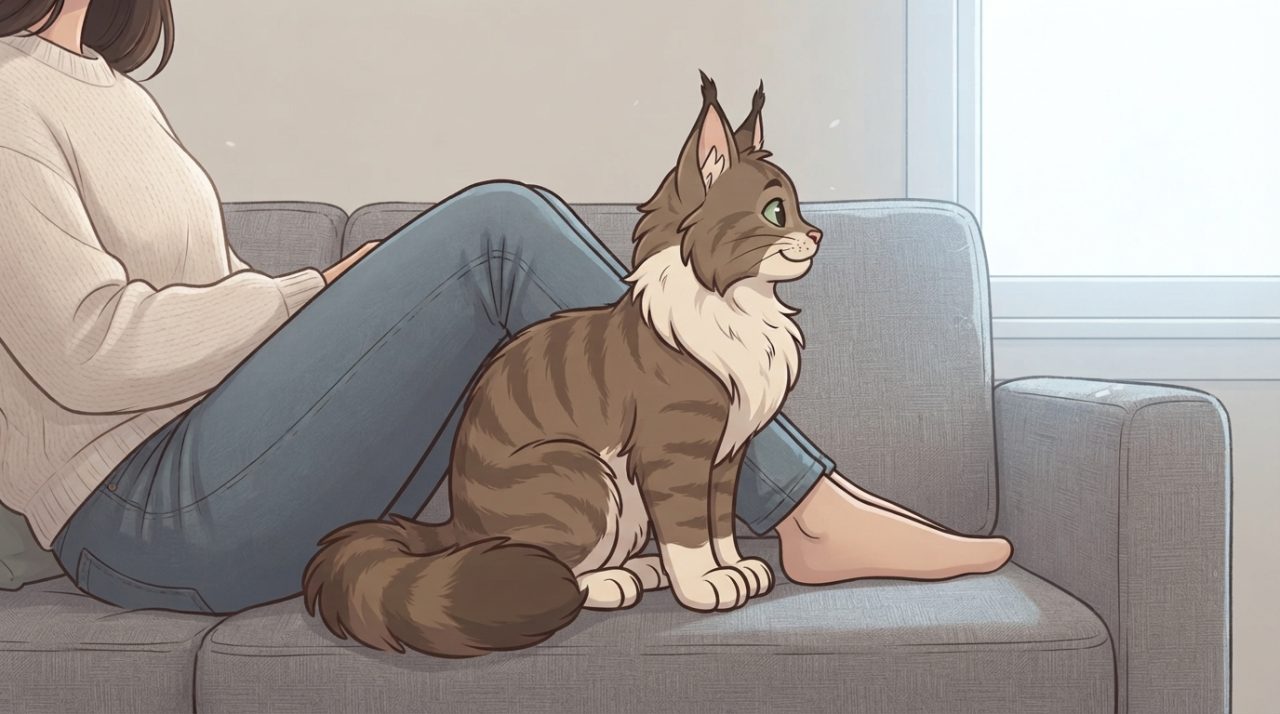
Sitting next to you, not on you. Luna’s favorite spot is right next to me on the couch. Not on my lap, usually right beside me, with her body touching mine. It’s physical closeness on her terms, and honestly, it’s pretty sweet.
*Bringing you “gifts.” I once found one of my hair ties placed very deliberately on my pillow. Luna looked very proud. Maine Coons sometimes bring toys or objects to their favorite humans, and it’s a sign of bonding.
The point is: if your Maine Coon isn’t melting into your arms, don’t read that as rejection. Read the room. They’re probably showing you love in five other ways you might be overlooking.
How to Hold a Maine Coon the Right Way (So They Actually Enjoy It)
Okay, so you do want to hold your Maine Coon totally fair, they’re magnificent and life is short. Here’s what I’ve learned from five years of trial and error with Luna.
Make Sure They’re Already Calm
Trying to hold a Maine Coon mid play session is asking for scratches. Wait for the drowsy, post nap, sitting in a patch of sunlight moments. That’s your window.
Let Them Sniff and Initiate First
Crouch down, extend your hand, and let your cat sniff you before you go in for the lift. Luna will sometimes turn around and walk away (thanks, girl), but often she’ll rub her face on my hand and that’s when I know it’s okay to pick her up.
Support Their Weight Fully
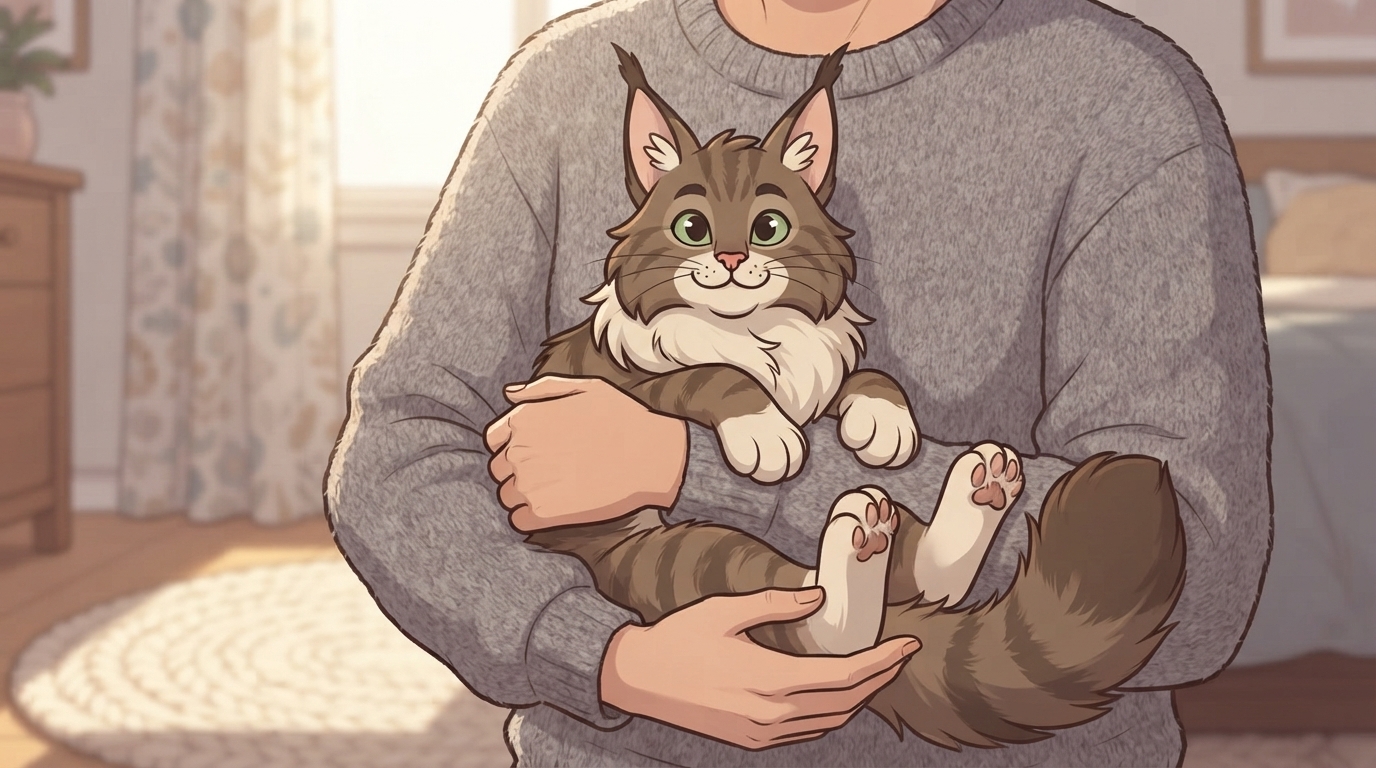
Maine Coons are heavy. Like, genuinely heavy. Luna is 12 pounds of pure floof. When you pick them up, you need one hand under the chest and one supporting the back legs. Never let a Maine Coon dangle with their back legs unsupported it feels insecure and they’ll panic.
Hold Them Against Your Body
Instead of holding them out in front of you (which feels unstable to them), bring them in close to your chest. Luna tolerates being held longest when she’s pressed against my shoulder like a big purring baby. She can feel my body heat and my heartbeat, and something about that seems to relax her.
Keep It Short at First
If you’re building up tolerance in a cat who’s not naturally friendly, don’t push it. Ten seconds of comfortable holding is better than thirty seconds that ends with a scratch and a trust setback. Gradually extend the time as they get more relaxed.
Let Them Down When They Ask
The single most important thing I can tell you: when your Maine Coon signals they want to be put down squirming, turning their head away, flattening their ears put them down. Immediately, calmly, without drama. This teaches them that being held is safe because they’re never trapped. Over time, that trust makes them more willing to be held, not less.

Do Maine Coon Kittens Like to Be Held More Than Adults?
This is a great question and the answer is: it depends on how you handle them early on.
Maine Coon kittens are curious, bouncy, and often too busy to sit still for holding. They’ve got important things to climb and chaos to cause. But kittens who are handled regularly, gently, and positively from a young age tend to develop into adults who are more comfortable with physical contact.
When Luna was a kitten, I made it a point to hold her briefly every single day, always releasing her before she got squirmy, always following up with a treat, always making the experience positive. I think that groundwork is part of why she tolerates (and occasionally seeks out) being held now.
If you’ve adopted an adult Maine Coon who wasn’t socialized much, it’s not hopeless, it just takes longer and requires more patience. Adult cats can absolutely learn to trust new people and new kinds of touch. Go slow, respect their boundaries, and let them set the pace.
Why Your Maine Coon Might Not Like Being Held (And When to Be Concerned)
Sometimes a Maine Coon who resists being held is just being a Maine Coon. But occasionally, there’s something else going on worth paying attention to.
They Haven’t Built Trust Yet
If your Maine Coon is new to your home whether a kitten or an adult rescue they may simply need more time. Trust building with cats isn’t linear and it isn’t fast. Give them space, let them initiate contact, and let them discover that your arms are safe on their own timeline.
They’re in Pain or Discomfort
This one is important: if a Maine Coon who used to tolerate or enjoy being held suddenly resists it especially if they react when touched in a specific area that can signal pain. Arthritis, an injury, an ear infection, or an internal issue can all cause a cat to become touch averse. If the change is sudden and significant, it’s worth a vet visit.
They’re Overstimulated
Maine Coons have a lot of sensory input happening all the time. After a long play session or in a noisy environment, they may simply need to decompress. In those moments, forced holding can tip into overstimulation, which feels genuinely unpleasant for them. Read their body language.
Past Negative Experiences
Rescues in particular may have histories we don’t know about. A Maine Coon who was mishandled, over restrained, or associated with being picked up with something frightening will take longer to come around and may never fully love it, and that’s okay.
Tips for Building a Stronger Bond With Your Maine Coon
Whether your goal is to have a Maine Coon who loves being held, or just a Maine Coon who trusts you deeply, these approaches have genuinely worked for me and Luna.
- Play with them every day. A good 10–15 minute interactive play session wand toy, feather teaser, laser pointer does incredible things for your bond. Maine Coons are hunters at heart and play is how they connect.
- Talk to them. I know this sounds extra, but Luna responds to my voice in a way that still gets me. Maine Coons are communicative cats and they learn the rhythm of your voice. Narrating your day at them is weirdly bonding.
- Respect their “no.” Every time you respect a Maine Coon’s signal that they want space, you’re making a deposit in the trust bank. Over time, that bank pays off in a cat who chooses to be near you more.
- Offer treats during handling. Positive association training works on cats. If your Maine Coon gets a tiny treat every time you pick them up and put them down calmly, they start associating your arms with good things.
- Create cozy shared spaces. Luna has a cat tree right next to my desk so she can be at my level while I work. She’s not on me, but she’s with me, and that’s what she wants. Meeting them where they are builds closeness.
Frequently Asked Questions
Do Maine Coons like to cuddle?
Maine Coons are affectionate cats, but their version of cuddling often looks different from other breeds. They tend to prefer being near you beside you on the couch, at your feet, or following you from room to room rather than sitting on laps or being held for long periods. That said, many Maine Coons do enjoy lap time and physical contact, especially with people they trust deeply. It varies a lot by individual cat.
Are Maine Coons lap cats?
Some Maine Coons are lap cats, but it’s not a universal trait of the breed. They’re more likely to sit beside you than on you, especially early in your relationship. Over time, with trust and positive associations, many Maine Coons do warm up to lap time but don’t be discouraged if yours prefers to be an adjacent couch companion instead.
Why does my Maine Coon follow me but not want to be held?
This is completely normal Maine Coon behavior. Following you is their way of showing affection and staying connected. Being held is a different thing entirely, requiring a level of physical vulnerability that not all cats are comfortable with. Your Maine Coon loves you and wants to be near you; they just prefer to keep their paws on the ground while doing it.
How do I get my Maine Coon to be more comfortable with being held?
Start small, be consistent, and always end on a good note. Pick them up for just a few seconds when they’re calm and relaxed, support their weight fully, then gently put them down before they get squirmy and follow it with a treat. Repeat daily. Over weeks and months, most Maine Coons become noticeably more tolerant of being held when they learn it’s always safe and brief.
At what age do Maine Coons become more affectionate?
Maine Coons often become more affectionate as they mature out of the kitten and young adult phase. Many Maine Coon owners (myself included) find that their cats noticeably mellow and become cuddlier around ages 2–4. They’re still playful and energetic, but they settle more and seek out physical closeness more readily.
Is it bad to force a Maine Coon to be held?
Yes and not just for the obvious reason (scratches). Forcing a cat to be held when they’re signaling they want down erodes trust and makes them less likely to seek physical contact with you over time. It can also cause significant stress. Always let your Maine Coon down when they ask, and never restrain them just because you want a cuddle. The long game building trust gets you more affection in the end, not less.

One More Thing Before You Go From One Maine Coon Mom to Another
Here’s what I’ve learned after five years of loving Luna: asking whether Maine Coons like to be held is kind of like asking whether they like jazz. Some do! Some are passionately against it. Most of them have opinions that evolve over time.
What Maine Coons are, without question, is deeply loving. They want to be with you. They want to know where you are, what you’re doing, and whether you might have a snack. They communicate in chirps and headbutts and strategic placement of themselves in every room you enter. That is, I love Maine Coon style.
If you’re patient, if you respect their boundaries, and if you let them set the terms for physical contact, you may well end up with a cat who drapes herself across your shoulder like a warm, purring scarf. (Luna’s going through a phase of this right now and I’m not complaining.)
And if your Maine Coon would rather sit beside you than be held? That’s still a whole lot of love. Take it.
Have a Maine Coon with strong opinions about being held or one who’s surprisingly cuddly? I’d love to hear about it in the comments. And if this helped you understand your big fluffy weirdo a little better, share it with a fellow Maine Coon parent who might need it.
Nellie J. Wilson, Editor & Maine Coon Mom
