
Estimated read time: 12 – 15 minutes
Introduction
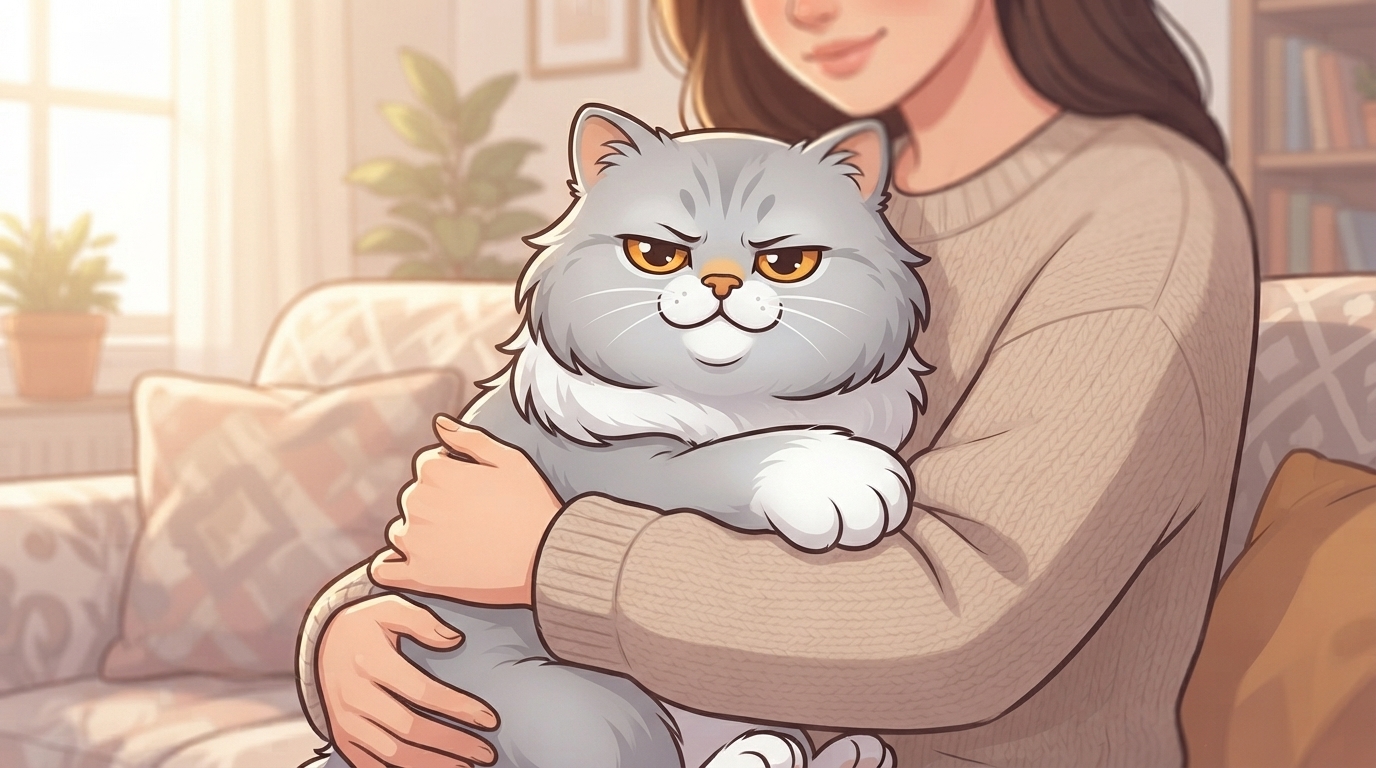
The first time I scooped Jasper up off the couch and held him against my chest like a baby, he stared at me with those big copper eyes for about three seconds then very deliberately placed one paw on my forearm and pushed. Not aggressively. Just firmly. Like he was saying, I love you, Tabitha, but this isn’t what I signed up for.
If you’re asking whether Persian cats like to be held, the honest answer is, it depends. And I know that’s not the satisfying yes or no you were hoping for, but stick with me, because once you understand why it depends, you’ll actually know a lot more about your Persian’s personality than a simple answer would ever give you.
In this article, I’m going to walk you through the truth about Persian cats and physical affection, what the breed tends to prefer, what individual personality differences look like, how to tell if your cat is enjoying being held, and what to do if your Persian would rather sit beside you than on you. By the end, you’ll have a much clearer picture of your cat’s love language.
The Persian Cat Personality – Affectionate, But on Their Terms
To really answer whether Persian cats like to be held, you have to start with who Persian cats are as a breed.
Persians are widely recognized as one of the most gentle, calm, and affectionate cat breeds out there. They’re not the kind of cats who bolt under the bed when someone new walks in the room. They don’t knock things off shelves for entertainment or demand your attention at 3 a.m. by sitting on your face. They’re quiet. They’re dignified. They like peaceful environments and steady routines.
But here’s the thing, affectionate doesn’t automatically mean lap cat. And lap cat doesn’t automatically mean loves to be held.
Persian cats tend to show their love in subtle ways. They’ll follow you from room to room without making a sound. They’ll settle near you on the couch close enough that you feel their warmth, but not necessarily on top of you. They’ll look at you with slow, sleepy blinks that cat behaviorists often call “kitty kisses.” They’ll purr when you walk into the room. All of that is genuine affection. It’s just not always expressed through cuddling.
So when someone asks “do Persian cats like to be held?” what they’re really asking is whether this gentle, loving breed expresses that love through physical closeness and being picked up. And the answer is some do, some don’t, and almost all of them have opinions about how it happens.
Why Some Persian Cats Love Being Held (And Some Really Don’t)
Let me tell you about my neighbor’s Persian, a fluffy silver girl named Duchess. Duchess will climb into your arms the second you sit down. She’ll drape herself over your shoulder like a very glamorous, very heavy scarf and stay there for an hour. My Jasper, on the other hand, prefers to sit next to me on the couch with exactly one inch of space between us close, but not touching. Same breed. Completely different approach to physical affection.
This is the part that surprises a lot of new Persian cat owners. You might have read that Persians are cuddly and affectionate and they are! but that doesn’t mean every individual cat expresses affection the same way.
Several factors influence how much a Persian cat enjoys being held,
Early socialization matters enormously – Persian cats who were handled gently and frequently from kittenhood are far more likely to enjoy being picked up as adults. If a cat wasn’t held much as a kitten, being lifted off the ground can feel genuinely alarming, they feel out of control, and that’s uncomfortable for any animal.
Temperament varies within the breed – Even within a litter, you’ll find bold kittens and cautious ones, snuggly kittens and independent ones. Breed tendencies give you a general picture, but your individual cat has their own personality layered on top of that.
Past experiences shape preferences – A Persian adopted from a shelter or rescue may have had experiences positive or negative that influence how they feel about human touch. Cats who were handled roughly or inconsistently often need more time and patience before they feel safe being held.
Health and physical comfort play a role. If being held is physically uncomfortable because of their position, because they’re being squeezed too tight, or because they’re dealing with an achy joint a cat will start to resist it. I always make sure Jasper feels fully supported when I do pick him up, which he tolerates much better than when I used to hold him more awkwardly.
How to Tell If Your Persian Actually Enjoys Being Held
This is where a lot of people go wrong. They pick up their Persian, the cat sits there without struggling, and they think, great, my cat loves this. But tolerating something and genuinely enjoying it are two very different things.
Cats are masters of endurance. Some cats will sit stiffly in your arms, body tense, tail lashing slowly, waiting for you to put them down and their owners interpret this as contentment because the cat didn’t scratch or yell. That’s not a happy cat. That’s a patient one.
Here’s how to tell if your Persian is genuinely comfortable being held,
Signs your Persian is enjoying it,
- Body is relaxed and loose, not stiff
- Purring (a real, relaxed purr not the tense, low purr some cats do when anxious)
- Head butting or rubbing against your chin or chest
- Kneading (that biscuit making motion with their paws)
- Slow blinking or eyes half closed
- They settle in and stay without pushing off
- When you put them down, they come back for more
Signs your Persian is just tolerating it,
- Body is tense or rigid
- Ears flattened or rotated backward
- Tail swishing or lashing
- Skin twitching
- Trying to push away with their paws (like Jasper’s very diplomatic paw on arm move)
- Looking around for an exit
- The moment you set them down, they immediately move away and don’t return
Learning to read these signals changed everything for me and Jasper. I stopped trying to hold him the way I wanted to and started noticing what he was actually telling me. It made our relationship so much better and honestly, it made the moments when he does choose to climb into my lap feel genuinely special.

The Right Way to Hold a Persian Cat
If your Persian does enjoy being held or if you’re working on building that trust how you hold them makes a massive difference.
Persian cats are not small animals. A fully grown male Persian can weigh anywhere from nine to fourteen pounds, and a lot of that weight is coat. When a cat feels unsupported, being picked up feels like falling, and that sensation triggers a panic response even in otherwise relaxed cats.
Here’s what works for most Persians,
Always support their back legs – This is the biggest one. When a cat’s back legs are dangling, they feel unstable and out of control. Slide one hand under their hindquarters and let their back legs rest on your forearm. Their front paws can rest against your chest or shoulder.
Keep them close to your body – A cat held at arm’s length feels vulnerable. Keeping them pressed gently against your chest gives them a solid anchor point and makes them feel safer.
Let them choose their position – Some cats prefer to face outward. Some like to be held chest to chest like a baby. Some want to drape over your shoulder. Let your Persian shift around a little to find what feels right, don’t force a specific position.
Keep your movements calm – Don’t walk quickly, make sudden turns, or reach for things while holding your cat. To them, those sudden movements feel unpredictable and unsafe.
Keep hold sessions short at first – If you’re working on getting a reluctant Persian used to being held, start with just ten or twenty seconds. Put them down before they ask to be put down. Do this consistently, and you’ll gradually build tolerance and even enjoyment.
Jasper went from doing his paw push thing every single time I picked him up to occasionally staying in my arms for a full few minutes as long as I hold him properly and keep things calm. Progress is possible. It just takes patience.

Persian Cats and Physical Affection – Other Ways They Show Love
Here’s something I want to say directly to anyone who feels a little disappointed that their Persian isn’t a snuggle on demand cat, please don’t take it personally. And don’t try to force closeness that your cat hasn’t chosen, it genuinely damages trust.
Persian cats have a whole language of affection that doesn’t involve being held, and once you start recognizing it, you’ll realize your cat is probably showing you love in ways you’ve been overlooking.
Proximity is love – If your Persian follows you from room to room, that’s not random. They want to be near you. They’ve chosen to be wherever you are.
The slow blink is huge – When Jasper looks at me across the room and does a long, slow blink, that’s him saying he feels safe and content in my presence. Blink back at him slowly, with soft eyes. It’s a real form of communication.
Grooming is intimate – If your Persian licks your hand or your hair, that’s a significant gesture. Cats groom the cats (and people) they trust most.
Vocalizing for you specifically – Persian cats aren’t big talkers, so when your cat does chirp or meow at you when you come home, when you walk into the kitchen that’s affection.
Sleeping near you – Even if Jasper won’t cuddle, he often sleeps at the foot of my bed. That’s a choice. He could sleep anywhere. He picks the room I’m in.
Learning to appreciate these expressions of love made me a much better Persian cat owner. And honestly? The relationship feels more real now because I understand what Jasper is actually saying.
How to Encourage a Persian Cat to Be More Comfortable With Being Held
If your Persian currently doesn’t enjoy being held and you’d like to change that or at least get to a more neutral place it’s absolutely possible with the right approach. The key word is gradual.
You cannot rush a cat into trusting you. Trying to force it will set you back, not forward.
Start at ground level. Before you ever pick your Persian up, work on building comfort with touch. Pet them when they come to you. Let them sniff your hand before reaching for them. Scratch behind the ears and under the chin the spots most cats enjoy and watch for signs that they’re leaning in.
Then work up to brief lifts. Pick them up for just a few seconds, not walking around with them, just lifting gently, saying something soft, and setting them right back down on their terms. Reward them with a small treat immediately after. Do this several times a day.
Over time, gradually extend the duration. Add five seconds, then ten. Move while holding them. Walk to another spot in the room. Keep it low key.
Always end on a positive note. Put them down before they struggle to get down. This keeps the whole experience feeling voluntary and safe.
I want to be honest with you, some Persian cats will come around to enjoying being held if you take this approach. Others will reach a comfortable tolerance but never become cuddle cats. And that’s okay. Your goal isn’t to have a cat who performs affection, it’s to have a cat who trusts you. Everything else follows from that.

FAQ: Do Persian Cats Like to Be Held?
Are Persian cats generally affectionate with their owners?
Yes, genuinely but Persian cats tend to show affection on their own terms. They’re devoted, loyal, and love being near their people. They just don’t always express that through cuddling or demanding to be picked up. Think of them as the kind of friend who shows up quietly and stays by your side, rather than the kind who tackles you with a hug.
My Persian squirms when I pick them up. Does that mean they don’t like me?
Not at all. Squirming when held doesn’t mean your cat dislikes you, it often just means they’re uncomfortable with the physical sensation of being lifted, or with how they’re being held. Try supporting their back legs fully and holding them close to your chest. Many cats who squirm with poor support are totally fine when held correctly.
How do I know if my Persian actually likes being held versus just tolerating it?
Look for a relaxed body, soft eyes or slow blinking, purring, and kneading. A cat who’s just tolerating being held will have a stiff body, may have ears slightly back, and will move away the moment you put them down without looking back. A content cat stays loose and may even nuzzle into you.
At what age do Persian cats become more cuddly?
Many Persian cats mellow with age. Kittens are often squirmy and energetic, but Persian cats tend to grow calmer and more affectionate as they mature, often around two to four years old. Senior Persians frequently become very snuggly indeed. So if your young Persian isn’t into being held yet, they may grow into it.
Can I train my Persian cat to enjoy being held?
You can absolutely build a greater comfort with and tolerance for being held through patient, gradual desensitization. Start with brief lifts, offer treats, keep experiences positive, and always let the cat set the pace. Some cats become genuinely fond of it. Others reach a comfortable neutral. Either way, consistent gentle handling builds trust and that’s the foundation of everything.
A Little Love Before You Go, From a Fellow Persian Cat Mama
Do Persian cats like to be held? Some do, wholeheartedly. Some don’t, firmly. Most land somewhere in the middle willing to be held briefly, on their terms, if you do it right.
Jasper is firmly in that middle category. He’s not a snuggle on demand cat. He won’t climb into my arms and stay there while I watch TV. But he sleeps near me every night, follows me to the kitchen every morning, and occasionally when the mood strikes he’ll settle into my lap for ten or fifteen minutes before deciding he’s done. And honestly? I treasure those moments more because they’re genuinely his choice.
That’s the thing about Persians. Their love is real. It’s just expressed with a lot of dignity.
If you have a Persian who isn’t into being held, I’d encourage you to look for all the other ways they’re showing you they care because I promise, those moments are there. And if you want to work toward more physical closeness, go slowly, go gently, and let your cat lead.
I’d love to hear about your Persian’s personality in the comments below. Are they a cuddle cat or more of a dignified love type? Every one of them is different, and that’s what makes them so endlessly fascinating.
Bookmark this page to come back to, and if you found it helpful, pin it for later someone else’s Persian loving heart might need it.
About the Author
Tabitha P. Bean is a Persian cat enthusiast, writer, and the proud owner of Jasper, her beloved male Persian cat. Through her love for Jasper, she enjoys sharing helpful tips and insights to help fellow cat parents give their fluffy companions a happy, healthy, and comfortable life.
