
Estimated read time: 11 – 14 minutes
Introduction
The first time I tried to bathe my Ragdoll, Milo, I made every mistake in the book. The water was a little too cold. I forgot to put a non-slip mat in the tub. And I had the audacity to turn the faucet on with him standing right there, which sent him scrambling straight into my arms soaking wet and deeply unimpressed. We both survived, but barely.
If you’ve typed “do Ragdoll cats need baths” into a search bar at midnight, you’re probably in a similar boat. Maybe your Ragdoll got into something questionable, or you’re just trying to stay on top of grooming for that gorgeous, silky coat. Either way, I’ve got you. After years of living with Milo and plenty of trial and error bath sessions, I can walk you through everything I’ve learned, what works, what doesn’t, and whether you even need to bother in the first place.
In this article, I’ll cover how often Ragdolls really need baths, how their unique coat affects the whole process, a step by step guide I actually use at home, common mistakes to avoid, and everything in between. Let’s get into it.
Do Ragdoll Cats Actually Need Baths?
The short answer: not often but sometimes, yes.
Like all domestic cats, Ragdolls are accomplished self groomers. They spend a significant chunk of their waking hours keeping their coat clean, which means in most cases, you don’t need to step in with a bottle of shampoo. Their sandpaper like tongues are remarkably effective at removing everyday dirt and distributing natural oils through the fur.
That said, there are situations where a bath genuinely helps.
- Your cat has gotten into something sticky, greasy, or potentially harmful like cooking oil, adhesive, or a cleaning product they shouldn’t be licking off.
- Their coat is looking greasy or dull despite regular brushing. Indoor cats, especially those on a lower quality diet, can sometimes build up excess oil over time.
- They’ve had a litter box accident and self grooming isn’t cutting it.
- You’re prepping for a cat show and want their coat to look its absolute best.
- Seasonal shedding is heavy and a bath can help loosen and remove all that excess fur more effectively.
For most Ragdoll owners, bathing every one to three months is perfectly adequate and for many cats in excellent coat condition, once every few months is even fine. The key is not to over bathe. Bathing too frequently strips the coat of its natural oils, which can leave the fur dull and the skin irritated.
Milo gets a proper bath roughly every six to eight weeks. Between baths, regular brushing keeps his coat looking soft and his blue eyes sparkling. (Ragdoll owners know the real reward of a well groomed Ragdoll, that absolutely unreal fluffiness when the coat is clean and brushed.)
What Makes the Ragdoll Coat Different and Why It Matters for Bath Time
Before you break out the shampoo, it really helps to understand what you’re working with. Ragdolls have a coat that’s genuinely different from most other long haired breeds, and that difference affects how you should approach bath time.
Ragdolls are a semi longhaired breed, but here’s the key thing, unlike Persians, Maine Coons, or Norwegians, Ragdolls have little to no dense undercoat. Their fur is primarily a single, silky topcoat soft, plush, and often compared in texture to rabbit fur. Because of this, Ragdolls shed less and mat far less than other long haired cats, which is one of the reasons they’re considered relatively low maintenance on the grooming front.
However, that same silky texture creates a couple of bath specific quirks.
- Shampoo spreads easily which sounds convenient, but it also means it’s very easy to over apply. A small coin sized amount is usually all you need.
- Rinsing takes longer than you’d expect. That silky coat holds onto soap residue surprisingly well. Any shampoo left behind can cause itching, flaking, or dullness so thorough rinsing is non negotiable.
- The coat can take a long time to dry. Even without a heavy undercoat, that semi long fur holds moisture. You’ll want to be patient (and possibly recruit a low heat blow dryer).
The fur is longest around Milo’s neck ruff, his stomach, and what Ragdoll people affectionately call his “britches” the feathery fur on the back of his hind legs. These areas need extra attention during both rinsing and drying.
Understanding all this before you even turn the tap on makes the whole experience go much more smoothly. Trust me, learning the hard way takes longer.
How to Bathe a Ragdoll Cat at Home: Step by Step
After a few bumpy early attempts with Milo, I landed on a process that actually works. Here it is, start to finish.
Step 1: Gather Everything Before You Start
The absolute worst thing you can do is realize mid bath that the towels are in the other room. Set everything up in advance:
- Cat safe shampoo (formulated for cats never human shampoo, which has a different pH and can irritate feline skin)
- A non slip mat for the sink or tub bottom
- Two soft towels one for wrapping, one for patting dry
- A small pitcher or cup for pouring water gently over the coat
- A wide toothed comb or slicker brush for post bath grooming
- High value treats the good stuff, reserved just for bath time
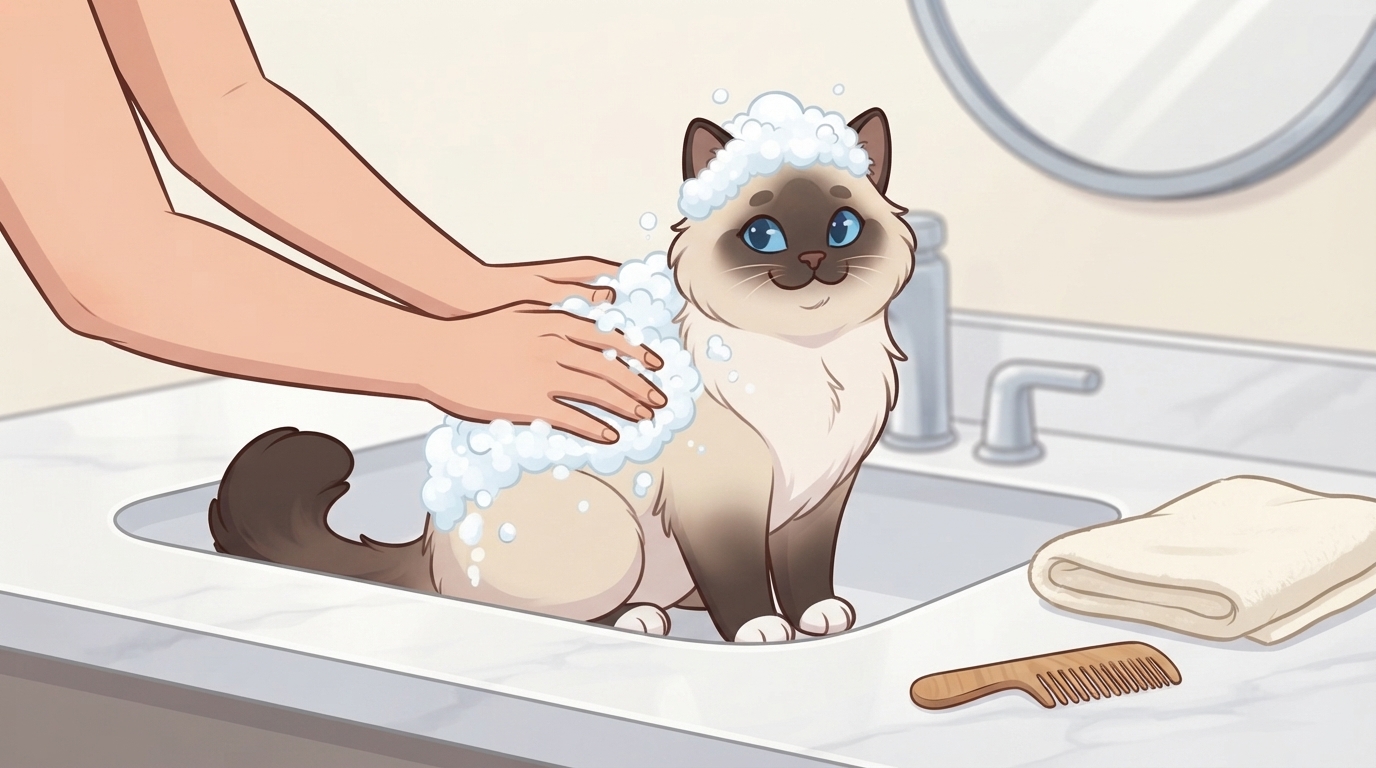
I bathe Milo in the bathroom sink rather than the bathtub, which gives me much better control. A laundry sink or kitchen sink also works well for larger Ragdolls.
Step 2: Trim Nails at Least 24 Hours Before
Don’t skip this step. Trimming your cat’s nails at least a day before the bath protects you from scratches if things get wiggly and it protects them from accidentally snagging the mat or themselves. Milo is generally calm during baths, but there are still moments when he decides he’s had enough and pushes off with his back feet. Trimmed nails make that about 90% less catastrophic.
Step 3: Brush Thoroughly Before Any Water Touches the Fur
Never wet tangled fur. Water causes knots and mats to tighten, making detangling afterward genuinely painful for your cat. Before bath time, give Milo a thorough brush by paying special attention to his neck ruff, belly, and britches, where tangles are most likely to lurk.
Use a wide toothed stainless steel comb for detangling and a soft slicker brush to finish off and remove loose hair.
Step 4: Prepare the Water First
Fill the sink with one to two inches of lukewarm water before bringing your Ragdoll into the room. The sound of running water can stress cats who aren’t used to baths, especially the initial surge from the tap. Test the temperature on your wrist. It should feel comfortably warm, not hot.
When I first started bathing Milo, I’d fill the sink completely before bringing him in. Now that he’s more bath tolerant, I sometimes let him stand in the empty sink while I pour water over him with the pitcher, which he seems to prefer.
Step 5: Wet the Coat Gently and Slowly
Place your Ragdoll in the sink and let them settle for a moment before you do anything. Use the pitcher to gently pour lukewarm water over the coat, starting at the back and working forward. Avoid the face and ears entirely, these areas are cleaned separately with a damp cloth or cotton pad.
Ragdolls’ coats can be deceptively water resistant at first. Take your time getting the fur fully saturated before applying shampoo.
Step 6: Apply Shampoo Less Is More
Dispense a small amount of cat shampoo (about a coin sized blob) and rub it between your palms first to create lather before applying it to the coat. Work from the neck toward the tail, massaging gently. Avoid the face, inside the ears, and directly around the eyes.
Because Ragdoll fur is silky, shampoo really does spread with very little product. Overloading will just make rinsing harder. Some Ragdoll breeders also recommend using a cat safe degreasing shampoo occasionally (such as a diluted Goop style degreaser) to remove oil buildup, followed by a regular cat shampoo.
Step 7: Rinse, Rinse, Rinse
This is the step most people underestimate. Rinse until the water runs completely clear then rinse once more for good measure. Any soap residue left in the coat will cause itching and dullness. Use the pitcher to direct water carefully, and use your fingers to work through the fur and make sure nothing’s left behind.
If you choose to use a cat safe conditioner (which can help keep the coat soft and tangle free), apply it after rinsing the shampoo, let it sit for a minute, then rinse again just as thoroughly.
Step 8: Dry Thoroughly Don’t Rush This
Wrap your Ragdoll snugly in a soft towel immediately after the bath and gently pat (don’t rub!) the excess water out of the fur. Rubbing creates tangles and can stress the coat. Work from head to tail, squeezing gently.
Some Ragdolls tolerate a blow dryer set to low heat; others find it terrifying. Milo falls somewhere in the middle. He tolerates it if I keep the dryer at a safe distance and don’t point it at his face. If your Ragdoll hates the noise, stick to towel drying and let them finish the job in a warm room.
Do not let your Ragdoll outside or in a cold room until they are fully dry. A damp Ragdoll can get chilled surprisingly quickly, and a damp coat also attracts more dust and debris.
Step 9: Comb Through and Reward Generously
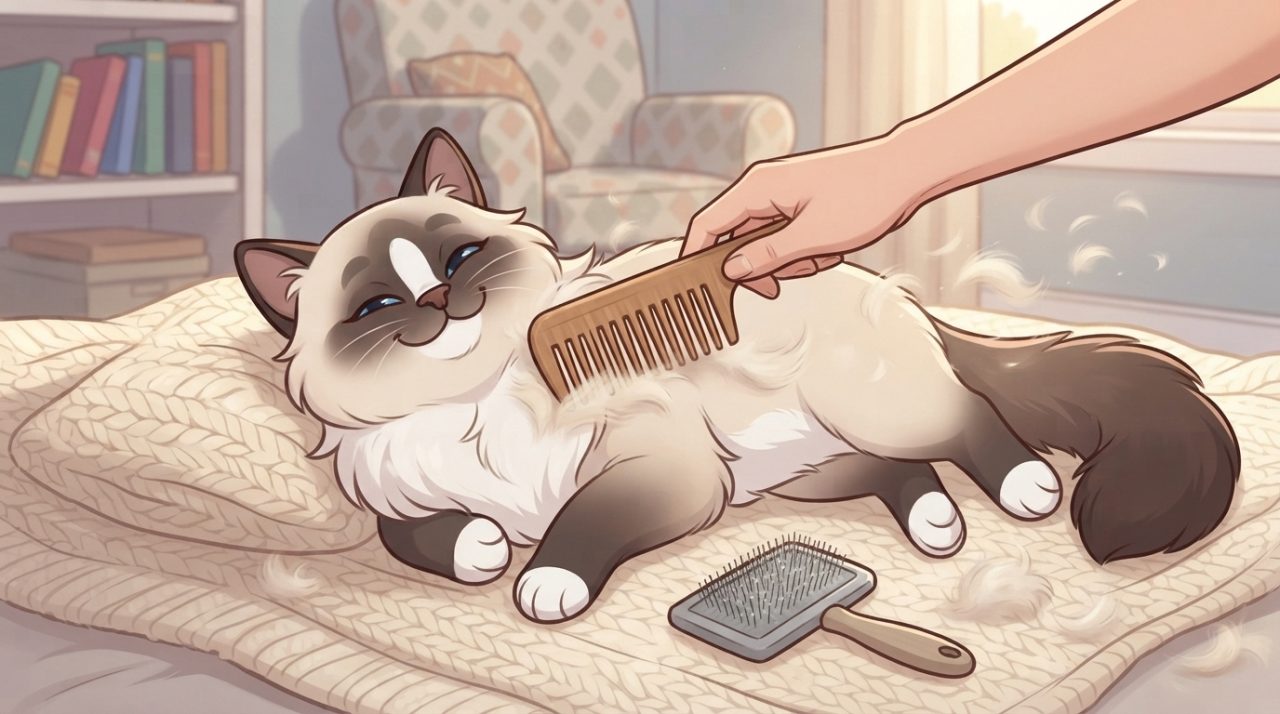
Once your Ragdoll is dry, give the coat a final comb through with a wide toothed comb. Start with the areas most prone to tangles (belly, britches) and finish with the back and tail. This step brings out the full, fluffy glory of that Ragdoll coat.
Then: treats, cuddles, and praise. Lots of them. Every positive association Milo has with bath time makes the next one easier.

Common Mistakes Ragdoll Owners Make at Bath Time
Over the years and a few slightly traumatic early sessions I’ve made most of these mistakes myself. Learn from my misadventures with Milo.
Using the wrong shampoo. Human shampoo, baby shampoo, and dish soap are all off the table. Cats have more sensitive and differently pH balanced skin than humans. Always use a shampoo formulated specifically for cats. Avoid products containing parabens or harsh sulfates.
Turning the faucet on with the cat in the sink. The sudden sound and rush of water can startle even a calm Ragdoll into full panic mode. Always pre fill or use a pitcher.
Skipping the pre bath brush. Wet tangles tighten into mats. Always brush first, no exceptions.
Getting water in the ears. Moisture in a cat’s ears can lead to irritation and ear problems. Keep a gentle hand around the head and clean the face separately with a warm, damp cloth.
Not rinsing long enough. Especially with Ragdolls’ silky coats, soap residue is a real issue. Rinse more than you think you need to.
Bathing too often. Once a week baths strip natural oils and can leave the coat dull and the skin irritated. For most Ragdolls, once every four to eight weeks is plenty.
Ending on a bad note. If your cat panics and you end the bath in chaos, that’s what they’ll remember. Where possible, end calmly, dry gently, and always follow up with treats.
How to Make Your Ragdoll More Comfortable with Baths Over Time
One of the nicest things about Ragdolls as a breed is their temperament. They’re famously easygoing, which does give you a head start compared to, say, trying to bathe a Bengal or an Abyssinian. But “easygoing” doesn’t automatically mean “happy to be dunked in a sink.” Comfort with bath time is built gradually.
Start early if you can. Kittens introduced to baths when young tend to be far more tolerant as adults. If you’ve just brought home a Ragdoll kitten, start by getting them used to the feel of damp hands, then a wet washcloth, before ever attempting a full bath.
Keep early baths short. The goal isn’t a perfect grooming session, it’s a neutral or positive association. Even if the first few baths are brief and a bit imperfect, consistency builds tolerance.
Use the same spot each time. Familiarity helps. Milo is much calmer in the bathroom sink than anywhere else because it’s his designated “bath spot.”
Talk to them the whole time. I know this sounds silly, but Milo visibly calms down when I keep up a steady stream of calm, low pitched chatter. Your voice is a signal that you’re in control and everything is fine.
Reserve special treats exclusively for bath time. Whatever Milo’s current favorite is that treat only appears on bath days. It’s become a bit of a ritual, and I genuinely think he’s learned to associate the whole sequence with something nice at the end.
What About Between Baths? Keeping Your Ragdoll’s Coat Clean Day to Day
Baths are just one piece of the grooming puzzle. For Ragdolls, regular maintenance between baths makes a huge difference in both coat quality and how often a full bath is actually necessary.
Brush at least two to three times a week. Milo gets a quick brush most days, but a thorough session two to three times weekly is the minimum I’d recommend for maintaining that signature Ragdoll fluffiness. Use a stainless steel wide toothed comb for general detangling and a soft slicker brush to finish. Pay special attention to the neck ruff, armpits, belly, and britches, the spots most likely to develop tangles.
Spot clean as needed. A damp warm washcloth or unscented pet wipe can handle minor dirt, sticky paws, or a messy chin without requiring a full bath. Milo sometimes manages to get his magnificent ruff into his food bowl, and a warm cloth sorts that out in about thirty seconds.
Monitor the coat for oiliness or dullness. If the fur starts to look flat or feel greasy rather than silky, that’s a sign it’s time for a bath even if one isn’t scheduled. Ragdolls’ single layer coats can show oil buildup more noticeably than breeds with a dense undercoat.
Keep the litter box clean. This sounds unrelated to grooming, but it directly affects how clean your Ragdoll stays. A clean litter box means less mess tracked through the coat and fewer emergency bath situations.
Diet matters for coat condition. A high quality diet rich in omega 3 and omega 6 fatty acids keeps the coat naturally soft and less prone to dullness. This is one of those things that works quietly in the background, but over time, the difference is visible.

FAQ : Bathing Ragdoll Cats
How often should I bathe my Ragdoll cat? For most Ragdolls, a bath every four to eight weeks is plenty. If your cat is an indoor only cat with a well maintained coat and regular brushing, you might only need a full bath every two to three months. Watch your cat’s coat if it starts to look oily, dull, or matted, that’s your signal it’s time, regardless of the calendar.
Can I use baby shampoo on my Ragdoll cat? It’s best to avoid it. While baby shampoo is gentler than regular human shampoo, it’s still formulated for human skin pH, which is different from a cat’s. Stick to shampoos specifically designed for cats ideally ones free from parabens, sulfates, and artificial fragrances.
My Ragdoll hates baths. Is it okay to skip them entirely? For a healthy indoor Ragdoll with a well maintained coat, infrequent baths are perfectly fine. Regular brushing, spot cleaning, and a good diet can keep most cats clean without full baths. That said, there will be times a messy accident, a sticky substance, a health related grooming need when a bath becomes genuinely necessary. Building at least some tolerance to the process while your cat is young is worth it for those moments.
Should I use conditioner on my Ragdoll after shampooing? A cat safe conditioner can help keep the coat soft, reduce static, and minimize tangles especially if you bathe regularly. It’s not essential, but many Ragdoll owners (myself included) find it makes a noticeable difference in coat texture. Always rinse thoroughly after conditioner.
What do I do if my Ragdoll panics during a bath? Stay calm, speak softly, and work quickly but gently to finish. If the distress is severe, it’s okay to abort the bath, towel them off as best you can, and try again another day with more gradual preparation. Never force the issue to the point of genuine trauma that makes every future bath harder. If bathing is consistently very difficult, a professional groomer experienced with cats is absolutely a valid option.
Can I bathe my Ragdoll kitten? Yes and in fact, getting your kitten used to baths early is a smart move. Keep early baths very short, use warm (not hot) water, and make the whole experience as calm and positive as possible. Kittens who experience baths without distress tend to be much more relaxed about them as adults.
Is it normal for my Ragdoll to shiver after a bath? Some mild shivering right after a bath is normal. Your cat is wet and potentially a bit stressed. Wrap them in a warm towel immediately and dry them as quickly and gently as possible. If shivering continues after they’re fully dry and warm, or if you notice other concerning signs, a check in with your vet is a good idea.
A Quick Note Before You Leave, From a Fellow Ragdoll Mama
Bathing Milo has gone from a stressful scramble to something we’ve both gotten genuinely comfortable with and that shift happened through consistency, patience, and learning from my mistakes. Do Ragdoll cats need baths? Not constantly but occasionally, and done well, bath time can actually be a bonding experience with your big, gorgeous fluffball.
The keys I keep coming back to: prepare everything in advance, never rush, rinse more thoroughly than you think you need to, and always end with treats and affection. Milo now trots into the bathroom on bath days with what I can only describe as resigned dignity which, for a Ragdoll, is basically enthusiastic cooperation.
If you’ve recently bathed your Ragdoll for the first time, I’d love to hear how it went in the comments. And if you have tips that work for your cat that I haven’t mentioned, share them! We’re all figuring this out together, one slightly damp cat at a time.
Shirley E. Butler is a Ragdoll cat enthusiast, editor, and the proud owner of Milo, her blue eyed male Ragdoll.
