
Estimated read time: 13 – 15 minutes
Introduction
If you’ve ever run your fingers through a Ragdoll cat’s coat and thought, “Wow, this is impossibly soft,” you already know why grooming matters so much with this breed. That beautiful, silky fur doesn’t just happen on its own. It takes a little work, the right tools, and a consistent routine. So how often should you brush a Ragdoll cat? The short answer: at least two to three times a week, and daily during shedding season. But there’s a lot more to it than that.
I’m Shirley, editor here at the site and proud owner of Milo, my blue eyed male Ragdoll. Milo has been part of my life for several years now, and grooming him has been one of the most rewarding and occasionally humbling parts of owning a Ragdoll. I’ve made plenty of mistakes along the way (RIP to the first brush I bought that he absolutely refused to tolerate), and I’ve learned what actually works.
In this guide, I’ll walk you through everything you need to know about brushing your Ragdoll cat. how often to do it, the best tools to use, how to make it an enjoyable experience for both of you, and what signs to watch for that tell you your grooming routine needs adjusting. Whether you’re a new Ragdoll owner or you’ve had your cat for years, there’s something here for you.
Why Ragdoll Cats Need Regular Brushing
Before we get into frequency, it helps to understand why Ragdolls need more grooming attention than your average shorthaired cat.
Ragdoll cats have a semi long, plush coat that’s often described as rabbit like in texture. Unlike breeds with a dense double coat such as the Maine Coon or Norwegian Forest Cat Ragdolls have a single layer coat that’s less prone to matting than you might expect. That’s one of the breed’s great grooming advantages. But don’t let that fool you into thinking they’re low maintenance.
Their long fur still
- Collects loose hair that can form knots if left unchecked
- Picks up debris, dust, and environmental particles
- Sheds seasonally, with heavier coat drops in spring and fall
- Requires regular detangling around the “armpits,” behind the ears, and at the base of the tail the areas most prone to tangles
Without regular brushing, that silky coat can become dull, matted in high friction spots, and a source of more hairballs as your cat tries to groom themselves. Regular brushing distributes natural skin oils throughout the coat, keeping it shiny and healthy. It also dramatically reduces the amount of fur you’ll find on your sofa, clothes, and somehow your morning coffee.
There’s another benefit that’s easy to overlook. Brushing is an opportunity to bond with your cat and check their skin and coat for anything unusual. I’ve caught a small tangle behind Milo’s ear more than once during our grooming sessions that would have turned into a proper mat if left alone for another week.
How Often Should You Brush a Ragdoll Cat?
Let’s get specific. Here’s a practical guide to brushing frequency based on different stages of your Ragdoll’s life and year:
The General Rule: 2–3 Times Per Week
For most adult Ragdolls in a typical non-shedding period, brushing two to three times per week is the sweet spot. This keeps the coat free of loose hair, prevents minor tangles from becoming mats, and keeps things manageable without overwhelming your cat with daily sessions.
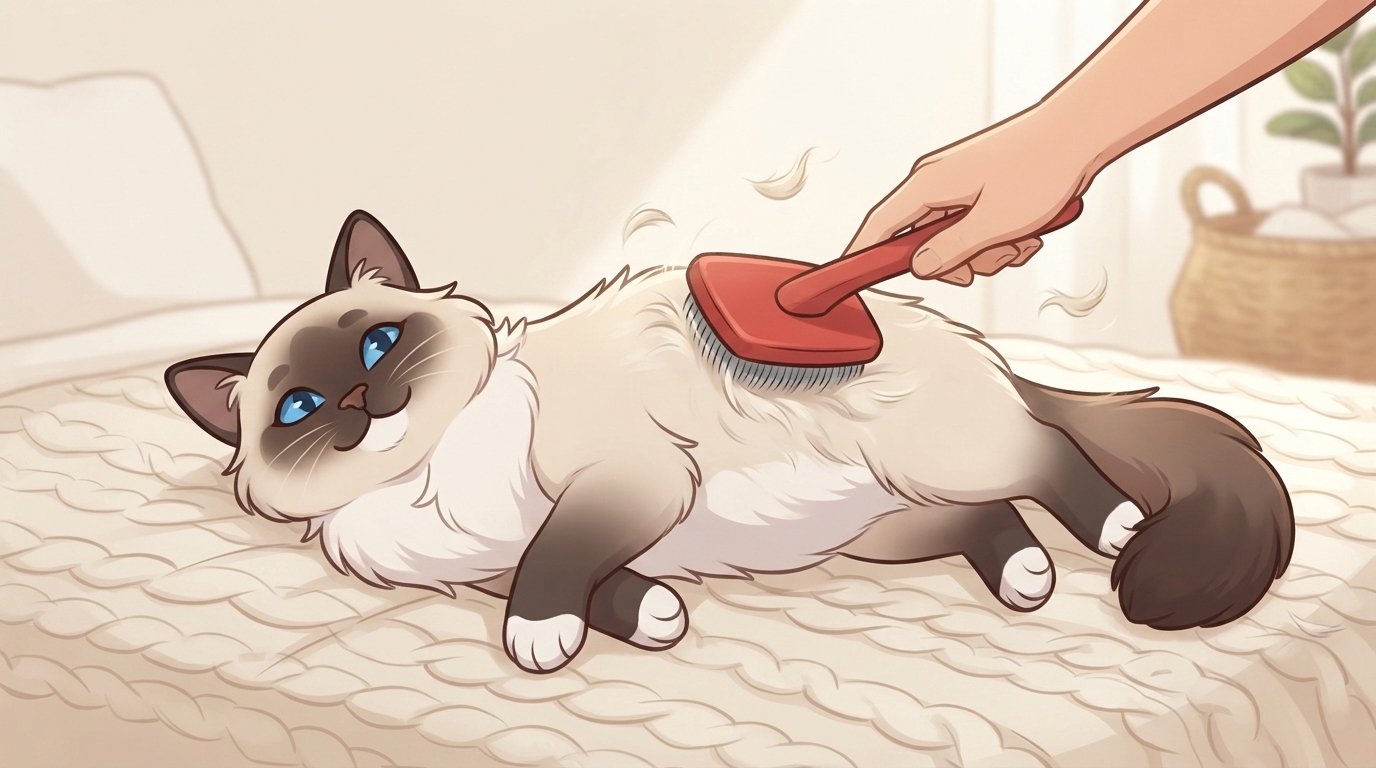
Milo does really well with every other day brushing. We have a little routine. He jumps up on the end of the bed, I get out his slicker brush, and we have a good fifteen minutes together. It took a while to get there, but now he actually seems to enjoy it.
During Shedding Season: Daily Brushing
Ragdolls shed more heavily twice a year typically in spring (March to May) and fall (September to November) as they transition between seasonal coats. During these periods, you’ll want to bump your sessions up to daily brushing, or at least every other day if your Ragdoll really resists more frequent grooming.
Signs your Ragdoll is in a heavy shed
- Noticeably more fur on furniture and clothing
- More loose hair coming out during petting
- Slightly duller coat appearance before new growth comes in
- Increased self grooming (which can lead to more hairballs)
A de-shedding tool or an undercoat rake becomes especially valuable during these periods. I’ll talk more about specific tools in the next section.
For Kittens: Short, Gentle, Frequent Sessions
Ragdoll kittens don’t need as much brushing as adults, their coats are still developing. But starting grooming early is critical for building positive associations with the brush. Aim for short sessions of 5 minutes, a few times per week, focusing more on getting them comfortable with the process than on any actual grooming need.
I wish I’d been even more consistent with Milo as a kitten. He went through a phase around 18 months where he became quite wriggly during grooming, and I’m convinced it was because I’d let things slide a bit when he was young. Lesson learned.
For Senior Ragdolls: Gentler, More Frequent Attention
Older Ragdolls may not groom themselves as efficiently as they once did. Stiff joints can make it harder for them to reach certain areas. Seniors often benefit from daily gentle brushing, using softer tools and lighter pressure. Pay extra attention to spots they can’t easily reach the lower back, hindquarters, and behind the ears.
The Best Brushes for Ragdoll Cats
Having the right tools makes a huge difference. Use the wrong brush and you’ll either miss half the loose fur or irritate your cat’s skin neither of which does anyone any favors.
Here’s a breakdown of the most useful brushes for Ragdoll cats:
1. Slicker Brush
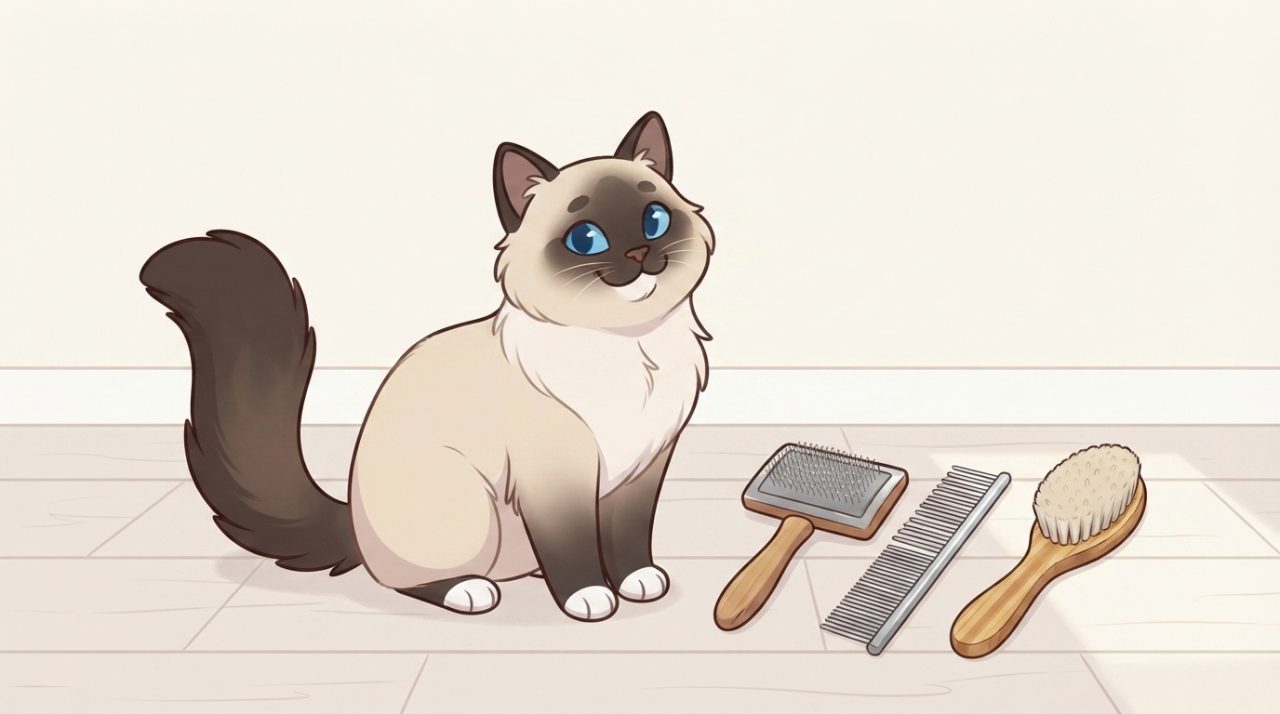
A slicker brush is the workhorse of your Ragdoll grooming kit. It has fine, short wire bristles on a flat or slightly curved pad and is excellent for general detangling and smoothing the topcoat. Look for one with flexible bristles and a comfortable grip you’ll be holding it for a while.
Best for: Regular maintenance brushing 2–3 times per week.
2. Wide Tooth Metal Comb
A stainless steel wide tooth comb is non-negotiable for Ragdoll owners. After brushing with a slicker, run this comb through the coat especially in high tangle spots like behind the ears and under the “armpits.” If it glides through smoothly, you’re done. If it catches, you’ve found a tangle to work out.
Best for: Finishing and tangle detection.
3. Undercoat Rake or De shedding Tool
During shedding season, an undercoat rake or a tool like a Furminator (designed for long haired cats) can remove loose fur that a regular slicker misses. Use these sparingly no more than once a week as overuse can irritate the skin or damage the coat.
Best for: Heavy shedding periods.
4. Soft Bristle Brush
A natural bristle brush is great for final passes to smooth and add shine. It’s also the gentlest option for kittens or cats with sensitive skin who find the slicker a bit much.
Best for: Finishing touch, kittens, senior cats.
Brush Type | Best Use Case | How Often to Use |
Slicker Brush | General detangling & maintenance | 2–3x per week |
Wide Tooth Metal Comb | Tangle detection & finishing | Every session |
Undercoat Rake / De shedder | Heavy shedding removal | Once a week max |
Soft Bristle Brush | Smoothing, sensitive cats, kittens | As needed |
Milo’s current setup is a slicker brush followed by a metal comb, with an undercoat rake brought in during spring and fall. It took a few tries to find tools he was happy with he hated anything with really stiff bristles at first.
How to Make Brushing a Positive Experience for Your Ragdoll
Even the most cooperative Ragdoll can have off days. And if your cat wasn’t introduced to brushing early, you might be starting with a cat who’s already skeptical. Here’s how to make grooming sessions something your Ragdoll actually tolerates and maybe even looks forward to.
Start Slow and Keep Sessions Short
If your cat is new to brushing or anxious about it, start with sessions of just 3–5 minutes. The goal isn’t to get through a complete brush down, it’s to end the session before your cat hits their limit and walks away (or bites you).
Choose the Right Time
Never try to groom a cat that’s already worked up, playful, or hunting something. The best time is after a meal or a nap, when your Ragdoll is naturally relaxed. Milo is most amenable to brushing after his afternoon nap, he’s drowsy, warm, and just wants to be close.
Use Treats Strategically
High value treats something your cat doesn’t get at other times can do a lot of work in making brushing feel like a good thing. Try offering a treat before, during (if they’re okay with being hand fed mid session), and after brushing.
Follow a Consistent Routine
Cats are creatures of habit. Doing your grooming sessions at roughly the same time of day, in the same spot, with the same brush, helps signal to your cat. this is a familiar, safe thing. Consistency is probably the single biggest factor in Milo’s tolerance for grooming.
Know Where Your Cat Likes (and Doesn’t Like) to Be Touched
Most Ragdolls enjoy being brushed along the back and sides. Many are less thrilled about their belly, inner thighs, and face. Work with your cat’s preferences, focus on the areas they enjoy and gradually, gently introduce the trickier spots over time rather than forcing it.
Watch for Signs of Overstimulation
Ragdolls are famously docile, but every cat has their limits. Watch for:
- Tail flicking or lashing
- Skin rippling along the back
- Ears flattening
- Turning to look at your hand
If you see these, wrap up the session. A short session that ends on a positive note is worth ten times more than a long session that ends with your cat fleeing under the bed.
Dealing with Mats and Tangles in Ragdoll Fur
Even with regular brushing, Ragdolls can develop tangles especially in those friction heavy zones I mentioned earlier. Here’s how to handle them without causing your cat (or yourself) stress.
Preventing Mats Before They Start
The best strategy is prevention:
- Brush high risk areas every session, not just occasionally
- Use your comb to check for tangles after each brush don’t assume the slicker got everything
- Keep the areas behind the ears, under the arms, and at the base of the tail as part of your standard routine
Working Out Small Tangles
For a small tangle (one that gives a little when you gently pull), apply a pet safe detangling spray (many are available for cats just check the label) and use your fingers to tease the tangle apart from the tip inward. Then follow with a wide tooth comb, working outward to inward.
Never yank a comb or brush through a mat. This hurts, damages the fur, and will make your cat trust brushing a lot less.
When to Call a Professional Groomer
If a mat is tight against the skin, too large to work through, or in a spot your cat won’t allow you to reach, call a professional groomer. Trying to cut out a mat with scissors yourself is genuinely risky, the skin of cats is thinner and more loosely attached than most people realize, and it’s very easy to accidentally nick it.
A professional groomer who’s experienced with Ragdolls can work through or remove mats safely. In some cases, if mats are extensive, a lion cut or belly trim might be recommended, not the most glamorous look, but it lets the coat grow back fresh and mat free.
Other Grooming Needs to Pair With Brushing
Brushing is the cornerstone of Ragdoll grooming, but it’s not the whole picture. Here’s what else should be part of your routine:
Nail Trimming
Every 2–3 weeks, trim the tips of your Ragdoll’s claws with cat specific nail clippers. Long nails are uncomfortable for your cat and can get snagged in their coat during grooming.
Ear Cleaning
Check your Ragdoll’s ears weekly for dark wax buildup or debris. A cotton ball dampened with a vet approved ear cleaner works well for gentle outer ear maintenance. If you see anything that looks like infection or heavy buildup, check with your vet.
Eye Area
Ragdolls, especially lighter colored ones, can develop minor tear staining beneath the eyes. A damp cotton pad used gently along the inner corner of the eye each week keeps this in check.
Bathing
Most Ragdolls don’t need frequent baths every 4–6 weeks is typically enough, or only when they get into something messy. Their coat resists dirt reasonably well, and over bathing strips the natural oils that keep that silky texture intact.
Frequently Asked Questions About Brushing Ragdoll Cats
My Ragdoll hates being brushed, what should I do?
Start over from scratch with very short, treat heavy sessions. Try a different brush some cats react poorly to the feel of wire bristles and do better with a soft bristle brush to start. Go as slowly as your cat needs. If even the sight of the brush triggers stress, try leaving it near their bed for a week so they can get used to its presence before you ever use it. Patience is everything here.
Is it normal for a lot of fur to come out when I brush my Ragdoll? During shedding season, yes it can look alarming how much fur comes off. As long as your cat’s skin looks healthy (no redness, flaking, or bald patches), a heavy release of loose fur during brushing is completely normal. If you’re seeing actual bald spots, that’s worth mentioning to your vet.
Can I use a human hairbrush on my Ragdoll? It’s not ideal. Human brushes aren’t designed for the density or texture of cat fur and won’t do a great job of detangling. They may also have sharp edges that irritate cat skin. Stick to brushes specifically designed for long haired cats.
How do I know if I’m brushing too hard? Your cat will tell you flinching, skin twitching, or trying to move away are all signs you’re pressing too firmly. The brush should glide through the coat with light to moderate pressure. You’re moving loose fur and light tangles, not scrubbing. If you have to press hard, the brush isn’t the right tool for what you’re trying to do.
Does brushing replace bathing for Ragdolls? Regular brushing dramatically reduces how often you need to bathe your Ragdoll by keeping the coat clean and distributing skin oils. But it doesn’t replace bathing entirely, most Ragdolls benefit from an occasional bath to remove deeper dirt and keep the coat truly fresh. Think of brushing and bathing as complementary, not interchangeable.
When should I start brushing a Ragdoll kitten? As early as possible even at 8–10 weeks old, you can begin very short, very gentle sessions. The goal at this age is purely about building positive associations, not actual grooming. A few minutes with a soft brush and plenty of treats goes a long way toward raising an adult cat who tolerates or even enjoys grooming.
My Ragdoll has a mat that I can’t work out. What should I do? Do not try to cut it out with scissors unless you’re very experienced and very confident the risk of accidentally cutting the skin is real. Instead, apply a pet safe detangling spray, work at the edges of the mat with your fingers and a wide tooth comb, and if it won’t budge, contact a professional groomer. It’s the safest call.
A Quick Note Before You Leave, From a Fellow Ragdoll Mama
Brushing your Ragdoll cat two to three times a week and daily during shedding season isn’t just about keeping their coat looking beautiful. It’s one of the most consistent acts of care you can offer your cat. It prevents uncomfortable mats, reduces hairballs, keeps shedding manageable, and gives you a regular opportunity to check in on your cat’s overall wellbeing.
Milo and I have our brushing routine down to a fine art now. Does he sometimes decide mid session that he’s done and walks off? Absolutely. But more often than not, he settles in and purrs through the whole thing and honestly, those quiet grooming sessions are some of my favorite moments with him.
If you’re just getting started with grooming your Ragdoll, don’t be discouraged if it takes time to find your rhythm. Invest in good tools, stay consistent, and follow your cat’s lead. You’ll get there.
Have a grooming tip that’s made a difference with your Ragdoll? I’d love to hear it in the comments below. And if this guide helped you, feel free to share it with a fellow Ragdoll owner!
Shirley E. Butler is a Ragdoll cat enthusiast, editor, and the proud owner of Milo, her blue eyed male Ragdoll.
