
Estimated read time: 10 – 12 minutes
Introduction
The first time I noticed the dark, crusty buildup under Jasper’s eyes, I panicked a little. He looked at me with that regal, unbothered expression he’s famous for, but those tear stains were clearly not going anywhere on their own. I had no idea that Persian cat eye cleaning was going to become one of the most important parts of our daily routine or that it would turn into a genuinely sweet bonding moment between us.
If you share your home with a Persian cat, you already know that their gorgeous flat faces come with a few extra responsibilities. Eye discharge is one of the big ones. It’s completely normal for the breed, but letting it build up isn’t something you want to do. In this guide, I’m going to walk you through exactly how I clean Jasper’s eyes at home, the tools I use, the technique that keeps him calm, what to watch for, and how to make the whole process feel less like a chore and more like a little act of love.
Let’s get into it.
Why Persian Cats Get More Eye Discharge Than Other Breeds
Before we talk about how to clean your Persian’s eyes, it helps to understand why they need cleaning in the first place. And honestly, once you understand it, you’ll feel a lot more patient about the whole thing.
Persian cats are a brachycephalic breed that’s the fancy term for flat faced. Because of their unique skull shape, the tear ducts don’t always drain properly. Instead of tears flowing down through the nasolacrimal duct (the little drainage channel that runs from the eye to the nose), they overflow outward and down the face. That moisture sits on the fur beneath the inner corners of the eyes and, over time, oxidizes. The result? Those familiar reddish brown stains.
This isn’t a sign that your cat is sick or that anything is wrong. It’s simply anatomy. Persian cats were bred for that gorgeous flat face, and the eye discharge is part of the deal. Some Persians have it worse than others white and light colored cats show the staining more dramatically because there’s no pigment to mask it, but every Persian produces more discharge than a longer nosed breed would.
The discharge itself can vary. Some days it’s a small amount of clear or light brown crust that wipes away in seconds. Other times especially after a long nap, a dusty afternoon, or allergy season it can be thicker and more stubborn. Wind, air conditioning, and even bright sunlight can all increase tearing.
The key thing to remember is that regular cleaning prevents buildup. And buildup is what causes problems. When discharge sits on the skin too long, it creates a warm, moist environment that can irritate the delicate skin around the eye or, in some cases, lead to the kind of skin fold issues that flat faced cats are prone to. A quick daily wipe takes about 45 seconds and prevents all of that.
What You’ll Need Before You Start
Getting your supplies together before you sit down with your cat is one of those small things that makes a big difference. If you have to get up mid cleaning to find a cloth, you’ve lost the moment. Persians are patient, but they’re not infinitely patient and once Jasper decides he’s done, he is done.
Here’s what I keep on hand for Jasper’s eye cleaning routine,
Soft cotton pads or rounds – These are my go to. They’re gentle, they don’t leave fibers behind, and they’re disposable, which I appreciate from a hygiene standpoint. Avoid anything with a rough texture. The skin around a Persian’s eyes is thin and sensitive.
Unscented saline solution – Plain sterile saline (the kind sold for contact lenses or wound care) works beautifully for loosening dried discharge before wiping. You want it at room temperature, not cold straight from the bottle.
Warm water – For milder, everyday discharge, warm water on a cotton pad is often all you need. Simple and gentle.
A soft, damp washcloth – I sometimes use a warm, damp corner of a microfiber cloth for the final wipe down of the fur below the eye. It picks up residue that the cotton pad might miss.
Eye safe grooming wipes formulated for cats – These are a convenient option, especially for travel or quick touch ups. Just make sure they’re specifically labeled as safe for use around cat eyes. Avoid any wipes that contain fragrance, alcohol, or tea tree oil. Those ingredients have no business being near your cat’s face.
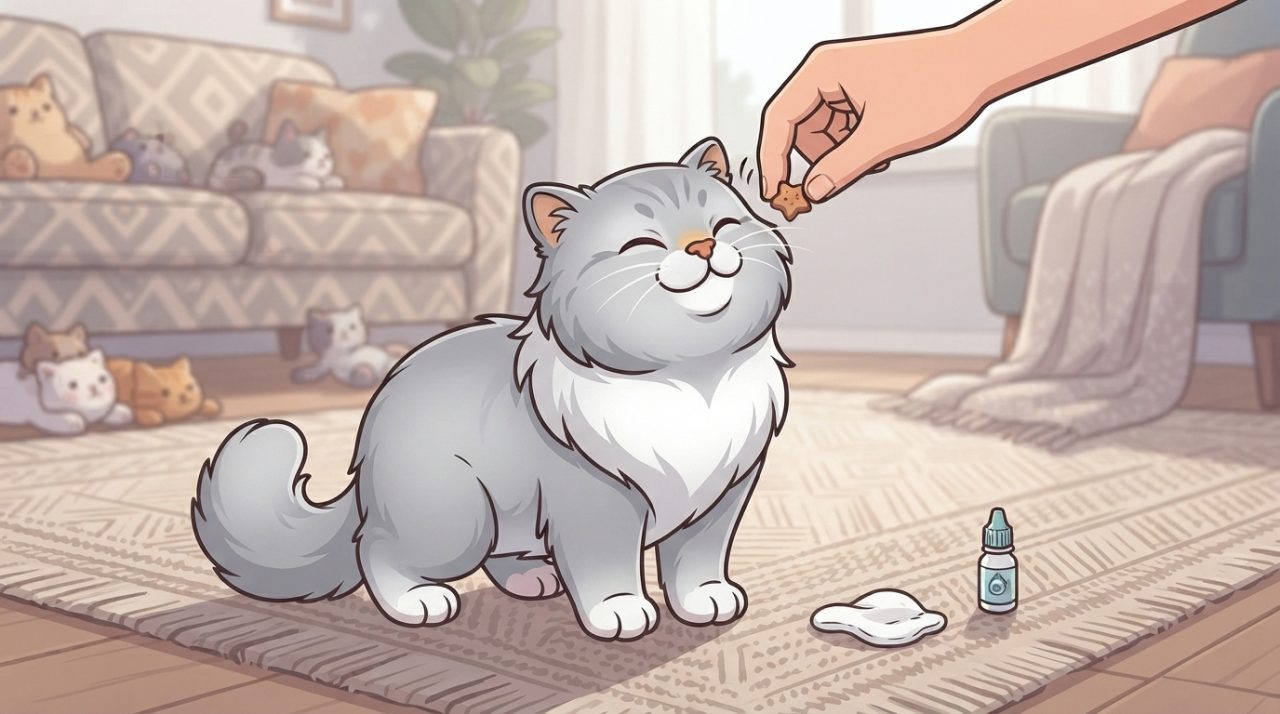
Treats – Non-negotiable in this house. Jasper gets a treat after every grooming session, and I am convinced this is the only reason he tolerates them as gracefully as he does.
What you should not use, hydrogen peroxide, alcohol wipes, human face wipes, baby wipes with fragrance, or any home remedy you’ve seen floating around the internet that involves lemon juice or essential oils. These can cause real irritation or damage. Stick with gentle, cat specific products or plain warm water.
The Step by Step Eye Cleaning Routine
Okay, here’s the actual process I use with Jasper. I’ve refined this over about three years of trial and error, and at this point it’s smooth enough that he barely fusses.
Step 1 – Choose the right moment.
Timing matters more than most people think. Don’t try to clean your Persian’s eyes when they’re full of energy and bouncing around. Wait until they’re calm ideally right after a nap, or during a relaxed evening cuddle session. Jasper is most cooperative in the late afternoon when he’s done his post lunch nap and is just sitting there looking vaguely philosophical.
Step 2 – Get yourself into a comfortable position.
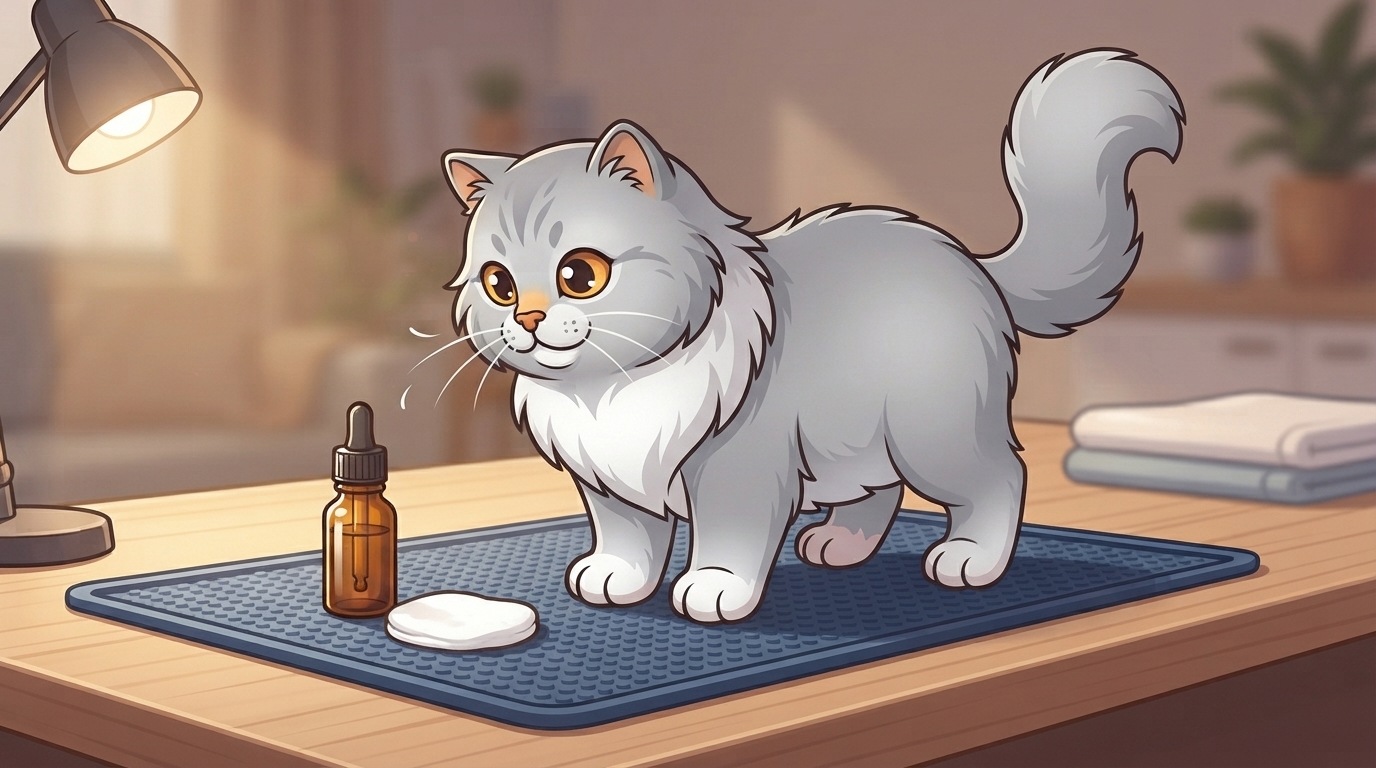
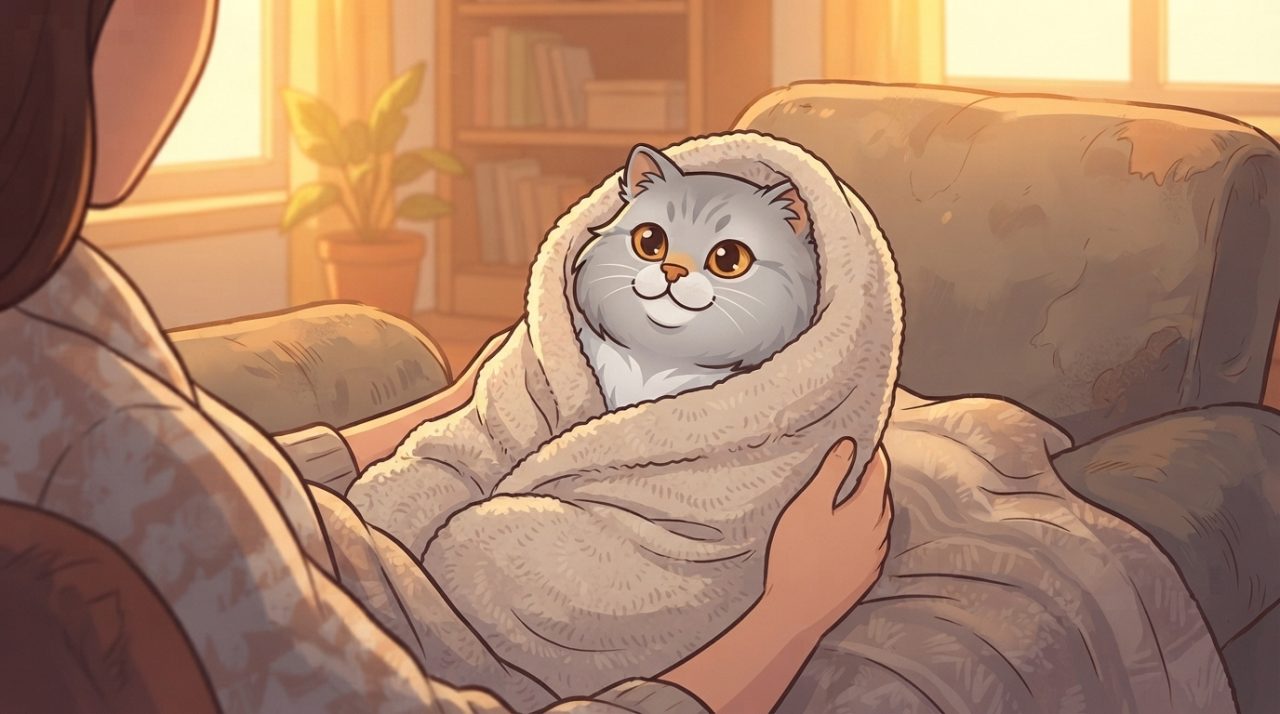
I sit on the floor with Jasper between my legs or in my lap. Some people find it easier to place their cat on a table at waist height with a non-slip mat underneath. The goal is to have your cat feeling secure and slightly contained without feeling trapped. If your cat is a squirmer, you can wrap them loosely in a towel. This is called the “purrito” method and it genuinely works.
Step 3 – Let your cat sniff the supplies.
Before you bring anything near your cat’s face, let them sniff the cotton pad and the saline bottle. This sounds small, but it removes the element of surprise, which is often what makes cats suddenly decide they’d rather be anywhere else.
Step 4 – Dampen your cotton pad.
A few drops of room temperature saline or warm water on the cotton pad. You want it damp, not dripping.
Step 5 – Gently soften the discharge before wiping.
If there’s dried crust, don’t try to pull it off dry. Instead, hold the damp cotton pad against the area for 10–15 seconds to soften it first. This prevents tugging on the fur and skin, which is uncomfortable and will make your cat trust the process less next time.
Step 6 – Wipe from the inner corner outward.
Always wipe from the inner corner of the eye (closest to the nose) outward in the natural direction of tear flow. Never wipe inward toward the eye itself. Use a fresh section of the cotton pad for each wipe, or use a new pad for the second eye. You don’t want to transfer bacteria from one eye to the other.
Step 7 – Follow up with a dry wipe or gentle fur dry down.
After cleaning, I’ll lightly blot the area with a dry section of cotton to remove any excess moisture. Keeping that area dry after cleaning helps prevent the kind of ongoing dampness that leads to skin irritation.
Step 8 – Praise and treats.
Every. Single. Time. Jasper gets a small treat, a scratch behind the ears, and a genuine verbal “you did so great.” It sounds over the top, but positive association is what keeps grooming sessions manageable for the long haul.
The whole process takes under two minutes once you’ve done it a few times. That’s it.

How Often Should You Clean Your Persian Cat’s Eyes?
This is one of the most common questions I see from new Persian cat owners, and the honest answer is, it depends on your individual cat.
For most Persians, a daily check and wipe is the right approach. Even if there’s only a tiny amount of discharge, a quick daily touch up keeps things from building up. Think of it less like a major cleaning event and more like brushing your teeth brief, consistent, and preventative.
Some Persians, particularly those with more prominent eye folds or very flat faces, may need attention twice a day. Others, especially those with a bit more nose bridge to work with, might be fine with every other day in cooler, less dusty months.
I clean Jasper’s eyes every morning as part of his routine, and I do a quick check in the evening when I notice him squinting or looking like something is bothering him. That’s usually enough, though during allergy season I occasionally add a midday check.
The best way to figure out your cat’s schedule is to observe them for a week or two. Check the area morning and evening and note how quickly discharge builds. That pattern will tell you exactly how often your cat needs attention.
One thing I’d caution against, being too aggressive with the cleaning. Over wiping an area that’s already clean or using products more frequently than necessary can irritate the sensitive skin around the eye. Gentle and consistent beats frequent and rough every time.
Managing Tear Stains on Persian Cat Fur
Cleaning the discharge is one part of the equation. Managing the tear staining that builds up in the fur over time is a separate and slightly more involved project.
Tear stains happen because of a compound called porphyrin, which is present in cat tears. When porphyrin containing tears sit on fur and are exposed to light, they oxidize and turn that characteristic reddish brown color. On white and cream Persians, the staining can be quite visible. On darker cats, it’s still there, just easier to miss.
First, let me reassure you, some degree of staining is just part of owning a Persian. You can minimize it significantly, but don’t expect to eliminate it entirely without professional grooming intervention.
Here’s what I’ve found helps with Jasper’s staining,
Consistency is everything – The main driver of heavy staining is buildup. When you clean the discharge promptly every day, you’re not giving porphyrin time to saturate the fur. This alone makes a notable difference over weeks and months.
Dry the area after cleaning – Keeping the fur dry after wiping reduces the ongoing oxidation that causes staining to deepen.
Cat safe eye wipes designed for staining – can help lift existing staining gradually with regular use. Look for formulas that are specifically marketed for tear stain management on cats and dogs and always verify they’re safe for use near eyes.
Trimming the fur around the eye area – is something many Persian owners and professional groomers do regularly. Shorter fur around the inner eye corner means less surface area for discharge to cling to. If you’re comfortable with grooming scissors (blunt tipped only, please safety first), you can carefully trim this area at home. If you’re not comfortable with scissors near your cat’s face, leave it to a groomer.
Diet and water – can play a role in tear production, though this varies a lot by cat. Some owners find that switching to filtered water or a higher quality food reduces tearing. I always check with my vet before making any major dietary changes, and I’d encourage you to do the same.

Signs That Something More Is Going On
The vast majority of Persian cat eye discharge is completely normal and just part of the breed’s anatomy. But it’s worth knowing the signs that something might need a vet’s attention.
Normal discharge is clear, light yellow, or light brown. It’s relatively easy to wipe away, and your cat doesn’t seem bothered by it. The skin beneath the eye looks normal, not inflamed, not swollen.
Talk to your vet if you notice,
- Discharge that is green or yellow green this can indicate infection
- Heavy, sudden increase in discharge that’s out of the ordinary for your cat
- Your cat pawing at their eye, rubbing their face on the floor, or squinting frequently
- Cloudiness in the eye itself
- Redness or swelling of the eye or the skin surrounding it
- A foul smell coming from the eye area
I want to be clear, I’m not a vet, and this article isn’t medical advice. Jasper’s annual checkups include an eye evaluation, and anytime something looks or seems off, I call his vet rather than guessing. Persian cats’ eyes are exposed and sensitive, and when something’s wrong, it’s worth getting a professional look sooner rather than later.
Trust your instincts. You know your cat better than anyone.
Making Eye Cleaning a Positive Experience Over Time
When I first started cleaning Jasper’s eyes, he was not a fan. He’d squirm, he’d give me the flat ear stare, and occasionally he’d make it very clear that he had somewhere more important to be. Now, three years in, he’ll actually sit still and sometimes lean slightly into the cotton pad. That’s not an exaggeration, it’s what consistent, gentle handling over time can do.
Here’s what helped us get there,
Start young if you can. Kittens who are introduced to regular grooming early in life adapt to it much more readily than adult cats who suddenly have foreign objects appearing near their face. If your Persian is still a kitten, start a gentle eye cleaning routine now, even if there’s barely anything to clean. You’re building the habit and the trust simultaneously.
Keep sessions short – In the beginning, do just one eye and stop. Give a treat. Come back for the second eye in an hour if needed. Short, positive experiences build trust faster than powering through a long session while your cat protests.
Never restrain forcefully – If your cat is genuinely struggling, take a break. Forcing the issue creates negative associations that are hard to undo. Come back later when they’re calmer. Over time, shorter positive sessions will get you further than stressful longer ones.
Use a calm, low voice throughout – I narrate the whole process to Jasper in a low, even tone. “Okay buddy, just gonna get this eye real quick, you’re doing great.” He probably doesn’t understand the words, but he responds to the tone.
Make the treat unpredictable occasionally – Behavioral research with cats suggests that variable reinforcement (sometimes a treat, sometimes just praise) can actually strengthen the behavior over time. I mostly give treats after eye cleaning, but occasionally I just give a long ear scratch and save the treat for something else. It keeps Jasper engaged with the process rather than just waiting it out for the food.
It takes time, but it’s absolutely worth it. A cat who tolerates grooming well is a happier cat and a happier owner.
FAQ: About How to Clean a Persian Cat’s Eyes
Can I use baby wipes to clean my Persian cat’s eyes?
Most baby wipes aren’t safe for use around cats’ eyes. They often contain fragrance, preservatives, or other ingredients that can irritate the delicate tissue. If you want a convenient wipe option, look for products specifically formulated and labeled as safe for use near cat eyes. When in doubt, plain warm water on a soft cotton pad is the gentlest choice.
Why does my Persian cat have one eye that waters more than the other?
Asymmetric tearing is pretty common in Persian cats. Slight differences in the shape of the tear duct on each side can cause one eye to drain better than the other. As long as the discharge looks normal (clear to light brown, no green or yellow coloring), it’s usually just anatomy at work. If one eye suddenly starts watering much more than usual or looks red or irritated, that’s worth a vet visit to rule out a blocked duct or other issue.
How do I get rid of tear stains that have already built up in my Persian’s fur?
Existing tear stains fade gradually with consistent daily cleaning and keeping the area dry. Cat safe tear stain wipes used regularly can help lift the staining over time. For heavy, longstanding stains, a professional groomer who specializes in Persians may be able to do a more thorough treatment. What won’t work, anything harsh or acidic, and any product not specifically designed for use around cats’ eyes.
My Persian cat hates having their eyes cleaned. What do I do?
Start small just one eye at a time, super brief, high value treat immediately after. Don’t power through resistance. If your cat is genuinely panicking, stop and try again later. Over many short, positive sessions, most cats come to at least tolerate the process. Some even grow to enjoy the attention. Patience and consistency are everything here.
Should I clean my Persian cat’s eyes even if I don’t see any discharge?
A quick daily check is always a good idea, even on clean looking days. You might just be catching it before it builds up, which is exactly the goal. If your cat’s eyes are consistently clear and you’ve been cleaning daily, a gentle wipe with a warm damp pad every couple of days is probably sufficient.
A Little Love Before You Go, From a Fellow Persian Cat Mama
There’s something about the Persian cat eye cleaning routine that I’ve come to genuinely look forward to and I know that sounds a little odd. But it’s two minutes of quiet, close up time with Jasper every single morning. He’s warm and half asleep and smells like a cat, and he lets me fuss over him in this very specific, practical way. That’s not nothing.
If you’re just starting out with a new Persian, I want you to know that it gets easier. It gets faster. And the discharge that seems so daunting at first becomes just another small part of the ritual of loving this particular breed. Persians ask a little more of us in the grooming department but they give back so much in personality, warmth, and sheer decorative presence on the couch.
Bookmark this page if you want to come back to it, or pin it for later when you’ve got a new Persian kitten on the way. And if you have your own tips, routines, or hard won tricks for managing your Persian’s eye care, I’d love to hear about them in the comments. Every cat is different, and I learn something new from this community all the time.
About the Author
Tabitha P. Bean is a Persian cat enthusiast, writer, and the proud owner of Jasper, her beloved male Persian cat. Through her love for Jasper, she enjoys sharing helpful tips and insights to help fellow cat parents give their fluffy companions a happy, healthy, and comfortable life.
