
Estimated read time: 12 – 15 minutes
Introduction
If you share your home with a Ragdoll, you already know how curious and people oriented these cats are. They follow you from room to room, chirp when you leave, and look at the window with those big blue eyes as if they’re daydreaming about something just beyond the glass. So it’s no surprise that many Ragdoll owners wonder, could I actually take my cat for a walk?
The answer is a resounding yes ,and Ragdolls are genuinely one of the best cat breeds for harness training. Their calm, gentle temperament and love of companionship make them excellent candidates for outdoor adventures. But it takes patience, the right equipment, and a step by step approach that never rushes the process.
I learned this firsthand with my own Ragdoll, Milo. He was about eight months old when I first floated the idea of outdoor walks, and I’ll be honest ,my first attempt was a disaster. I grabbed a cheap harness, clipped it on him in about 30 seconds, and headed straight out the front door. Milo froze solid on the front step, refused to move, and then did his very best impression of a wet noodle until I carried him back inside. Not my finest moment.
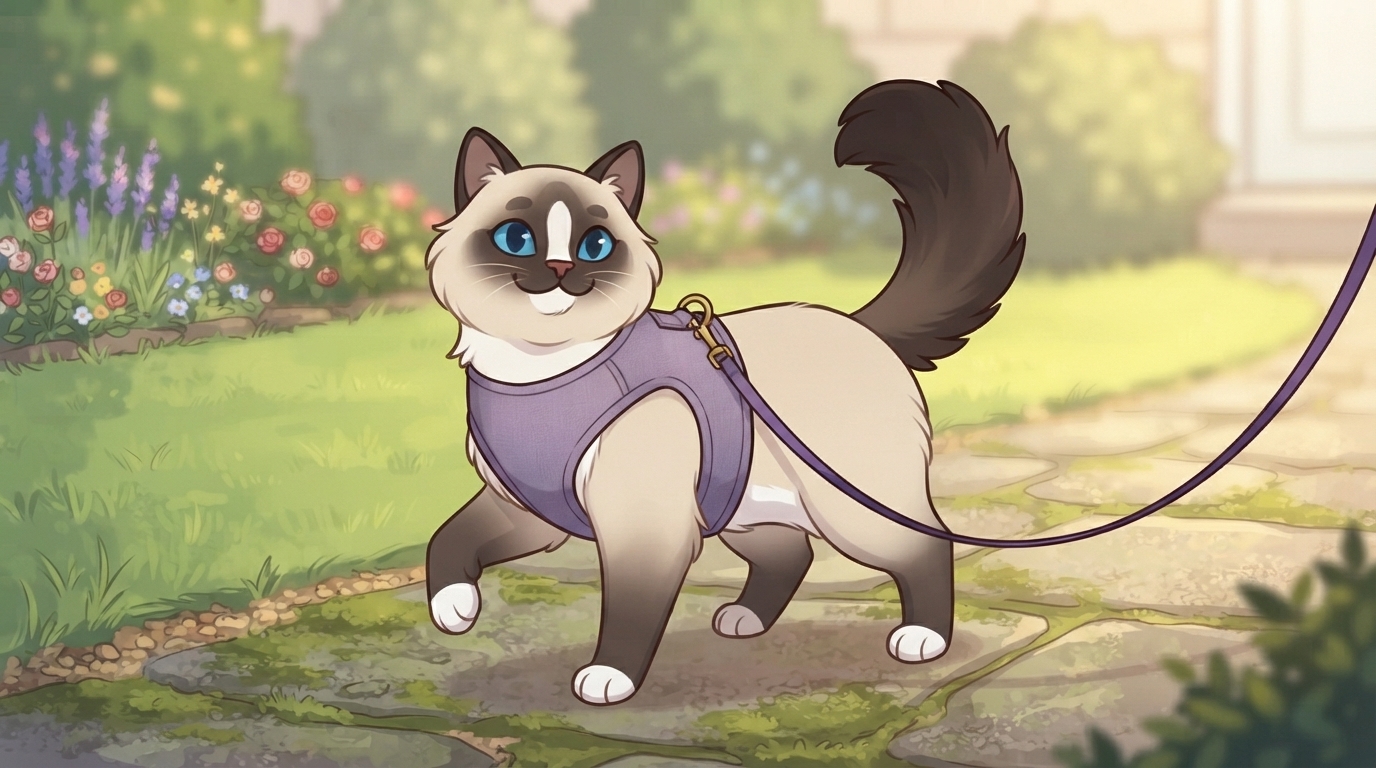
What followed was a much more gradual, structured approach ,and within about five weeks, Milo was strutting down our street like he owned it. In this guide, I’ll walk you through everything I’ve learned, so you can skip the frozen cat on the doorstep phase entirely.
Why Harness Training Is Great for Ragdolls
Before we get into the how, let’s talk about the why ,because harness training isn’t just a fun activity for curious owners. It offers some real, meaningful benefits for your Ragdoll’s physical and mental health.
The Mental Enrichment Factor
Ragdolls are indoor cats at heart, and that’s where they’re safest. But indoor living can come with a hidden downside, boredom. Without enough stimulation, Ragdolls can develop unwanted behaviors ,excessive grooming, over eating, or scratching furniture. Outdoor walks provide a flood of new sensory input, different smells, sounds, textures underfoot, birds overhead. Even a 10 minute walk around the yard can give your Ragdoll the kind of mental workout that toys inside just can’t replicate.
Milo always comes home from a walk looking genuinely satisfied ,he’ll curl up and sleep for a couple of hours after a good outdoor session, and he’s noticeably calmer for the rest of the day.
Physical Health Benefits
Ragdolls are a large breed, and weight management is a real concern for many owners. Regular walks help keep their muscles toned, joints flexible, and weight in a healthy range. The exercise your cat gets outdoors is typically more vigorous than indoor play ,there’s more ground to cover, more to investigate, and the novelty of the environment keeps them moving instead of sitting and watching.
Bonding Time
There’s something unique about taking a walk with your cat. It’s a shared experience that builds genuine trust. Your Ragdoll learns to rely on you as a safe anchor in an unfamiliar environment, and that bond translates back inside the house too. Milo has always been affectionate, but after we started our outdoor walks together, he became noticeably more relaxed and confident ,even around new visitors.
Are Ragdolls Suited to Outdoor Walks?
Not every cat adapts well to harness training, but Ragdolls have a natural advantage. Their laid back temperament means they’re less likely to panic at unexpected stimuli. Confident, social cat breeds like Ragdolls typically adjust better to outdoor environments than more nervous or highly strung breeds. That said, each cat is an individual. If your Ragdoll hides under the bed when the doorbell rings, outdoor walks may take longer and require more patience. That’s okay. Patience is really the whole game here.
Choosing the Right Harness for Your Ragdoll
Getting the right harness is the single most important gear decision you’ll make. A poorly fitting harness is both uncomfortable and a genuine safety risk ,Ragdolls, like all cats, can be surprisingly skilled escape artists, and a harness that allows backward slipping is dangerous. This section will help you pick confidently.
Harness Types
There are a few main styles to know,
- H-style harness – Two loops connected by a back strap, forming an H shape. Lightweight and simple, but can allow slipping if not sized carefully.
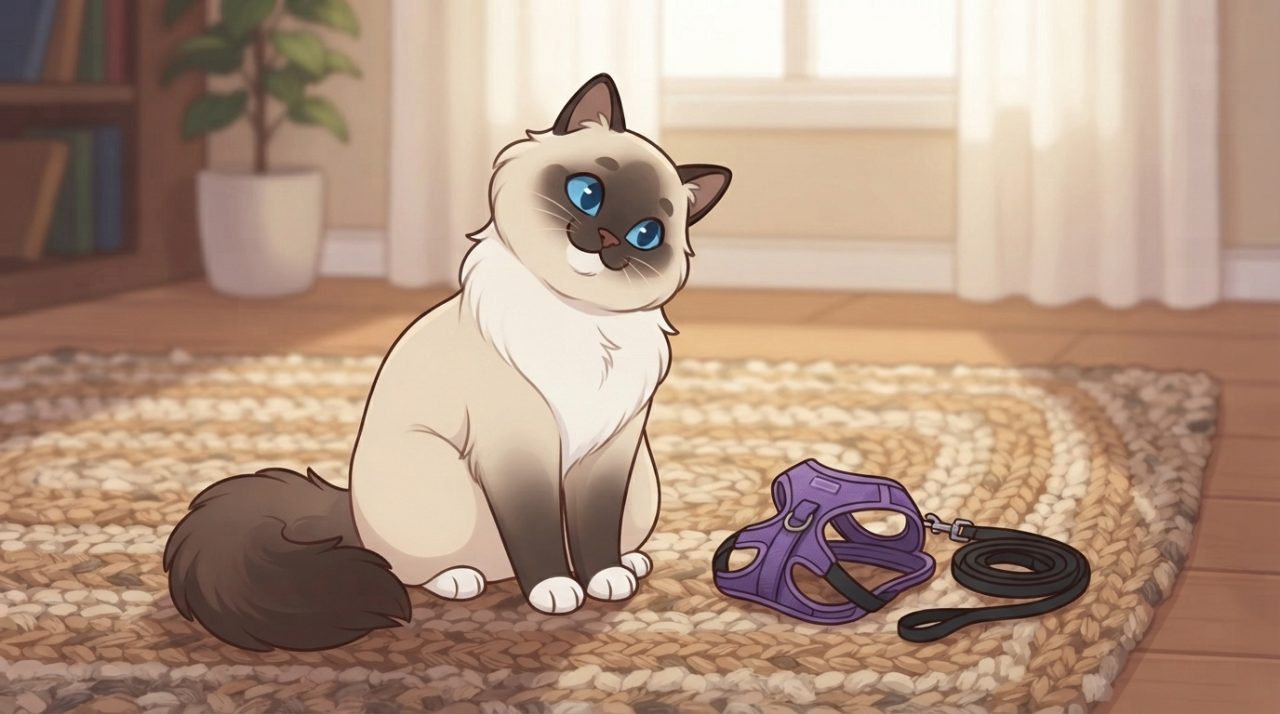
- Vest harness (also called a walking jacket) – A soft fabric vest that wraps around the chest and torso. These distribute pressure more evenly and are generally harder to escape from. Excellent choice for Ragdolls.
- Figure 8 harness – Loops around the neck and chest in a figure-of eight. Simple, but not ideal for beginners ,the fit is trickier to judge.
For most Ragdolls, a vest style harness is the best choice. The broader contact area is more comfortable for their semi long fur, and the design minimizes the risk of the cat reversing out of the harness when startled ,which Ragdolls can sometimes try to do.
Fit Is Everything
A correctly fitted harness should allow you to slip two fingers comfortably underneath any strap. Any tighter and it’s uncomfortable; any looser and it becomes an escape risk. Ragdolls are a large breed ,males typically weigh between 15 and 20 pounds ,so look for a harness that explicitly covers larger cats or offers an XL sizing option.
Check for these features,
- Adjustable straps (ideally at least three adjustment points)
- Quick release buckles for fast removal if needed
- Breathable material ,Ragdolls have dense semi long fur that traps heat, so mesh or ventilated fabric matters in warmer weather
- Reflective strips for visibility on early morning or evening walks
- A secure D ring on the back for leash attachment
The Leash
Keep it simple. A lightweight, non-retractable leash between four and six feet is ideal. Retractable leashes give you less control and can snap back and startle your cat. A regular fixed length leash lets you stay close and feel every little hesitation or tension in your Ragdoll’s movement.
Step by Step – The Harness Introduction
This is where patience truly matters. Rushing this phase is the number one reason harness training fails. The goal is for your Ragdoll to associate the harness with calm, positive experiences ,not restraint, not stress.
Step 1 – The Proximity Phase (Days 1 – 3)
Don’t put the harness on yet. Instead, place it near your Ragdoll’s favorite spot ,next to their food bowl, beside their sleeping area, or on the sofa where they like to lounge. Let them sniff it, walk past it, or even lie on it. Reward any interaction ,a sniff, a curious nudge ,with a high value treat immediately.
The goal at this stage is simple: harness = something good happens.
With Milo, I placed his harness next to his food dish for two days. By day three he was barely glancing at it, which meant it had gone from “weird new object” to “normal part of the furniture” ,exactly what I wanted.
Step 2 – Draping Without Fastening (Days 3 – 5)
Once your Ragdoll is unbothered by the harness being nearby, gently lay it over their back without fastening any buckles. Keep the moment brief ,just a few seconds ,and reward them with a treat and warm praise while it’s resting on them.
Repeat this several times a day in short bursts. The aim is to normalize the sensation of something being on their back. Keep your energy calm and cheerful throughout.
Step 3 – Wearing the Harness Indoors (Days 5 – 10)
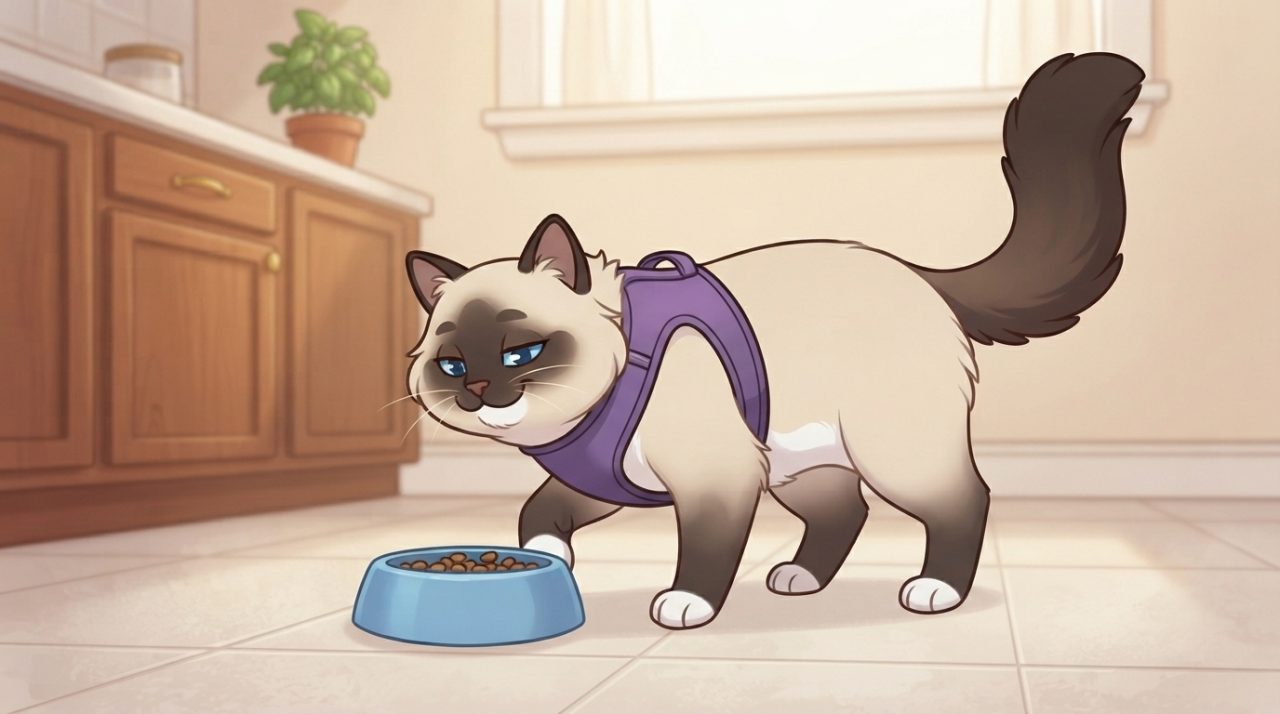
Now fasten the harness. A useful trick here, time the fastening with your cat’s mealtime. The positive distraction of eating makes the whole experience far less loaded. Put the harness on, offer their meal, and remove it once they’ve eaten.
Start with sessions of just five minutes and gradually extend. Watch for signs of discomfort ,freezing in place, trying to roll or rub the harness off, or general agitation. These are normal at first, but should lessen quickly with repetition and rewards.
By the end of this phase, your Ragdoll should be moving fairly naturally in the harness indoors without much fuss.
Step 4 – Adding the Leash Indoors (Days 10 – 14)
Once your cat is comfortable wearing the harness, clip the leash on and simply let them drag it around the house under your supervision. Don’t hold it yet ,just let them feel the trailing weight and get used to the slight tug sensation.
After a day or two of this, pick up the leash and follow your cat around the house. The key word here is follow. Don’t attempt to lead, direct, or tug. Let your Ragdoll walk where they choose while you trail along, holding the leash loosely. Use treats to encourage movement toward you when you want to practice basic directional walking.
Milo thought this indoor leash phase was hilarious. He’d do a loop of the living room and then sit and stare at me as if to say “your turn.”
Taking Your Ragdoll Outside for the First Time
Once your Ragdoll is walking comfortably on the leash indoors without stress, it’s time to move outside. This transition is exciting ,but it’s also where things can go sideways if you rush.
Prep the Environment First
Choose your first outdoor location carefully. A quiet, enclosed space is ideal ,a fenced backyard or a low traffic side alley is far better than a busy street. You want minimal stimulation for this first outing, no dogs, no heavy traffic noise, no other cats in sight.
Before you go out, make sure your Ragdoll is up to date on flea and tick prevention ,outdoor exposure, even brief, increases the risk. It’s also worth checking with your vet that vaccinations are current before you begin regular outdoor sessions.
The First Outing
Keep it short ,five to ten minutes maximum. Step outside, let your Ragdoll set the pace, and simply observe. They might crouch low to the ground at first, ears rotating, taking in every sound. That’s perfectly normal. Let them sit and absorb the environment without any pressure to move.
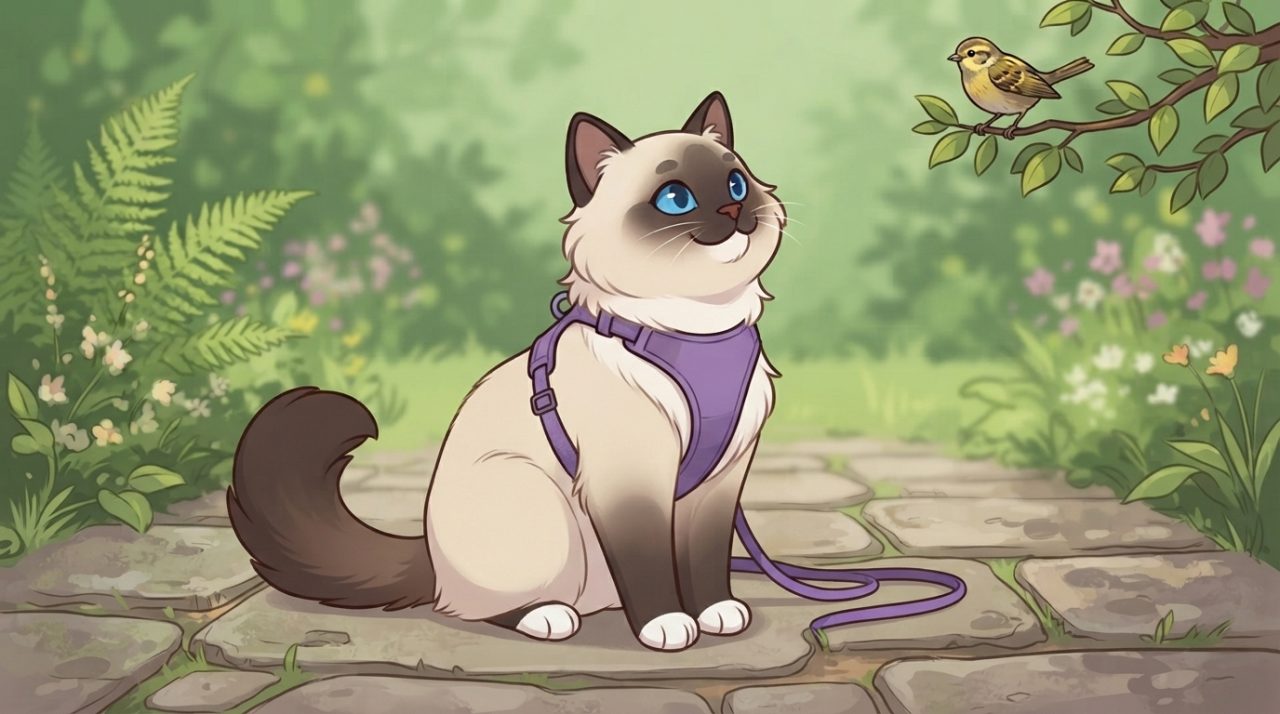
Bring high value treats and offer them freely during this first session. Every positive interaction with the outdoor environment ,sniffing the grass, taking a few steps forward, looking up at a bird without panicking ,deserves a reward.
If your Ragdoll shows signs of real distress (panting, trying to pull backward out of the harness, yowling, or flattening to the ground with dilated pupils), pick them up calmly and bring them inside. Don’t push through. End the session on a neutral or positive note rather than a stressed one.
Building Up Gradually
Over the following weeks, gradually extend the duration and the range of your walks. Move from the quiet garden to a slightly busier street, then to a neighborhood path, then to a local park. With each new environment, give your Ragdoll time to adjust at their own pace.
Most Ragdolls settle into a comfortable walking routine within four to six weeks of starting outdoor sessions. Some take longer ,and that’s completely fine.
Tips for Successful Outdoor Walks
Once you’re regularly getting out together, here are some practices that’ll make every walk safer and more enjoyable for both of you.
Always Follow Your Cat’s Lead
This is fundamentally different from walking a dog. Your Ragdoll isn’t going to heel beside you on command. They’ll meander, stop to smell something for three minutes, then suddenly change direction. Embrace it. The walk is for them ,your job is to stay connected via the leash and keep them safe, not to navigate a specific route.
Milo has a habit of sitting down in the middle of the path to observe a bird for an extended period. I’ve learned to just stand there with him. It’s genuinely peaceful once you let go of the idea of covering any particular distance.
Watch the Weather
Ragdolls don’t do well in extreme heat. Their semi long coat, while beautiful, traps warmth ,walks in direct summer sun can lead to overheating quickly. Walk during cooler parts of the day in summer, early morning or evening. In very cold weather, keep walks short, as cats aren’t as cold tolerant as some owners assume.
Carry Your Cat Past Stressful Situations
If a dog appears, a car backfires, or a group of noisy children rounds the corner, don’t wait to see how your Ragdoll reacts. Pick them up calmly and hold them securely against your chest until the stressor has passed. This prevents a panicked bolt and reinforces that you are a safe presence when things get overwhelming.
Post Walk Routine
After every walk, check your Ragdoll’s fur and skin for ticks, particularly around the neck, ears, and between the toes. Provide fresh water ,outdoor exploration is more physically demanding than it looks. Remove the harness gently and reward them with a treat or a calm petting session. Building a consistent post walk routine helps your cat understand that walks have a clear beginning and end, which reduces anxiety.
Never Leave a Harnessed Cat Unattended
Even a secure harness isn’t a substitute for supervision. Never leave your Ragdoll harnessed and unsupervised outdoors ,even in an enclosed yard. A harnessed cat that gets tangled or spooked can injure themselves quickly.
Common Harness Training Problems (And How to Solve Them)
Even with the best approach, you’ll likely hit a few snags. Here’s how to handle the most common ones.
“My Ragdoll freezes completely when I put the harness on”
This is very common in the early stages and usually means you’ve moved too fast. Go back to the previous step ,draping without fastening ,for a few more days. The freeze response is your cat saying they’re not comfortable yet. Pushing past it will build negative associations. Patience and retreat are your tools here.
“My cat keeps trying to back out of the harness”
This usually indicates either a fit issue (harness too loose) or that your cat has figured out the backward pressure trick. Check the fit first ,you should only be able to slide two fingers under the straps, not more. If the fit is right, consider switching to a vest style harness, which is considerably harder to reverse out of.
“My Ragdoll was doing great and then suddenly refused to wear the harness”
A sudden regression often has a specific cause ,a frightening experience on a recent walk, illness or discomfort, or a change in routine. Give your cat a few days off, then restart from a comfortable earlier stage of the training. Don’t force it.
“My cat just lies down outside and won’t walk”
Welcome to cat walking! This is extremely common. Many cats prefer to explore in a very slow, stationary way ,lying in the grass and watching the world go by is, for them, a thoroughly enriching outdoor experience. As long as your Ragdoll isn’t showing stress signals, there’s nothing wrong with simply sitting outside together. Milo’s version of a “walk” is often more of a “sit,” and we’re both fine with that.

FAQ : Harness Training Your Ragdoll Cat
What age can I start harness training my Ragdoll? The earlier the better. Kittens between eight and twelve weeks old adapt most easily to new experiences ,their brains are still in a prime socialization window. That said, adult Ragdolls can absolutely learn to enjoy harness walks; it simply takes a bit more patience and a longer introduction period. Milo was about eight months old when I started, and he took to it beautifully within a few weeks.
How long should harness training take before we go outside?
Most Ragdolls are ready for their first outdoor session within two to four weeks of starting the harness introduction process. Don’t rush this timeline ,a calm, thorough indoor foundation makes the outdoor transition much smoother. If your cat is still showing stress in the harness indoors after three weeks, keep working at that stage before venturing outside.
Is a vest harness or an H-style harness better for Ragdolls?
For most Ragdolls, a vest style harness is the better choice. The broader surface area is more comfortable against their dense fur, and the design makes it significantly harder for a startled cat to reverse out of the harness. H-style harnesses can work well too, but they require very precise fitting and are easier to escape from if your cat panics.
Can I walk my Ragdoll in an area with other cats or dogs?
Start in areas where encounters with other animals are unlikely. As your Ragdoll builds confidence and experience, gradual exposure to other animals is fine ,but keep the leash short and be ready to pick your cat up immediately if another animal approaches. Never allow a dog to rush up to your harnessed cat; the experience can be very frightening and set training back significantly.
My Ragdoll seems scared outside. Should I push through it?
No. Fear is a clear signal to slow down. If your Ragdoll is genuinely frightened outside ,crouching flat, panting, trying to back out of the harness ,cut the session short and bring them inside without fuss. Go back to quiet indoor training and try outdoor sessions again in a few days, starting with a less stimulating environment. Pushing a scared cat forward rarely produces progress; it usually produces more fear.
Do I need to do anything before starting harness training?
Make sure your Ragdoll is in good general health and that their vaccinations and parasite prevention treatments are current before introducing outdoor walks. A quick vet check is always a good idea before starting a new exercise routine, particularly if your cat has been exclusively indoors. Beyond that, all you need is a quality harness, a leash, a supply of high value treats, and patience.
What if my Ragdoll never takes to outdoor walks?
Not every cat will love outdoor adventures, and that’s completely okay. Some Ragdolls are perfectly content indoors and find outdoor environments stressful regardless of how gradual the training is. If after a patient, extended training process your cat is still clearly unhappy outside, there’s no obligation to continue. Enrichment can be provided in plenty of other ways ,puzzle feeders, window perches, catios, and interactive play sessions all offer mental and physical stimulation without the outdoor component.
A Quick Note Before You Leave, From a Fellow Ragdoll Mama
Harness training a Ragdoll cat takes time, but it’s one of the most rewarding things you can do for your cat’s quality of life ,and for your bond together. The key is to move at your cat’s pace, make every step of the process positive, and never skip the indoor foundation work in your eagerness to get outside.
Milo has been walking on a harness for a few years now, and those early morning strolls have become one of my favorite parts of the day. He approaches every walk with this quiet, dignified curiosity ,stopping to investigate things I’d never notice, watching the neighborhood wake up from his spot on the path. It’s a small adventure, but it’s ours.
If you’re just starting out, I promise it’s worth the patience. Good luck, and give your Ragdoll a treat from Milo and me.
Have you tried harness training your Ragdoll? I’d love to hear how it’s going ,drop a comment below and share your experience!
About the Author
Shirley E. Butler is a Ragdoll cat enthusiast, editor, and the proud owner of Milo, her blue eyed male Ragdoll.
