
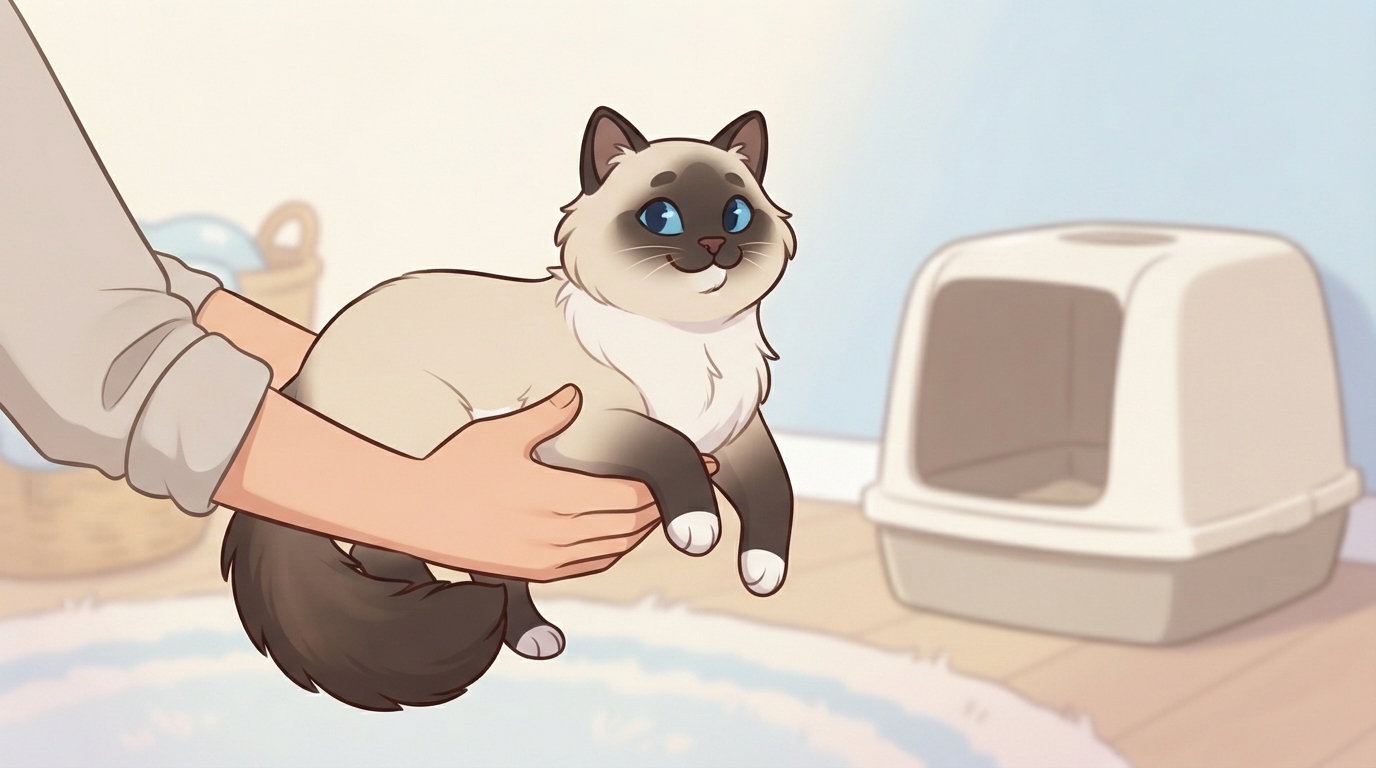
Estimated read time: 12 – 15 minutes
Introduction
Bringing home a Ragdoll kitten is one of the most exciting moments in any cat lover’s life and I say that from experience. When I first brought Milo home, he was a fluffy, blue eyed ball of confusion who had absolutely no idea what my house rules were. The litter box situation? Let’s just say the first 48 hours involved a couple of “surprise locations” I’d rather not describe in detail.
But here’s the good news, Ragdoll kittens are exceptionally intelligent and naturally clean, which makes litter training faster and more straightforward than most new owners expect. With the right setup, a little consistency, and a handful of well timed treats, most Ragdoll kittens can be reliably using the litter box within five to seven days.
In this guide, I’m going to walk you through exactly how to litter train a Ragdoll kitten in under a week. We’ll cover choosing the right box and litter, setting up your kitten’s safe space, the daily routine that makes training click, how to handle accidents without setbacks, and what to do if things aren’t progressing as quickly as you’d hoped. Whether you’re in the US or the UK, a first time cat owner or adding to your feline family, this step by step guide has everything you need.
Why Ragdoll Kittens Are Actually Easy to Litter Train
Before we dive into the how to, let’s talk about why you’ve already got a head start by choosing a Ragdoll. These cats are sometimes called “puppy cats” for a reason , they’re highly attuned to their owners, eager to learn routines, and naturally motivated to keep their environment clean. It’s a combination that works beautifully when it comes to litter training.
Cats, as a species, have an instinctive drive to bury their waste. This behavior dates back thousands of years and is hard wired into their DNA. Kittens often begin practicing this instinct as young as three to four weeks old, usually under the guidance of their mother. By the time your Ragdoll kitten comes home at around twelve weeks, they’ve already got the basic concept , they just need to learn where you want them to put it into practice.
Ragdolls have a few specific traits that make training even smoother,
- High trust and bonding – Ragdolls form strong attachments to their owners and are motivated by approval and positive attention.
- Gentle, non reactive temperament – Unlike more high strung breeds, Ragdolls don’t panic or act out when gently redirected.
- Routine loving nature – Once a Ragdoll learns a habit, they tend to stick with it reliably.
- Intelligence – They pick up on patterns and expectations quickly.
Milo figured out his litter box within three days of coming home. The key was that I gave him the right setup from day one , and that’s exactly where we’ll start.

Choosing the Right Litter Box and Litter for Your Ragdoll Kitten
One of the most common reasons litter training stalls isn’t the kitten , it’s the equipment. The wrong box or the wrong litter can make a kitten hesitant, confused, or flat out unwilling to use it. Getting this right before your kitten arrives is worth every bit of effort.
Picking the Right Litter Box
For a young Ragdoll kitten, the most important features in a litter box are,
- Low entry point – Kittens have short legs. A box with sides higher than three to four inches at the entry can be genuinely difficult for a young kitten to climb into. Look for a box with a low front opening, or use a shallow storage tray as a starter box.
- Adequate size – Even at twelve weeks, Ragdolls are bigger than average kittens , and they grow fast. Start with a box that’s at least 16 inches long so your kitten has room to turn around comfortably.
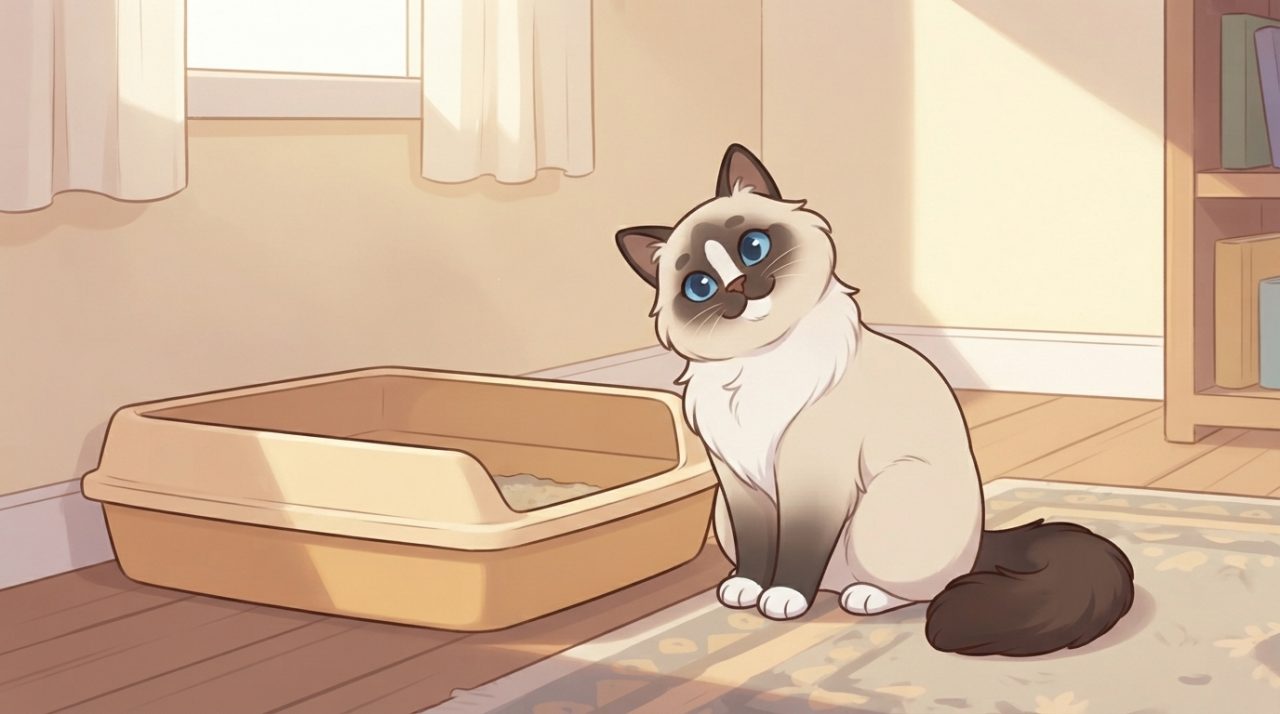
- Open top (no hood) – Covered boxes trap odors, which can feel overwhelming to a kitten’s sensitive nose. They can also make a large breed cat like a Ragdoll feel cramped. Skip the hooded box, at least for now.
- No plastic liner – Liners can shift and bunch underfoot, which some cats find unsettling. Keep it simple.
How many boxes do you need? The general rule is one litter box per cat, plus one extra. For a single kitten in a multi level home, start with one box per floor. As your kitten becomes more confident and house trained, you can gradually reduce the number.
Choosing the Right Litter
Unscented, fine textured clumping litter is the go to recommendation for Ragdoll kittens , and for most cats in general. Here’s why each part of that matters,
- Unscented – What smells fresh to us can be chemically overwhelming to a cat’s nose. Heavily fragranced litters can deter a kitten from using the box entirely.
- Fine texture – Cats instinctively prefer soft, sand like substrates. Fine grained litter feels natural underfoot.
- Clumping formula – Clumping litter makes scooping easier, which means you’re more likely to keep the box clean , and a clean box is the single biggest factor in whether your kitten uses it consistently.
One important note for very young kittens (under eight weeks) – Avoid clumping clay litter with kittens under eight weeks old, as young kittens may accidentally ingest litter while grooming. By twelve weeks , the typical Ragdoll adoption age , clumping litter is generally considered safe, but always keep an eye on your kitten’s behavior in those early days.
Setting Up Your Kitten’s Safe Room – The Foundation of Fast Litter Training
When Milo first arrived, I made the mistake of giving him a full run of my house almost immediately. He was curious, I was excited, and within a few hours, he’d had two accidents in rooms nowhere near his litter box. Sound familiar?
The fix is simple, start small. Confining your Ragdoll kitten to a single room for the first few days is the single most effective thing you can do to accelerate litter training.
What Is a Safe Room?
A safe room is a kitten proofed space , typically a bedroom, bathroom, or spare room , where your kitten spends their first few days at home. It should contain,
- One (or two) litter boxes
- A food and water bowl (placed well away from the litter box , cats instinctively avoid going near their food)
- A comfortable bed or blanket
- A few toys
- A scratching post
The logic is simple. When a kitten needs to go and the litter box is always within a few feet, they’ll find it and use it. Every time they do, the habit gets reinforced. Once they’re consistently using the box in their safe room, you gradually expand their territory , one room at a time.
Placement Tips
- Keep the litter box in a quiet, low traffic corner. Kittens are vulnerable when they’re using the box and feel safer without a lot of noise or movement nearby.
- Never place the box near the food bowl. Cats have a strong instinct to eliminate away from their eating area.
- Make sure the box is easy to find. Don’t tuck it behind a door or inside a cabinet. Visibility matters, especially in the early days.
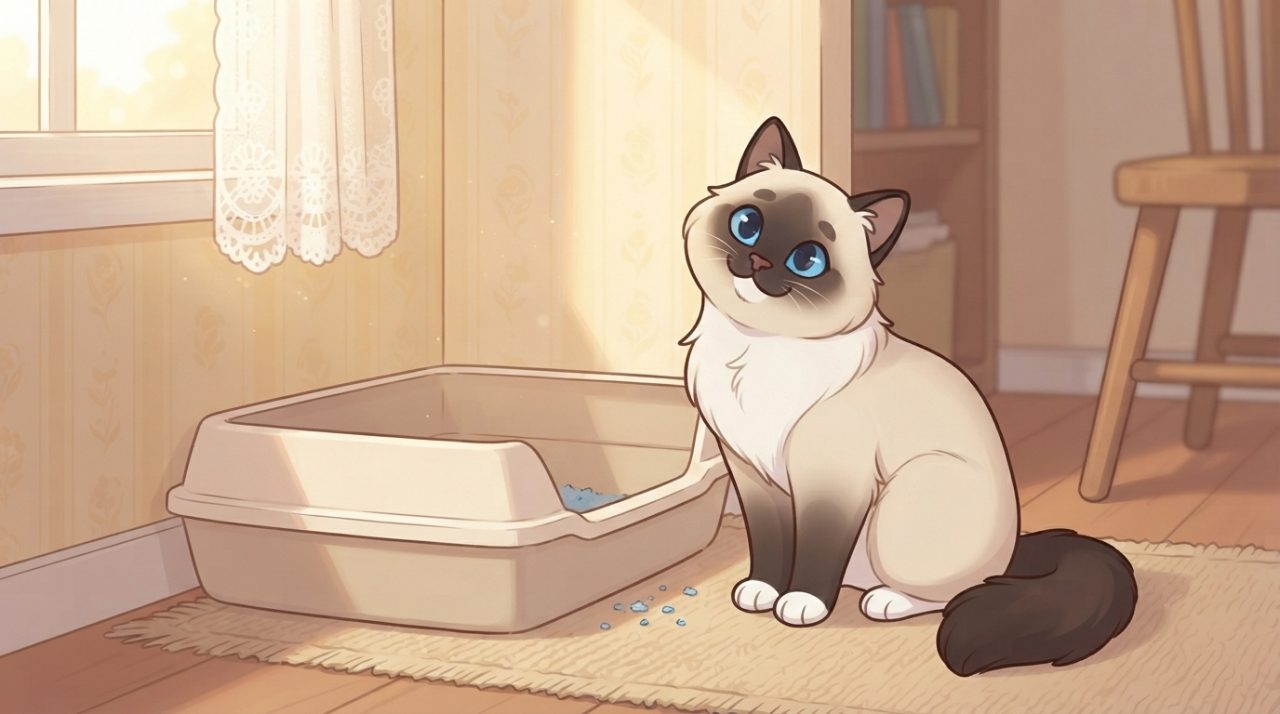
When I introduced Milo to his safe room, I placed him directly in the litter box for a few seconds when he woke up from his first nap. He sniffed around, scratched a little, and then climbed right out , but that brief introduction helped him recognize it as his spot.
The 7 Day Litter Training Routine That Actually Works
Litter training isn’t complicated, but it does require consistency. Here’s the daily routine I used with Milo, and the one I recommend to every new Ragdoll owner.
Day 1 – 2 : Introduction and Supervision
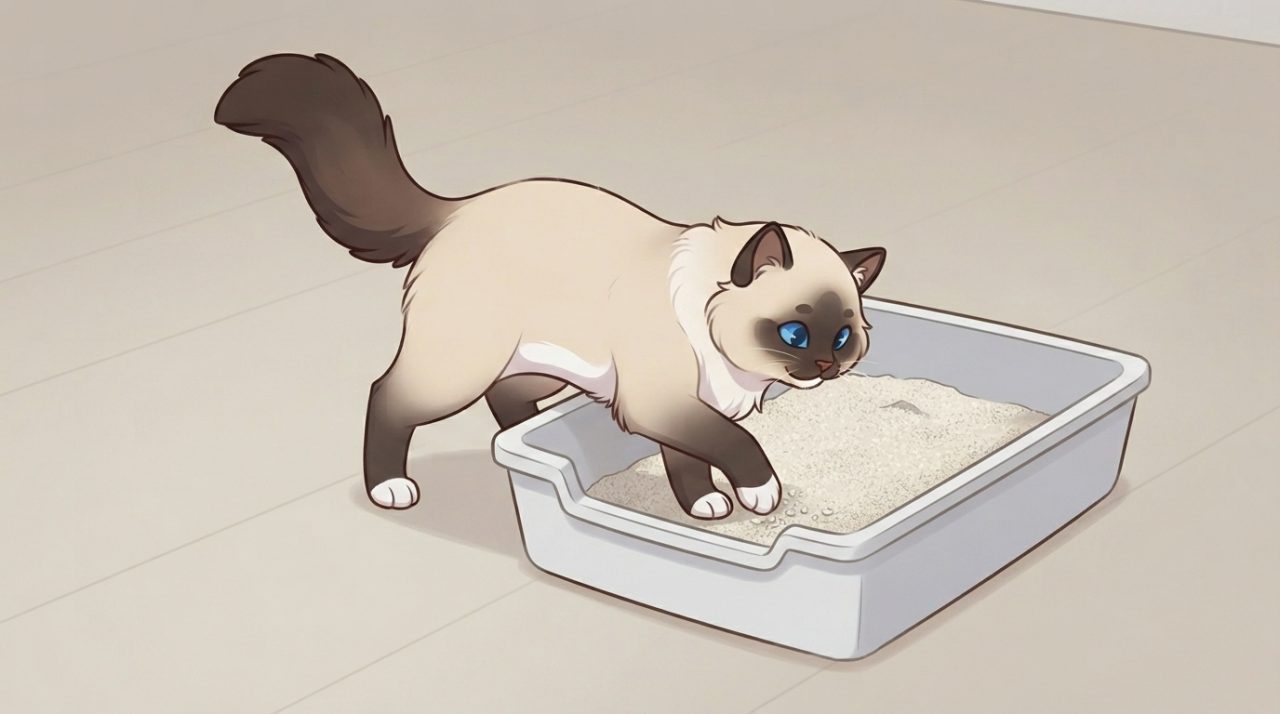
- As soon as your kitten arrives, show them the litter box. Gently place them inside, let them sniff, and scratch gently in the litter with your finger to demonstrate.
- Place your kitten in the box after every meal, after every nap, and after any active play session. These are the three key times when kittens most urgently need to go.
- Stay close and watch for pre elimination signals: sniffing the floor, crouching, circling, or suddenly moving with purpose toward a corner.
- If you spot these signs, scoop up your kitten calmly and place them in the box immediately.
- Keep all interactions calm and positive. No shouting, no startling.
Day 3 – 4 : Reinforcing the Habit
- By now, your kitten should be finding the box on their own at least some of the time. Celebrate every successful use with a small treat and verbal praise.
- Continue the post meal and post nap box visits, but watch whether your kitten is starting to head there independently.
- Scoop the box at least once a day , ideally twice. A dirty box is one of the top reasons kittens start looking for alternative spots.
- If there’s an accident, clean it immediately with an enzyme based pet cleaner. This removes the scent completely, which is important because the residual smell of urine can attract your kitten back to the same spot.
Day 5 – 7 : Expanding Territory and Building Confidence
- If your kitten is reliably using the box in their safe room, you can begin introducing them to one additional room under supervision.
- Add a second litter box in the new room initially, so there’s always one nearby.
- Continue praising successful uses. As the routine becomes ingrained, you can gradually phase out treats, replacing them with affection and play.
- By the end of the week, most Ragdoll kittens are consistently box trained. Milo was fully reliable by Day 5 , though he did give me one cheeky reminder on Day 6 that I needed to scoop more promptly.
Quick Reference Daily Checklist
- Place kitten in box after waking, after meals, after play
- Scoop the box at least once daily
- Reward every successful use
- Clean accidents immediately with enzyme cleaner
- Watch for pre elimination behavior and redirect
- Expand territory only after consistent success in current space
Handling Accidents Without Setbacks
Accidents are normal. They don’t mean your kitten is being defiant, lazy, or difficult , they mean your kitten is a kitten. Here’s how to handle them without undoing your progress.
What NOT to Do
- Never punish your kitten for an accident. Rubbing their nose in it, raising your voice, or startling them is not only ineffective , it actively damages the trust you’re building. Ragdolls are emotionally sensitive cats, and harsh responses can cause anxiety that makes the litter training problem worse.
- Don’t use ammonia based cleaners. Ammonia smells similar to urine to a cat’s nose and can actually encourage them to return to the same spot.
What TO Do
- Stay calm. Pick up your kitten gently and place them in the litter box , even if they’ve already finished.
- Clean the area thoroughly with an enzyme based cleaner (look for products labeled specifically for pet urine). This neutralizes the scent markers that tell your kitten “this is a bathroom spot.”
- If accidents keep happening in the same location, temporarily place a litter box there. Once your kitten is using it consistently, you can slowly move it inch by inch toward your preferred location.
- Ask yourself, Is the box clean enough? Is it in a quiet spot? Is your kitten having trouble finding it? Often, accidents have a simple environmental cause.
When Milo had his one memorable accident on my bedroom rug, I traced it back to forgetting to scoop his box the previous evening. Lesson learned, a fresh box is a used box.
Common Litter Training Mistakes to Avoid with Ragdoll Kittens
Even experienced cat owners can fall into a few traps when litter training a new kitten. Here are the ones I see most often , and how to sidestep them.
Giving Too Much Space Too Soon
It’s tempting to let your Ragdoll explore the whole house from day one, especially when they’re giving you those big blue eyes. Resist the urge. A kitten in a large unfamiliar space may not make it to the litter box in time, especially in the first few days when everything is new and overwhelming. Stick to the safe room approach until box use is consistent.
Using a Scented Litter
Scented litters might seem like a good idea for odor control, but cats experience scent on a completely different level than we do. What smells pleasant to a human can be repellent to a cat. Unscented litter consistently gets better results.
Not Cleaning the Box Often Enough
This is the number one reason that otherwise well trained cats and kittens start eliminating outside the box. Cats are fastidiously clean animals. If their box is dirty, they’ll find somewhere else , and you can’t really blame them. Scoop daily at a minimum; twice daily is better during the training week.
Switching Litters Mid Training
Cats can be surprisingly resistant to change, especially when it comes to litter texture and scent. If you start with a particular litter, stick with it throughout the training period. Once the habit is established, any transitions should be done slowly by mixing old and new litter gradually over a week or two.
Placing the Box in a Loud or Busy Spot
Ragdolls are gentle, somewhat shy cats who like to feel safe when they’re vulnerable. A litter box placed next to a washing machine, in a busy hallway, or anywhere with sudden loud noises can make a kitten anxious about using it. Choose a quiet corner where your kitten can do their business in peace.
FAQ: Litter Training a Ragdoll Kitten
How long does it really take to litter, train a Ragdoll kitten?
Most Ragdoll kittens catch on within three to seven days with a consistent routine and the right setup. Some pick it up within 24 hours , they’re smart cats with a natural instinct to bury waste. The key variables are box placement, litter type, cleanliness, and how consistently you redirect your kitten after meals and naps.
My Ragdoll kitten keeps going in the same corner of the room, not the box. What do I do? This usually means the box isn’t accessible or appealing enough, or the kitten has scent marked that corner. First, clean the area thoroughly with an enzyme cleaner to remove the scent. Then, temporarily place a litter box in that exact corner. Once your kitten is using it, gradually shift the box , a few inches at a time , toward your preferred location.
How many litter boxes does a Ragdoll kitten need?
As a starting point, one box per floor of your home is a good rule of thumb. For a single kitten in a one level apartment, two boxes is ideal , it gives your kitten options and reduces the chance of a missed bathroom trip during the training phase.
Should I use a covered or uncovered litter box for my Ragdoll?
Start with an uncovered box. Covered boxes trap odors, and while that might appeal to humans, it can be off putting , or even overwhelming , for a kitten’s sensitive nose. Covered boxes can also feel confining for a larger breed like a Ragdoll. Once your kitten is fully trained and grown, you can experiment with enclosed options if you prefer them aesthetically.
My kitten uses the box for pee but not for poop. Why?
This is surprisingly common. Some kittens prefer separate boxes for each function , yes, really. If this is happening, try adding a second litter box. Many owners find their kitten quickly claims one box for each purpose and the problem resolves itself.
Is it normal for a Ragdoll kitten to kick litter out of the box?
Absolutely. Ragdolls love to dig and cover thoroughly (it’s instinctive), and kittens especially tend to treat the litter box like a sandbox. Using a box with higher sides , at least four to five inches on three sides, with a lower entry point , and placing a litter mat outside the box will help contain the mess.
What if my Ragdoll kitten is still having accidents after a week?
If accidents are continuing beyond a week despite consistent training, it’s worth taking your kitten to the vet for a check up. Occasional urinary issues or digestive problems can make it uncomfortable or difficult for a kitten to use the box correctly. A vet can rule out any underlying health concerns and give you peace of mind.
A Quick Note Before You Leave, From a Fellow Ragdoll Mama
Litter training a Ragdoll kitten really doesn’t have to be stressful , for you or for your kitten. With the right box, the right litter, a safe room to start in, and a consistent daily routine, most Ragdolls are fully box trained within five to seven days. Their natural intelligence, clean instincts, and trusting temperament make the process faster and more rewarding than you might expect.
Milo and I have come a long way from those first chaotic 48 hours. Today, he marches to his box like a professional, and the only reminder I ever get is when I’ve left the scooping a little too long , at which point he sits next to it and gives me a very pointed look. Ragdolls are nothing if not communicative.
If you’ve just brought home your Ragdoll kitten, take a breath. You’ve got this. Start small, stay consistent, keep that box clean, and celebrate every little success. You and your kitten are going to be just fine.
Have a litter training tip that worked for your Ragdoll? I’d love to hear it in the comments below , or share this article with a fellow Ragdoll parent who’s just starting out!
About the Author
Shirley E. Butler is a Ragdoll cat enthusiast, editor, and the proud owner of Milo, her blue eyed male Ragdoll.
