

Estimated read time: 11 – 13 minutes
Introduction
When I brought my Ragdoll, Milo, home for the first time, I quickly realized that this breed is unlike any other cat I’d ever owned. He wasn’t just content to curl up in a corner, he wanted to be in the middle of everything, close to me, close to the action, and (very specifically) next to the warmest vent in the house. Getting Milo’s environment just right took some trial and error, and I want to save you that trouble.
Setting up the perfect home for a Ragdoll cat isn’t complicated, but it does require knowing what makes this breed tick. Ragdolls are large, gentle, and deeply social. They thrive on routine, companionship, and comfort. They’re not natural climbers the way some other cats are, but they do love soft surfaces, window views, and a home that feels safe and predictable.
Whether you’re in the US or the UK and you’re preparing for your first Ragdoll kitten or welcoming a new adult cat into your family, this guide covers everything you need to know. We’ll walk through sleeping arrangements, feeding stations, litter box placement, cat trees, toys, cat-proofing, and even how to think about room layout from your Ragdoll’s perspective. By the end, you’ll have a clear, actionable checklist and the confidence to set things up right from day one.
Why Ragdolls Need a Specially Thought-Out Home
A lot of people assume that any home ready for a regular cat is ready for a Ragdoll. In many ways that’s true but Ragdolls have a few specific traits that make certain adjustments worth thinking about ahead of time.
For starters, Ragdolls are big cats. Adult males can weigh anywhere from 15 to 20 pounds (that’s roughly 7 – 9 kg for UK readers). That size changes things, litter boxes need to be large enough, cat trees need to be sturdy enough, and resting spots need to be supportive enough. Milo absolutely destroyed a flimsy cat bed within his first month home, and I had to switch to something with a solid base and a washable cover.
Ragdolls are also known for their floppy, trusting nature. They tend to be less guarded than other breeds, which means they don’t instinctively avoid danger the way some cats do. This is adorable, but it also means your home needs to be thoughtfully cat-proofed. Milo once waltzed into a cabinet I’d left open and spent an hour inside a mixing bowl. Cute but it made me realize I needed to take a closer look at hazards I’d completely ignored before.
Here’s what makes a Ragdoll-specific home setup worth the extra planning.
- Their size – Bigger cats need bigger furniture, larger litter boxes, and more stable climbing structures.
- Their temperament – Ragdolls are people-oriented and can experience stress if isolated or placed in chaotic environments.
- Their coat – That beautiful semi-long fur means you’ll need lint rollers everywhere and easy-to-clean surfaces near their favorite spots.
- Their laid-back nature – They’re less likely to jump to safety if startled, so it’s important to reduce hazards proactively.
- Their love of routine – A consistent, predictable layout helps Ragdolls feel safe and settled.
Think of setting up your home less like “preparing for a cat” and more like “preparing for a very fluffy, very gentle roommate who needs everything at floor level.”
Creating the Perfect Sleeping and Resting Spots
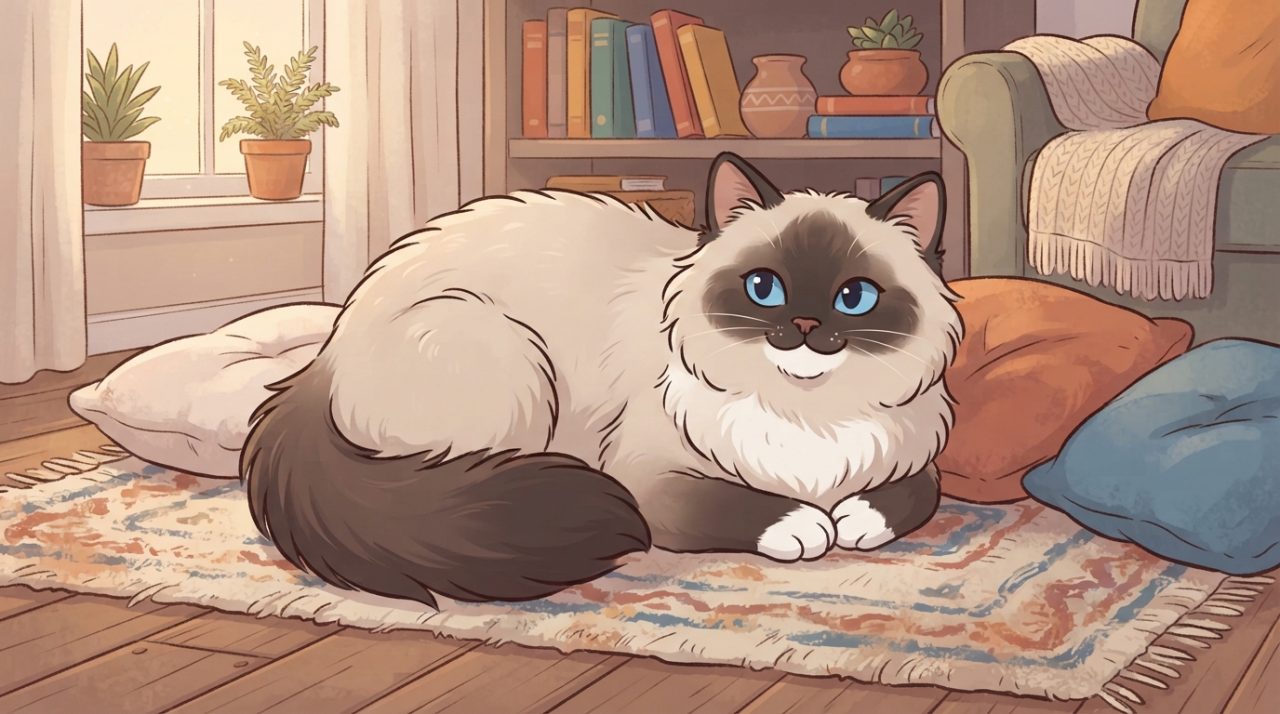
Ragdolls sleep a lot. If you’ve ever watched your cat find the exact right patch of afternoon sunlight and collapse into it like a dropped flour sack, you know exactly what I mean. Milo has approximately six preferred napping spots and I say “approximately” because he occasionally discovers a seventh.
Getting the sleeping and resting areas right is one of the most important parts of a Ragdoll-friendly home setup. Here’s what to look for and what works best.
Choose Low, Supportive Beds
Unlike breeds that love climbing to the highest point in a room, Ragdolls often prefer lower-level resting spots. A plush cat bed placed on the floor, on a low shelf, or on a couch cushion will suit them perfectly. Look for beds with,
- Thick, supportive padding – Ragdolls are heavy and will compress flimsy foam quickly
- Washable covers – that gorgeous coat sheds, so you’ll be washing these often
- Raised edges or bolster sides – many Ragdolls like to rest their chin on a raised rim, just like Milo does
Donut-shaped beds and cave-style beds are especially popular with this breed. Milo goes through phases, sometimes he’s a cave cat, sometimes he stretches out flat. Having one of each has been a great move.
Give Them Access to Sunny Spots
Natural light is enriching for all cats, and Ragdolls are no exception. A window perch (low enough to jump to safely) or a cat bed placed near a south-facing window gives your Ragdoll a front-row seat to the outside world birds, squirrels, blowing leaves which provides mental stimulation even for an indoor cat.
Designate a “Safe Room” for New Cats
If you’re bringing home a brand-new Ragdoll, don’t open up the whole house on day one. Set up a safe room a single bedroom or quiet space with everything they need: a bed, food and water, a litter box, and some toys. This gives them a calm place to decompress before exploring the rest of the home. I kept Milo in our spare bedroom for his first four days, and the transition to the full house went completely smoothly.
Setting Up the Ideal Feeding Station
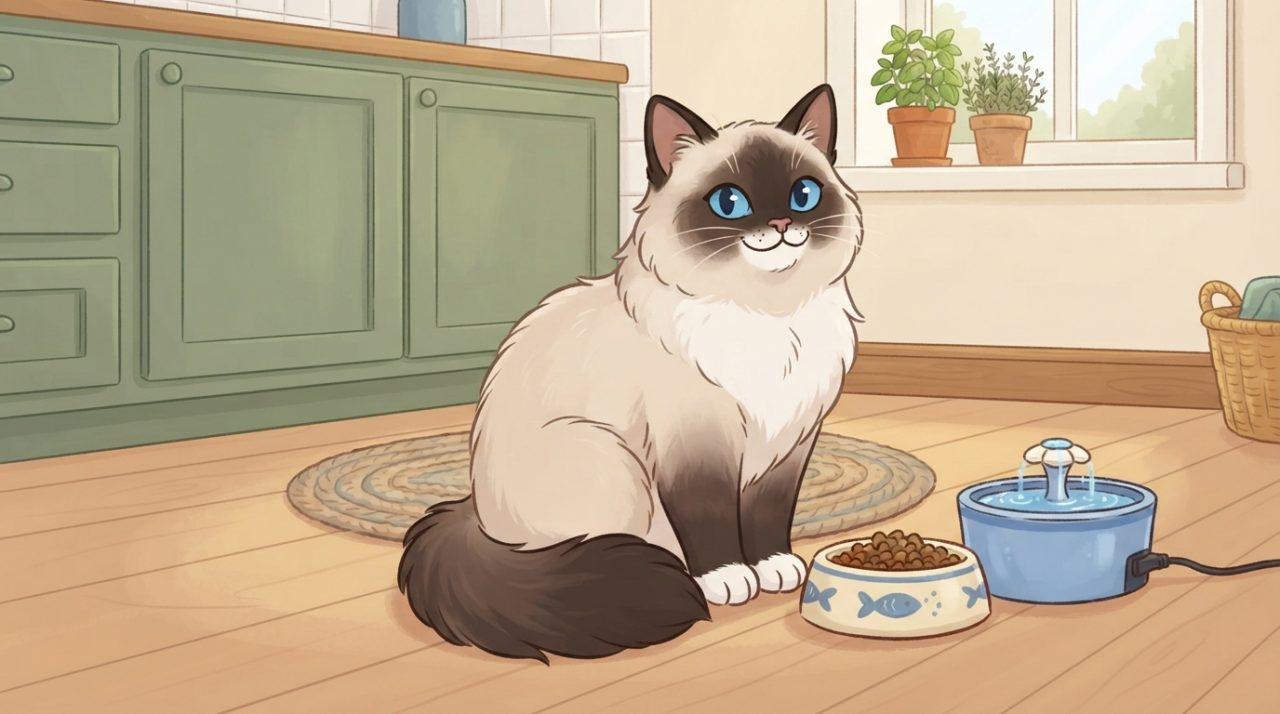
Feeding time is a big deal in our house. Milo knows exactly when it’s coming, and he’ll start following me around about fifteen minutes early, just to make sure I don’t forget. Getting the feeding station right makes mealtimes more enjoyable for your cat and keeps your home cleaner.
Choose the Right Bowls
The material and shape of your Ragdoll’s food and water bowls matter more than you might think. Here’s what to keep in mind,
- Stainless steel or ceramic are the best materials. They don’t harbor bacteria like plastic does, and they’re easy to clean.
- Wide, shallow bowls work best for Ragdolls. Their flat faces and sensitive whiskers can be irritated by deep, narrow bowls, a condition sometimes called “whisker fatigue.”
- Raised bowls or stands can help larger cats eat and drink more comfortably without hunching.
Invest in a Water Fountain
This was one of the best things I ever did for Milo. Cats are naturally attracted to moving water, and a circulating pet water fountain encourages them to drink more throughout the day. Keeping your Ragdoll well-hydrated is important for their overall wellbeing, and many cats that previously ignored their water bowl will happily sip from a fountain all day long.
When choosing a fountain,
- Look for BPA-free, stainless steel or ceramic models for easy cleaning
- Choose one with a replaceable filter to keep the water fresh
- Place it away from the litter box and away from high-traffic areas cats prefer peace when they’re drinking
I clean Milo’s fountain every week and replace the filter monthly. It’s a small routine that makes a big difference.
Location
Place the feeding station in a quiet, low-traffic area of your home. Avoid corners where your Ragdoll might feel trapped, and keep food and water well away from the litter box at least 3 – 4 feet, preferably more. Cats instinctively avoid eating near where they eliminate, so respecting this preference makes mealtimes more pleasant.
Choosing and Placing the Litter Box
The litter box situation is something a lot of new Ragdoll owners underestimate, and then scramble to fix later. I made a few mistakes here with Milo before I figured out what worked. Let me save you some trial and error.
Size Matters Go Big
Because Ragdolls are a large breed, standard litter boxes are often too small. Your cat needs enough room to turn around comfortably inside the box. A general guideline is that the box should be 1.5 times the length of your cat. For a fully grown male Ragdoll, that often means a large or extra-large litter box.
Look for,
- High sides (around 5 – 6 inches) to contain litter scatter Ragdolls can kick enthusiastically
- A low entry point for kittens or senior cats who may struggle to step over high walls
- An unroofed design for cats that feel claustrophobic in covered boxes though some Ragdolls don’t mind a covered box at all
Follow the One-Plus-One Rule
The standard advice for multi-cat households is one litter box per cat, plus one extra. Even if you only have one Ragdoll, having two litter boxes is a smart move, especially if you live across multiple floors. Place one on each level of your home so your cat never has to travel far.
Placement Tips
- Quiet and private – Ragdolls are creatures of habit and prefer a calm, consistent space for their litter box.
- Away from food and water – Keep at least several feet of distance.
- Easy to access – Don’t tuck it into an inconvenient spot if it’s hard for your cat to get to, accidents become more likely.
- Consistent – Once you find a spot that works, don’t move it around. Ragdolls respond well to routine and stability.
Scoop daily. Ragdolls are tidy by nature and a dirty box can put them off using it. I scoop Milo’s box at least once a day and do a full clean weekly using mild soap and warm water, no harsh chemicals that might put him off.
Cat Trees, Scratching Posts, and Vertical Space
Here’s a surprise for new Ragdoll owners, Ragdolls are not big climbers. Unlike breeds that love perching at the top of a tall cat tree, most Ragdolls prefer lower and mid-level spaces. Milo has a beautiful seven-foot cat tree that he uses exclusively for the bottom two levels and the hammock on level three. Level six might as well not exist.
That said, a cat tree is still a valuable piece of furniture for this breed. Just choose the right one.
What to Look for in a Ragdoll Cat Tree
- Sturdy base – Because Ragdolls are heavy, stability is critical. Wobbly trees won’t be used and can become a hazard.
- Wide platforms – Narrow perches don’t suit a large, fluffy Ragdoll. Look for platforms that are at least 12 – 14 inches wide so your cat can stretch out comfortably.
- Hammocks and enclosed spaces – Many Ragdolls love sleeping in hammocks or cozy cubbies on a cat tree.
- Sisal scratching posts – Built-in sisal-wrapped posts give your cat an appropriate outlet for scratching and help protect your furniture.
- Moderate height – You don’t need the tallest tree in the store. A mid-height tree (around 4 – 5 feet) with wide, stable platforms often suits Ragdolls better than towering structures.
Don’t Skip the Scratching Post
Even if your cat tree has built-in scratching posts, consider adding a standalone sisal post to another part of your home. Look for one that’s tall enough for your Ragdoll to fully stretch upright around 32 inches or taller. A scratching post that’s too short won’t get used. Milo has one near the back door and one in the living room, and both get regular use.
For horizontal scratchers, a flat cardboard scratcher is usually a big hit. Ragdolls often enjoy stretching out along a flat surface and dragging their claws through cardboard. These are inexpensive and cats love them just replace, when they start to shred.
Wall-Mounted Shelves as an Alternative
If floor space is limited, wall-mounted cat shelves can be a great addition. Position them at lower and mid-height levels (around 2 – 4 feet off the ground) rather than near the ceiling, since most Ragdolls prefer not to be too high up. Make sure shelves are anchored properly into wall studs remember, you’re supporting a cat that may weigh 18 pounds.
Toys, Enrichment, and Play Spaces
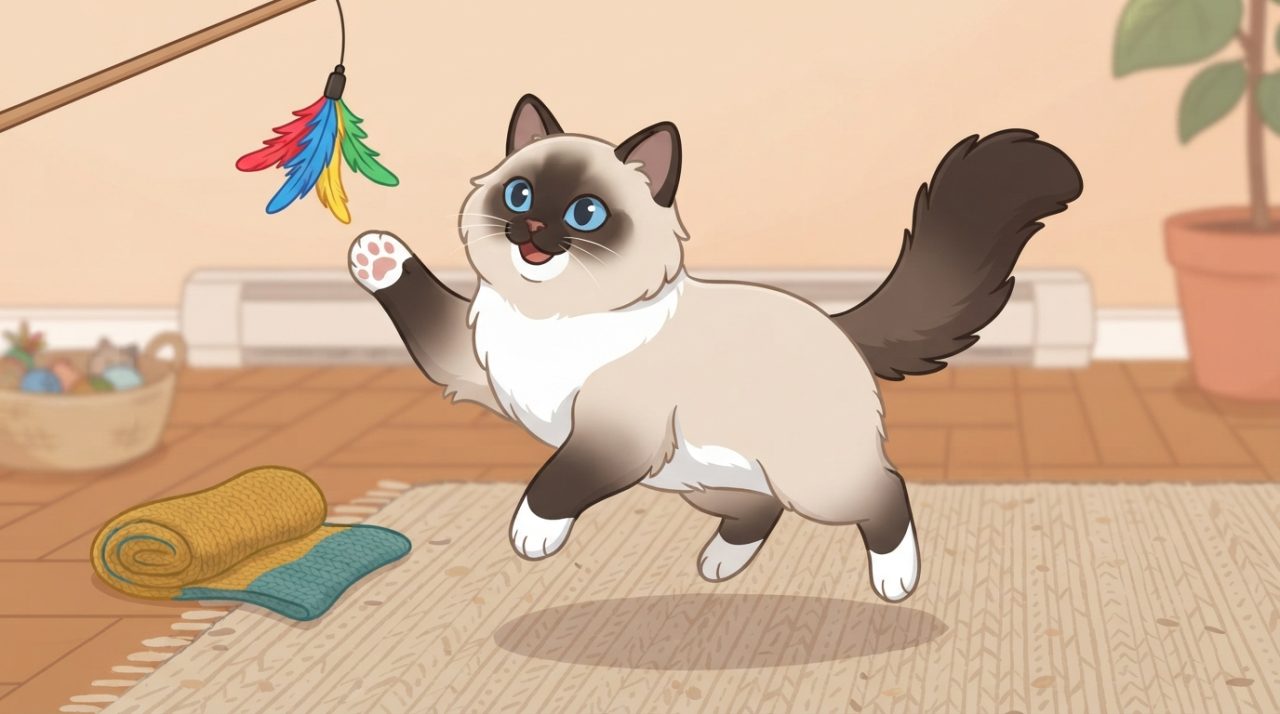
Ragdolls are playful, but not in a chaotic, bouncing-off-the-walls way. Milo enjoys a good play session, but on his own terms. He’ll bat at a wand toy for fifteen minutes and then declare himself thoroughly done and look for somewhere to nap. Understanding this temperament helps you choose the right toys and set up enriching play spaces.
Best Types of Toys for Ragdolls
- Wand toys and feather teasers – Interactive toys that you control are usually the biggest hit. Milo goes absolutely wild for a feathered wand, especially in the early evening when he’s most active.
- Crinkle balls and light toys – Ragdolls enjoy batting at lightweight balls they can chase across smooth floors.
- Puzzle feeders – A slow-feeder bowl or food puzzle is a great way to engage your Ragdoll mentally at mealtime and slow down fast eaters.
- Catnip toys – Milo’s relationship with catnip is deeply committed. A simple stuffed catnip toy will keep him occupied for a good chunk of the afternoon.
Rotate toys regularly. Like most cats, Ragdolls lose interest in the same toys after a while. Keep a rotation of five or six toys and swap them out every week or two. When a toy that’s been “away” comes back, your cat treats it like it’s brand new.
Indoor Enrichment for an Indoor Life
Ragdolls are best kept as indoor cats. They’re trusting, social, and not particularly street-smart, which makes the outdoors a risky environment for them. But that means it’s on you to make the indoors interesting and stimulating.
A few ideas that have worked brilliantly with Milo,
- Bird feeders outside windows – Position a bird feeder outside a window your cat frequents and watch your Ragdoll become a dedicated ornithologist.
- Cat TV – There are hours of “bird and squirrel” videos on YouTube designed specifically for cats. Milo watches these with genuine concentration.
- A catio or screened porch – If you have outdoor space, a secure enclosed patio or catio lets your Ragdoll enjoy the sights, sounds, and smells of the outdoors without any of the risks.
- Consistent daily play – Even just 10 – 15 minutes of interactive wand play each day makes a real difference to your Ragdoll’s happiness and energy levels.
Cat Proofing Your Home for a Ragdoll
Earlier I mentioned that Ragdolls are less naturally cautious than some breeds. Their trusting temperament and tendency to go limp when picked up means they may not respond to household hazards the way a more skittish cat might. A thorough cat-proofing of your home before your Ragdoll arrives is genuinely worth your time.
Common Hazards to Address
Here’s a checklist of things to check before bringing your Ragdoll home,
Plants:
- Many common houseplants are toxic to cats, including lilies (highly toxic), pothos, philodendrons, and aloe vera.
- Move any toxic plants well out of reach, or rehome them before your cat arrives.
- The ASPCA maintains a complete list of toxic and non-toxic plants at aspca.org it’s worth bookmarking.
Cords and cables:
- Loose electrical cords are a chewing hazard. Use cord concealers or cable management boxes to keep wires tidy and inaccessible.
Cabinets and small spaces:
- Ragdolls are curious and will investigate open cabinets, especially low ones. Child-proof latches work well for keeping cabinets containing cleaning products or chemicals securely closed.
Windows and balconies:
- Even “indoor” cats can fall from high windows or balconies. Install window screens that lock securely, and be cautious with balcony access.
Washing machines and dryers:
- Always check inside before starting a cycle. Ragdolls (especially kittens) can sneak in without you noticing.
Rubber bands, hair ties, and small objects:
- These can be swallowed. Keep small items off the floor and off accessible surfaces.
FAQ: Setting Up a Home for a Ragdoll Cat
Do Ragdoll cats need a lot of space to be happy?
Not necessarily. Ragdolls do well in apartments and smaller homes as long as they have enough vertical enrichment, a cozy resting space, and regular human interaction. What they need more than space is companionship and stimulation. As long as you’re engaging with your cat daily and providing interesting enrichment, the size of your home matters less than the quality of the environment within it.
How many litter boxes do I need for one Ragdoll cat?
The general recommendation is two one for each floor of your home, or simply two placed in different areas. Ragdolls are large cats and like having options. A single litter box in one corner of the house can lead to accidents if your cat feels it’s too far away or too full. Scoop at least once daily to keep things fresh.
Should I get a cat tree for my Ragdoll?
Yes, but choose carefully. Ragdolls aren’t avid climbers, so you don’t need the tallest, most elaborate tree available. Focus on sturdiness, wide platforms, and cozy hammocks or enclosed spaces. A well-chosen mid-height tree with good sisal posts will be far more loved than an impressive-looking tower with narrow ledges your Ragdoll ignores.
What kind of bed does a Ragdoll cat prefer?
Most Ragdolls love plush, supportive beds with raised edges, donut beds and bolster beds are especially popular. They also enjoy cave-style beds for privacy. Milo has both and rotates depending on his mood. The key is that the bed should be big enough to comfortably fit a large cat and placed somewhere warm and quiet.
Are Ragdolls okay being left alone at home?
Ragdolls are social cats and can become bored or lonely if left alone for long stretches every day. If you’re away from home for more than 8 – 10 hours regularly, consider getting a second cat for company. Many Ragdolls do very well with a feline companion Milo’s temperament is so mellow that he tends to get along with most other animals.
How do I keep my Ragdoll’s environment stress-free?
Ragdolls are creatures of habit and respond well to routine. Keeping feeding times, play sessions, and litter cleaning on a consistent schedule helps them feel secure. Calming pheromone diffusers (like Feliway) can also help during transitions like moving furniture, introducing a new pet, or bringing home a new baby. Try to keep their key spots bed, feeding station, litter box in consistent locations rather than moving things around frequently.
What’s the most important thing to get right when setting up a home for a Ragdoll?
If I had to pick one thing, it would be creating a calm, consistent environment. Ragdolls are sensitive to stress and they thrive on predictability. Before worrying about the fanciest cat tree or the most stylish feeding station, focus on finding quiet, settled spots for their essentials bed, food, water, and litter box and building a routine around them. Everything else builds from there.
A Quick Note Before You Leave, From a Fellow Ragdoll Mama
Setting up the perfect home for a Ragdoll doesn’t have to be expensive or complicated, it just needs to be thoughtful. After years of living with Milo, the biggest lesson I’ve learned is that this breed isn’t high-maintenance in terms of space or equipment. What they need is consistency, comfort, and your presence. The right bed in a sunny spot, a sturdy scratching post, a clean litter box, a flowing water fountain, and a daily play session with a feather wand that’s really the foundation of a happy Ragdoll life.
Start simple, observe what your cat gravitates toward, and adapt. Every Ragdoll has their own preferences, and part of the joy of living with this breed is figuring out exactly what makes yours happiest. Milo taught me more about what he needed in the first few months than any checklist ever could.
I hope this guide helps you create a home that your Ragdoll loves as much as Milo loves ours. If you’ve recently set up a Ragdoll-friendly space and have tips to share, drop them in the comments below. I’d love to hear what’s been working for you!
Quick Home Setup Checklist
Item | Notes |
Large, plush cat bed | Bolster or donut style; machine washable |
Cozy cave bed | Great for private nap times |
Stainless steel or ceramic food bowls | Wide and shallow; raised stand optional |
Pet water fountain | Filtered; clean weekly |
Two large litter boxes | One per floor; scoop daily |
Sturdy mid-height cat tree | Wide platforms; sisal posts included |
Tall standalone sisal scratching post | 32 inches or taller |
Flat cardboard scratcher | Great for horizontal scratching |
Window perch or sunny bed placement | For bird-watching enrichment |
Wand toys and rotating toy selection | Swap out weekly |
Cord concealers and cabinet latches | Essential for cat-proofing |
Bird feeder outside a window | Budget-friendly enrichment |
About the Author
Shirley E. Butler is a Ragdoll cat enthusiast, editor, and the proud owner of Milo, her blue eyed male Ragdoll.
