
Estimated read time: 12 – 15 minutes
Introduction
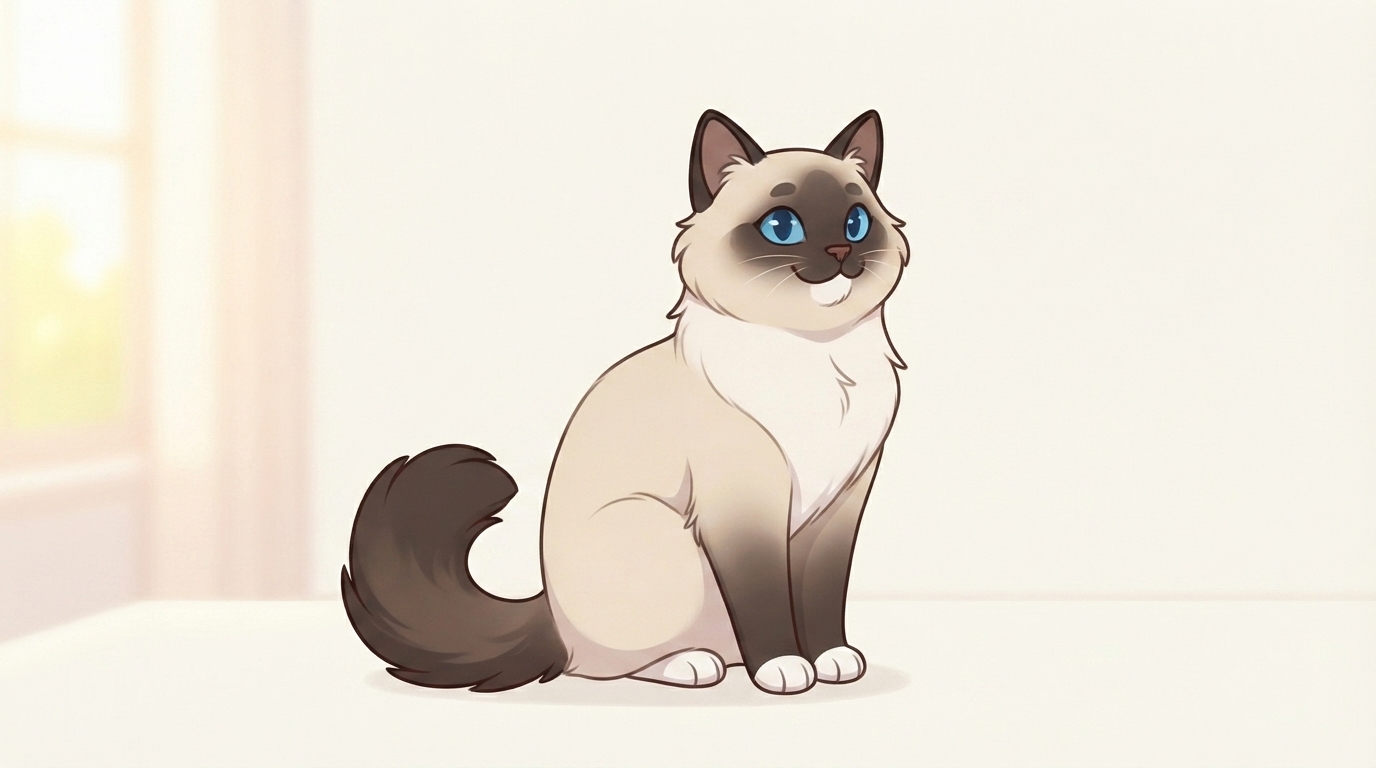
If someone told me, when I first brought Milo home, that I’d eventually have him sitting on cue, giving high fives, and trotting over every time I called his name, I probably would have laughed. Cats aren’t exactly known for their obedience, right? But here’s what I’ve learned after years of living with my Ragdoll cat, this breed is genuinely different. Milo isn’t just a pretty face with a silky coat and those impossibly blue eyes. He’s smart, curious, and when you know how to approach him, surprisingly trainable.
The truth is, how to train a Ragdoll cat is a question more owners should be asking. Ragdolls are gentle, people oriented, and highly food motivated, which makes them one of the easiest cat breeds to work with. Whether you’re in the US or the UK, if you’ve just welcomed a Ragdoll kitten or you’re wondering if your adult cat can still pick up new skills, this guide is for you.
I’m going to walk you through 7 commands that Ragdoll cats can genuinely learn, how to teach each one step by step, and all the tips I’ve gathered from training Milo myself. Let’s get started.
Why Ragdoll Cats Are Surprisingly Easy to Train
Before we get into the specific commands, it’s worth understanding why Ragdolls respond so well to training. A lot of people assume all cats are too stubborn or independent to bother with and for some breeds, that’s closer to the truth. But Ragdolls are a genuinely different personality type.
Ragdoll cats are highly intelligent. They pick up on patterns quickly and are known for observing their owners carefully. Milo figured out which drawer I kept his treats in after watching me open it just a few times. That same sharp mind means he can connect a verbal cue with a behavior faster than you might expect.
They’re also deeply people oriented. Unlike more aloof breeds, Ragdolls actively want to interact with you. They follow you from room to room, want to be involved in whatever you’re doing, and genuinely enjoy the one-on-one attention that a training session provides. For Milo, a five minute training session isn’t a chore, it’s quality time with his favorite person.
Finally, Ragdolls tend to be highly food motivated, which is the cornerstone of almost all cat training. The right treat at the right moment can work wonders.
Here’s what makes Ragdolls well suited to learning commands,
- Calm temperament they don’t spook easily or get overstimulated
- Strong human bond they want to please you (or at least get your attention)
- Curiosity they engage actively with new stimuli and puzzles
- Patience they’ll sit through a short session without getting stressed or bolting
The key to success with any of the commands below is positive reinforcement never punishment. Ragdolls are sensitive cats. A harsh word or frustrated reaction will shut them down completely. But praise, treats, and gentle encouragement? That’s where the magic happens.
Getting Set Up – Tools You Need Before You Start Training
You don’t need much to start training your Ragdoll, but having the right setup makes everything smoother and faster.
Treats
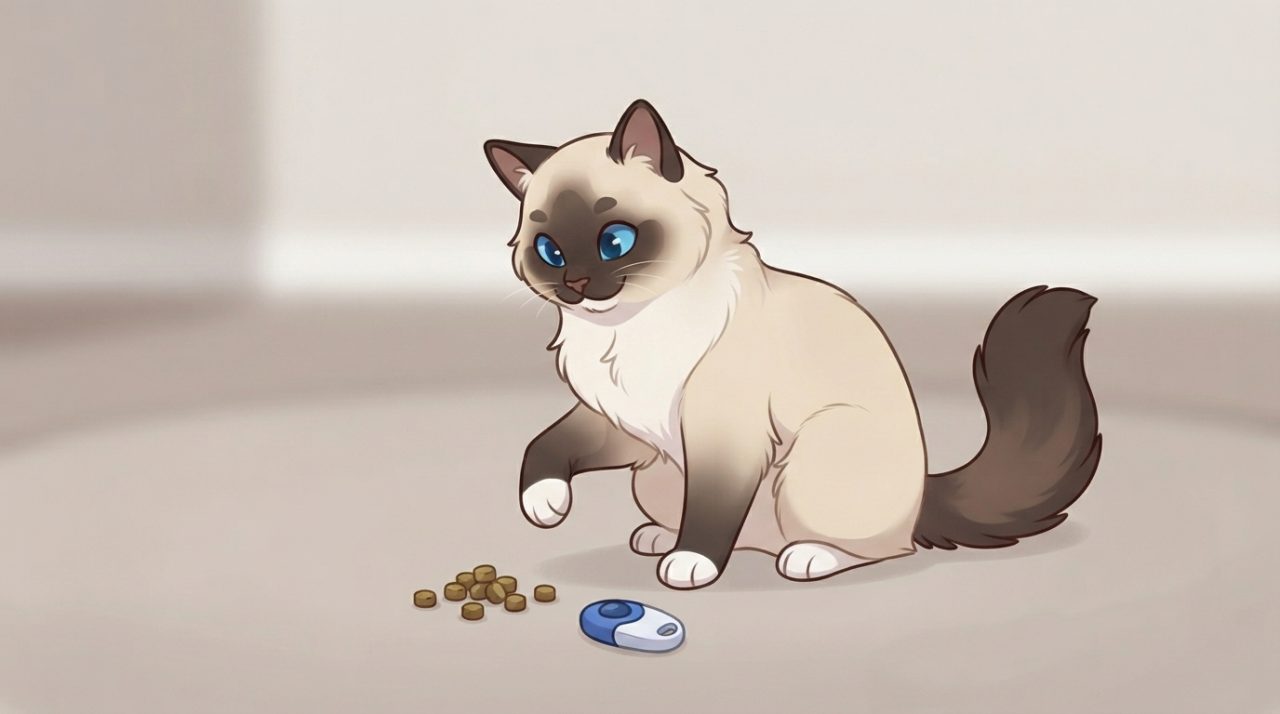
This is the single most important tool. Your treats need to be small (pea sized or smaller), soft, and something your cat goes absolutely wild for. Freeze dried chicken, small pieces of cooked plain turkey, or specialized cat training treats work best. Milo is obsessed with freeze dried chicken. I can have his full attention the second he hears the crinkle of the bag.
Keep treats under 10% of your cat’s daily calorie intake to avoid overfeeding, especially when you’re training regularly.
A Clicker (Optional but Helpful)
A clicker is a small handheld device that makes a sharp “click” sound. In clicker training, you click at the exact moment your cat performs the desired behavior, then follow it immediately with a treat. The click marks the behavior with precision much more accurately than your voice alone.
You don’t have to use a clicker. A consistent verbal marker like “Yes!” said in a bright, upbeat tone works too. But many trainers and owners myself included find the clicker speeds things up noticeably. If you use one, spend a few sessions just “charging” it, click, then give a treat. Click, treat. Over and over until your Ragdoll looks for a reward every time they hear the sound.
The Right Environment
- Quiet room, no distractions a TV blaring in the background or other pets running around will compete for your cat’s attention
- Before a meal a slightly hungry cat is a motivated cat. Don’t train right after feeding
- Short sessions 3 to 5 minutes, once or twice a day. Milo checks out after about five minutes, and that’s perfectly normal. Ragdolls do best with frequent short bursts rather than one long session
The 7 Commands Your Ragdoll Cat Can Learn
Command 1 – Sit
Sit is the perfect starting point. It’s based on natural behavior, easy to lure, and gives you a foundation for almost every other command. When I first taught Milo to sit, I was genuinely shocked by how quickly he picked it up three short sessions over two days.
How to teach it,
- Hold a treat just above your Ragdoll’s nose, slightly out of reach.
- Slowly move the treat back over their head, toward their tail.
- As they follow the treat with their eyes, their hindquarters will naturally lower to the ground.
- The moment their bottom touches the floor, click (or say “Yes!”) and give the treat immediately.
- Repeat 5–8 times per session.
- Once they’re sitting reliably with the lure, add the verbal cue, say “Sit” just before you begin moving the treat.
- After several successful sessions, try saying “Sit” without the lure. Reward when they comply.
Shirley’s tip – Toss the treat a short distance away after each repetition. This resets your cat’s position and gets you a fresh “starting” stance for the next attempt without fuss.
Command 2 – Come (Recall)
Teaching your Ragdoll to come when called is genuinely one of the most useful things you can do and it’s not just a party trick. A reliable recall can keep your cat safe in an emergency, help you locate them when they’re being unusually quiet, and make everyday life a little smoother.
Milo comes running to his name more reliably than some dogs I know. It took about a week of daily short sessions to get there.
How to teach it,
- Start in a small room, just a few feet away from your cat.
- Say their name followed by “Come” in a warm, encouraging tone. Never call in a sharp or frustrated voice that will make them avoid you.
- The moment they move toward you, click and give a treat enthusiastically.
- Gradually increase the distance over several sessions.
- Practice in different rooms once they’ve got the hang of it.
Important – Never call your Ragdoll to you for something they might find unpleasant, a bath, nail trim, going into the carrier. If “Come” ever predicts something stressful, they’ll stop responding. For those situations, always go to them.
Command 3 – Stay
Stay builds directly on Sit. Once your Ragdoll reliably sits on cue, you can start adding duration asking them to hold the position for a few seconds before receiving their reward.
How to teach it,
- Ask your cat to Sit.
- Wait one second before clicking and treating. If they stay in position, excellent! If they get up, simply reset and try again.
- Gradually increase the wait time: one second → two seconds → five seconds → ten seconds.
- Add the word “Stay” as a verbal cue once they’re holding the position reliably.
- Once duration is solid, introduce small movements, take a tiny step back, then return and reward.
Keep expectations realistic. A Ragdoll holding a Stay for 10–15 seconds is a genuine achievement. We’re not training Border Collies here and that’s fine. The goal is a useful, reliable short stay, not a ten minute down stay at a distance.
Command 4 – High Five
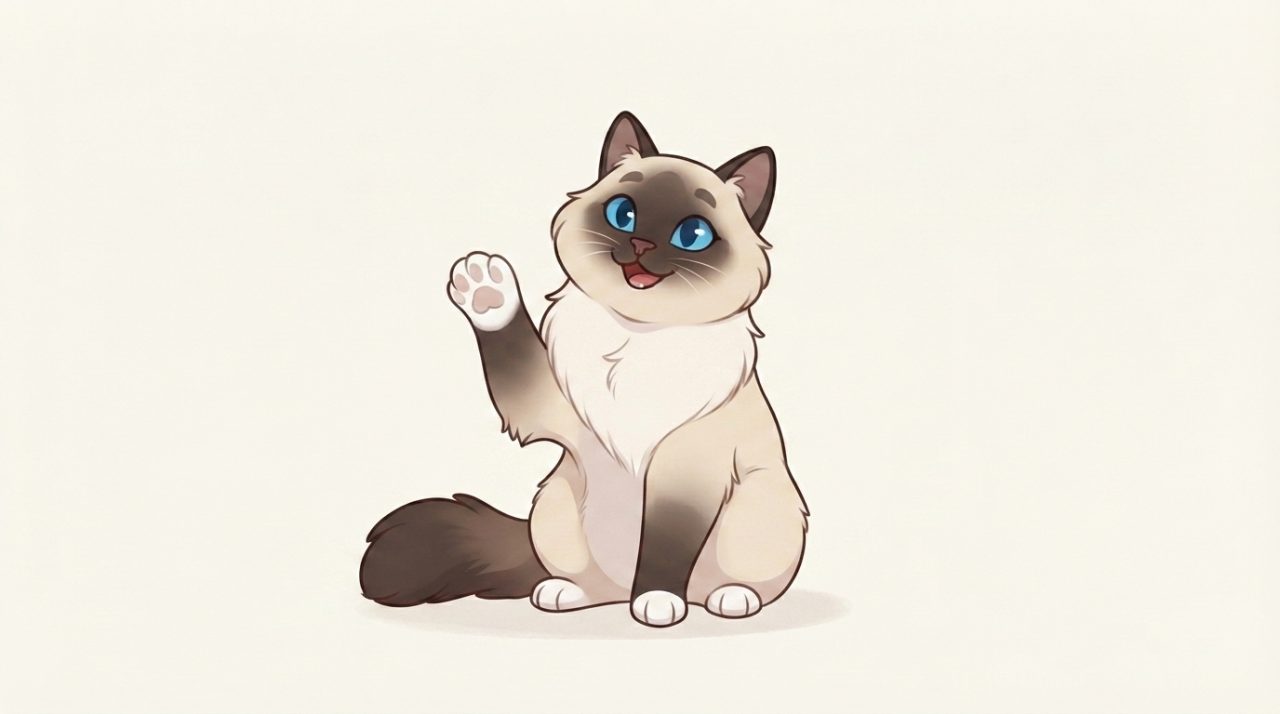
This one is pure fun, and it’s a crowd pleaser. When Milo slaps his big fluffy paw against my hand on cue, it never fails to delight everyone in the room. The high five is surprisingly easy to teach because it builds on a cat’s natural tendency to paw at interesting things.
How to teach it,
- Hold a treat enclosed in your fist at your cat’s chest height.
- Your Ragdoll will naturally paw at your hand trying to get to the treat.
- The moment their paw makes contact with your hand, click and open your fist to give the treat.
- Repeat until they’re confidently pawing at your closed hand.
- Transition to an open, flat palm held up (the high five position). Hold a treat between your fingers to guide them.
- When their paw touches your palm, click and treat.
- Add the verbal cue “High five!” as they get more consistent.
- Gradually fade the treat from your hand so they’re responding to the empty palm.
Command 5 – Touch (Target Training)
Touch also called target training, teaches your Ragdoll to bop their nose to a target, usually the tip of your finger or a small stick. It sounds like a novelty trick, but it’s actually one of the most useful foundational behaviors you can teach a cat.
Once Milo learned “Touch,” I could use it to guide him onto a specific spot, help him get comfortable with the carrier by guiding him inside, and even redirect him away from furniture I didn’t want him scratching. It’s a genuinely practical skill wrapped up in a fun package.
How to teach it,
- Hold one finger out just in front of your cat’s nose about an inch away.
- Most cats will naturally sniff or touch an outstretched finger. The moment their nose makes contact, click and treat.
- If your cat doesn’t engage, try rubbing a tiny amount of treat on your fingertip.
- Gradually move your finger to different positions to the side, lower, higher so they have to move to touch it.
- Add the verbal cue “Touch” as they become consistent.
Extension – Once your cat knows “Touch” with your finger, transfer the behavior to a target stick (a chopstick or wooden dowel works perfectly). This gives you even more flexibility for guiding them to different locations.
Command 6 – Spin
The spin command asking your cat to do a little circle on cue is a wonderful mental workout and a genuinely impressive trick to show off. Milo learned this one after about two weeks of short, consistent sessions.
How to teach it,
- Ask your cat to stand (not sit) in front of you.
- Hold a treat at their nose level and slowly guide it in a circle around their body they’ll naturally follow their nose.
- As soon as they complete the full circle, click and treat.
- Repeat, gradually making the luring motion smaller each session.
- Add the verbal cue “Spin” as you fade the lure.
- Eventually, a small finger circle gesture combined with the word “Spin” should be enough.
You can teach a clockwise and counterclockwise spin as two separate commands just use different verbal cues (“Spin” vs. “Twist,” for example).
Command 7 – Go to Your Spot
This last command is arguably the most practically useful of the seven. Teaching your Ragdoll to go to a specific spot, a mat, a bed, a cat tree platform on cue is brilliant for managing their behavior around mealtimes, when guests arrive, or just when you need them out from underfoot in the kitchen.
How to teach it,
- Choose your target spot and place it somewhere accessible.
- Toss a treat onto the mat/bed to get your cat to walk onto it.
- The moment all four paws are on the spot, click and treat.
- Repeat until they’re confidently stepping onto the spot to find their reward.
- Begin standing further away and pointing to the spot rewarding when they walk over and step on.
- Add the verbal cue “Go to your spot” (or whatever phrase you choose) as they become reliable.
- Build duration, ask them to sit on the spot and gradually increase how long they stay before being released with a treat.
Milo has a favorite spot on a cat tree platform near the window. When dinner prep gets chaotic, a cheerful “Go to your spot!” sends him trotting over reliably. It keeps him safe, happy, and let’s be honest out of the way of my ankles.

Common Training Mistakes Ragdoll Owners Make
Even with the most trainable breed on the planet, a few common mistakes can stall your progress. Here’s what to watch out for,
- Sessions that are too long – Five minutes is plenty. Ten is pushing it. Going longer creates frustration for both of you and teaches your Ragdoll that training is boring.
- Inconsistent cues – If you sometimes say “Come” and sometimes say “Come here, buddy, come on!” your cat has to decode what you actually mean every time. Pick one word per command and stick to it.
- Delayed rewards – The treat needs to arrive within about two seconds of the behavior. Any longer and your cat genuinely can’t connect what they did to the reward.
- Training when your cat isn’t interested – If Milo is grooming himself, sleeping deeply, or staring out the window at a bird, that’s not the moment to start a session. Wait until he’s alert and engaged.
- Punishing mistakes – If your Ragdoll gets it wrong, just quietly reset and try again. Frustration, raised voices, or any kind of physical correction will damage the trust you’ve built and make them reluctant to try.
How Long Does It Take to Train a Ragdoll Cat?
This is one of the most common questions I get, and the honest answer is, it depends on the command and the individual cat. Simple commands like Sit and Come can click into place within a few days to a week of consistent short sessions. More complex behaviors like Stay with duration or the Spot command might take two to four weeks.
The good news is that Ragdolls, once they’ve understood the concept of training that there’s a game here where doing a thing gets them something delicious tend to get faster with each new command you introduce. Milo picked up Spin in about three sessions, partly because he’d already learned that trying things and offering behaviors was rewarded.
Adult Ragdolls can absolutely learn new commands. While kittens may absorb things quickly, adult cats often show better focus during sessions and can be just as successful. I started training Milo as an adult, so if you’re worried it’s too late it isn’t.
FAQ: How to Train a Ragdoll Cat
Can all Ragdoll cats be trained, or just some?
Most Ragdolls have the temperament and intelligence to learn basic commands, though every cat is an individual. Some take to training enthusiastically from day one; others need a little more time to warm up. The key is patience and finding the treat that really motivates your specific cat.
Do I have to use a clicker, or can I use my voice?
You don’t have to use a clicker. A clear, consistent verbal marker like “Yes!” said in an upbeat tone works well. The clicker does have advantages, it’s always the same sound, which removes ambiguity but plenty of cats learn beautifully without one. Use whatever feels most natural to you.
My Ragdoll seems bored after two minutes. Is something wrong?
Nothing is wrong, some cats simply have shorter attention spans for structured activities. Try two minute sessions twice a day instead. End while your cat is still engaged and wanting more, rather than waiting until they walk away. That leaves them eager for the next session.
What are the best treats for Ragdoll cat training?
Small, soft, smelly treats work best freeze dried chicken, small pieces of plain cooked meat, or commercial training treats designed for cats. The treat should be tiny (the size of a small pea or smaller) so your cat stays motivated without filling up quickly.
Can I train an older Ragdoll, or is it only for kittens?
Absolutely. The old saying “you can’t teach an old cat new tricks” simply isn’t true for Ragdolls. Senior cats may take slightly longer, but they’re just as capable of learning and often more focused during sessions than bouncy kittens.
How many commands should I teach at once?
Start with one command and get it solid before introducing a second. Once your Ragdoll understands the game and has mastered a couple of behaviors, you can work on two different commands in the same session just use them alternately to keep things fresh.
My Ragdoll knows the command at home but ignores it when guests arrive. Why?
This is called “context specificity” your cat has learned the behavior in one context but hasn’t generalized it yet. Practice the command in different rooms, with different people present, and at different times of day to build a more robust response. This is completely normal and just takes a bit more repetition.
A Quick Note Before You Leave, From a Fellow Ragdoll Mama
If there’s one thing I hope you take away from this guide, it’s that training your Ragdoll isn’t just possible, it’s one of the most enjoyable things you can do with them. Those short daily sessions with Milo have deepened our bond in ways I didn’t expect. He’s more confident, more engaged, and honestly I think he loves having a “job” to do.
Start with Sit or Come. Keep sessions short, keep treats delicious, and always end on a win. Whether you’re in the US or the UK, a Ragdoll owner for years or just getting started, the seven commands in this guide give you everything you need to build something genuinely special with your cat.
I’d love to hear how your training is going! Drop a comment below and let me know which command your Ragdoll learned first or share this with a fellow Ragdoll owner who’s been curious about giving it a try.
About the Author
Shirley E. Butler is a Ragdoll cat enthusiast, editor, and the proud owner of Milo, her blue eyed male Ragdoll.
