
Estimated read time: 11 – 13 minutes
Introduction
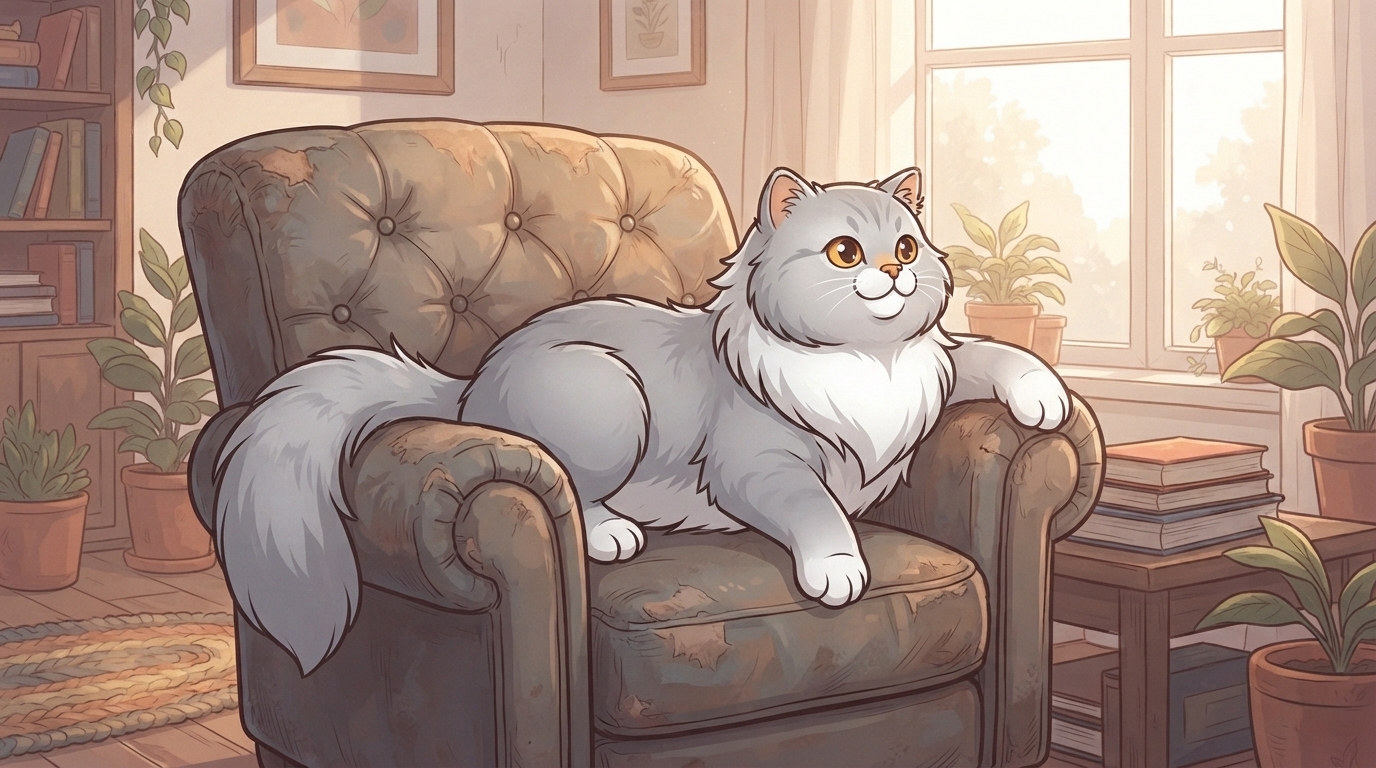
Jasper was sprawled across my favorite armchair the other day, doing what Persians do best looking like royalty while contributing absolutely nothing to the household chores and it hit me. This cat, with his squashed little face and his coat like a dandelion that exploded, has a backstory that goes back centuries. People ask me about the history of Persian cats more than almost any other topic, and I get it. There’s something about looking at this fluffy, dignified creature and wondering, where did this even come from?
So I did some digging. I talked to other Persian owners, read through breed histories, and pieced together what I think is the real story or at least, the story as best as anyone can tell it. Because here’s the thing about Persian cat origin, a lot of it is part history, part legend, and part “nobody really knows for sure, but here’s our best guess.”
By the end of this article, you’ll know where these cats likely came from, how they made their way around the world, and how they became the pampered indoor companions we know today. Grab a cup of coffee. This one’s a fun ride.
The Mountains of Ancient Persia
Let’s start where the name comes from, because that part isn’t a mystery. Persian cats are believed to have originated in the region historically known as Persia what we now call Iran and the surrounding areas of the Middle East, including parts of present day Turkey and Afghanistan.
The leading theory is that long haired cats developed naturally in the cold, mountainous regions of this part of the world. Think about it from a survival standpoint, a cat living at higher elevations, where winters are harsh, would benefit enormously from a thick, insulating coat. Over generations, cats with longer, denser fur would have had an edge, and that trait would have been passed down and reinforced.
This is actually a pattern we see across a lot of long haired cat breeds. The Norwegian Forest Cat, the Siberian, the Maine Coon these breeds also developed in cold climates, and they all share that same “built for winter” quality. Persians are part of that broader story, but with their own distinct flavor.
What set the early Persian type cats apart wasn’t just the coat, though. It was the build. These cats tended to be stockier, with broader heads and shorter legs relative to their bodies than your average shorthair. Some historians believe this body type was further emphasized through selective breeding once these cats were noticed and admired by people which brings us to the next part of the story.
I always think about this when Jasper plops himself down in a sunny spot and just melts into a puddle of fur. He’s built like a little tank under all that fluff. That sturdiness isn’t an accident. It’s centuries of adaptation to a tough environment, even if his toughest challenge these days is deciding which windowsill to nap on.
From Persia to Europe – The Journey West
Here’s where the story gets really interesting, and honestly, a little romantic. Most accounts trace the introduction of long haired Persian type cats to Europe back to the 1600s, largely through trade routes connecting the Middle East to Italy and France.
There’s a popular story and I want to be upfront that this falls more into “charming legend” territory than “verified fact” about an Italian traveler named Pietro della Valle. The story goes that in the early 1600s, he brought long haired cats back from Persia to Italy, helping spark European interest in these unusual, fluffy felines.
Around the same time, a French scholar and collector named Nicolas Claude Fabri de Peiresc is also credited with importing long haired cats from Asia Minor (Turkey) into France. Whether these specific accounts are 100% accurate in every detail or have been embellished over the centuries, the general timeline checks out, long haired cats from the Middle East started arriving in Europe in the 1600s, and they were an instant sensation.
And I mean instant. European nobility and the upper classes were captivated. A cat with a coat like silk, a calm and dignified bearing, and an exotic origin story? That was basically the 17th century equivalent of a celebrity status symbol. Long haired cats started showing up in portraits, in the homes of wealthy families, and eventually became symbols of luxury and refinement.
This is honestly where I think the “Persian cat personality” we know today started to get cemented in people’s minds this idea of a calm, composed, almost aristocratic companion. Jasper definitely leans into that energy. He has a way of looking at you when you’re being silly that says “I am above this,” even when “this” is just me trying to get him to chase a feather toy.
By the late 1600s and into the 1700s, these long haired cats had become fairly established among European cat fanciers, setting the stage for what would eventually become formal breed development.
The Victorian Era – Where “Persian” Became a Breed
If the 1600s were when long haired cats arrived in Europe, the Victorian era is when the Persian cat breed history really starts to take shape as we’d recognize it today.
Cat shows became wildly popular in England during the 1800s, and Queen Victoria herself was reportedly a fan of these long haired beauties, which only added to their appeal. The first major organized cat show is often credited to 1871 at the Crystal Palace in London, and long haired cats often grouped under names like “Asiatic” or “Persian” were among the stars.
This is the period when breeders started getting serious about defining what a “Persian” actually was. Before this, “long haired cat from somewhere in Asia or the Middle East” was a pretty loose category. Cats from Turkey (often called Angoras) and cats from Persia were sometimes grouped together, sometimes distinguished, and the terminology was honestly a bit of a mess depending on who you asked.
Over time, British breeders began to favor the stockier, round headed type associated with “Persian” cats over the more slender, fine boned Angora type. Selective breeding emphasized the round face, the dense undercoat, the short, thick legs, and that plush, luxurious coat that needs so much TLC (more on that in a future article grooming a Persian is a whole topic on its own).
By the late 1800s and early 1900s, the Persian had become a recognized, distinct breed in its own right, separate from other long haired varieties. Breed standards started getting written down, cat clubs formed, and the foundation was laid for the Persian cats we know today.
I find it kind of amazing that this whole formal “breed standard” process happened relatively recently in the grand scheme of things. Jasper’s ancestors went from “mountain cats surviving harsh winters” to “show cats with official standards” in a few hundred years. That’s a pretty wild glow up.
The “Doll Face” vs. “Peke Face” Evolution
Here’s something that surprises a lot of people, the Persian cat’s look has actually changed quite a bit over time, even within the last century.
Early Persian cats, the ones from the late 1800s and early 1900s had what’s often called a “doll face.” This means a more moderate facial structure, with a nose that, while still relatively short compared to other breeds, wasn’t as flat or pushed in as what became common later. If you look at old photographs or illustrations of Persian cats from this era, they look noticeably different from a lot of Persians you see today.
Over the 20th century, breed standards in many cat associations gradually shifted toward what’s sometimes called the “peke face” or extreme type characterized by a much flatter face, a more pronounced “stop” (the indentation between the eyes and forehead), and an overall rounder appearance. The name “peke face” actually comes from a comparison to Pekingese dogs, which have a similarly flat facial structure.
This shift happened gradually through selective breeding, as certain cat associations and breeders favored increasingly flat faced cats in their standards. Today, you’ll find Persian cats across a spectrum, some breeders and associations still maintain lines closer to the traditional doll face look, while others have continued toward the more extreme flat faced type.
I’ll be honest, Jasper sits somewhere in the middle. He’s got that classic round Persian face, but he’s not at the extreme end of the flat faced spectrum. And you know what? I think it suits him. He can still breathe easily during his marathon napping sessions, which I personally consider a feature, not a bug.
This evolution is a great example of how a breed’s history isn’t just about where it came from geographically, it’s also about how human preferences and breeding choices continued to shape the cat long after it left those original mountain regions.
Persians Cross the Atlantic
So how did Persian cats make their way to America? The story follows a pattern similar to a lot of pedigreed breeds, they arrived in the United States primarily through British breeders and cat fanciers in the late 1800s and early 1900s, around the same time organized cat shows were taking off stateside.
The Cat Fanciers’ Association (CFA), one of the major cat registries in North America, was founded in 1906, and Persians were among the breeds recognized early on. From there, the breed’s popularity in the U.S. grew steadily throughout the 20th century.
What’s interesting is that American breeders developed their own preferences and trends within the breed over time, sometimes diverging slightly from British standards. This is part of why you might notice subtle differences between Persian cats bred in different countries, the broad “Persian” template has been interpreted and refined by different communities of breeders across different decades.
By the mid 20th century, Persians had become one of the most popular pedigreed cat breeds in America, a status they’ve largely maintained ever since. Walk into pretty much any conversation about “fancy cat breeds,” and Persian is one of the first names that comes up right up there with Siamese and Maine Coon.
I think part of what made Persians so beloved in America is exactly what made them popular back in 17th century Europe, that combination of striking appearance and a generally calm, easygoing temperament. They’re not a breed that demands constant activity or attention in the way some more energetic breeds do. They’re content to be elegant, fluffy fixtures of the home which, if you’ve ever lived with one, you know is basically a full time job description that they execute flawlessly.

What This History Means for Persian Owners Today
So why does any of this matter if you’re just trying to figure out how to take care of your fluffy friend right now? A few reasons, actually.
First, understanding where Persians come from helps explain some of their physical traits. That dense double coat isn’t just for looks, it’s a holdover from those mountain dwelling ancestors who needed serious insulation. Knowing this can help you appreciate why grooming is such a big part of Persian cat care. You’re not just maintaining a pretty coat; you’re managing a trait that was originally built for survival in a cold climate, which in a warm, indoor home can mean more shedding, matting, and the need for regular brushing.
Second, the calm, composed temperament that Persians are famous for has deep roots too. Centuries of being bred as companion animals for households rather than, say, working cats focused on hunting have shaped a breed that’s generally relaxed, affectionate, and well suited to a quieter indoor lifestyle. If you’ve ever wondered why your Persian seems perfectly happy to spend the day lounging rather than tearing around the house, the breed’s long history as a pampered companion is a big part of the answer.
Third, knowing the variation in “look” across the breed’s history from doll face to peke face can help you understand and appreciate your own cat’s particular features, whatever they happen to be. There’s no single “correct” Persian face. There’s a spectrum shaped by over a century of breeding choices, and every Persian carries a piece of that story in their features.
When I look at Jasper, I sometimes think about all the generations of cats before him, mountain cats, Victorian show cats, mid century American sweethearts that led to this one specific, slightly dramatic creature currently glaring at me because his food bowl is (in his opinion) tragically half empty. It makes the everyday moments feel a little more special, knowing there’s so much history behind that fluffy face.
A Few Fun Facts From Persian Cat History
Here’s a quick roundup of some bits of Persian cat trivia I’ve come across that I think are genuinely fun to know, even if they don’t fit neatly into the timeline above.
The name “Persian” has stuck around for centuries even as the breed itself has changed dramatically, which is a little like calling a smartphone a “telephone” technically connected to the original, but a completely different thing in practice.
Persians were among the first long haired breeds to be shown at organized cat shows in the Western world, which means they’ve essentially been “famous” in the cat world for well over 150 years.
Some breed historians believe that Turkish Angora cats and Persian cats share overlapping ancestry, even though they’re recognized as separate breeds today, another reminder that breed categories are often human inventions layered on top of messier biological reality.
The shift toward the modern round faced Persian happened gradually enough that if you lined up photos of “typical” Persians from each decade of the 20th century, you’d see a slow, steady transformation rather than one dramatic change.
Persians have remained one of the most consistently popular pedigreed breeds for over a century, which is honestly remarkable in a world where trends usually come and go pretty quickly.
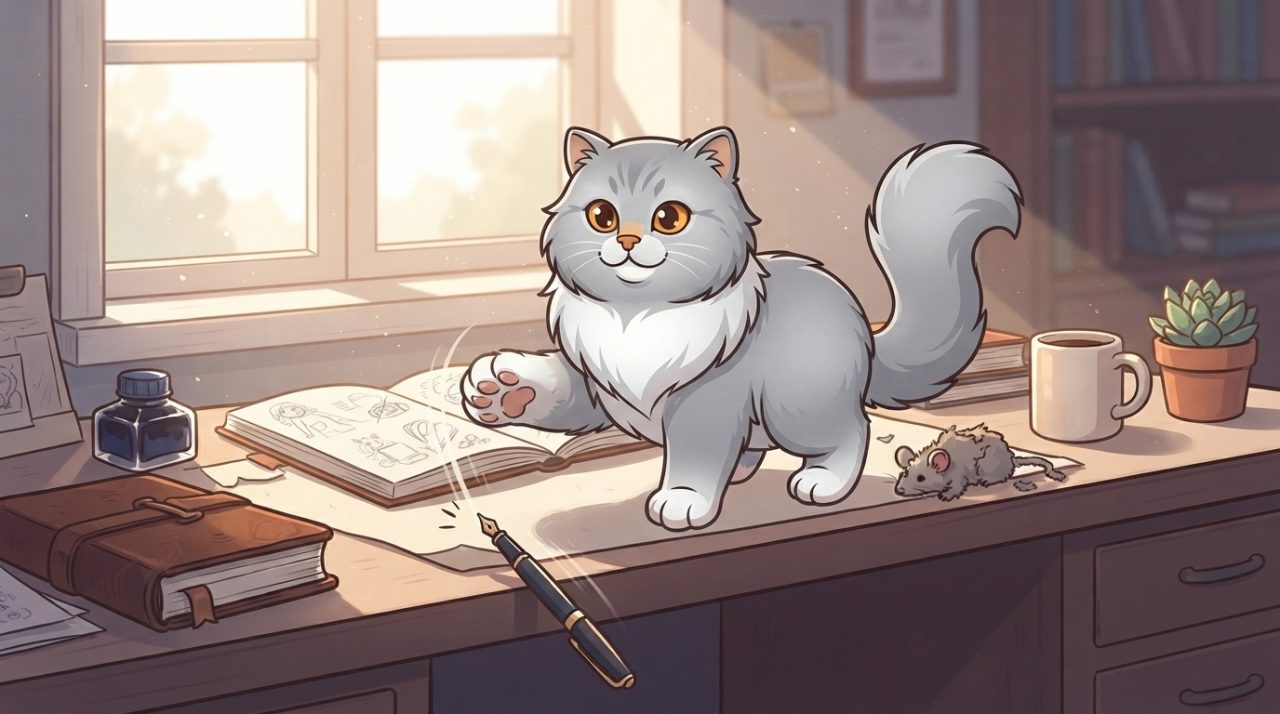
I love sharing these little nuggets because they remind me that Jasper isn’t just “a cat” he’s part of a living tradition that’s been unfolding for hundreds of years, even if his main contribution to that tradition lately has been knocking pens off my desk.
FAQ: Where Do Persian Cats Come From?
Where did Persian cats originally come from?
Persian cats are believed to have originated in the mountainous regions of what was historically called Persia (modern day Iran) and nearby parts of the Middle East. Their thick coats likely developed as an adaptation to cold mountain climates.
When did Persian cats arrive in Europe?
Long haired cats from the Persia and Turkey regions are generally believed to have been brought to Europe in the 1600s, with Italy and France often cited as early entry points through trade and travel connections.
Is the modern Persian cat the same as the original Persian cats from centuries ago?
Not exactly. While they share ancestry, the modern Persian’s appearance, especially the very round, flat face seen in many cats today developed gradually through selective breeding, particularly from the Victorian era through the 20th century.
When did Persian cats become popular in the United States?
Persians arrived in the U.S. mainly through British breeders in the late 1800s and early 1900s, and their popularity grew steadily through the 20th century, becoming one of the most popular pedigreed breeds in the country.
Why do Persian cats have such long, thick coats?
The leading theory is that their dense double coat developed as an adaptation to the cold, mountainous climates of their ancestral region, providing insulation that helped them survive harsh winters.
A Little Love Before You Go, From a Fellow Persian Cat Mama
Honestly, researching this one was a treat for me. I knew the broad strokes of Persian cat history, but digging into the details the Victorian cat shows, the doll face to peke face evolution, all of it gave me a whole new appreciation for the cat currently snoozing on my desk as I type this.
There’s something kind of grounding about realizing that the fluffy, dramatic, occasionally aloof companion sharing your home has roots that stretch back centuries, across continents, through royal courts and mountain ranges. Jasper has no idea about any of this, of course. He’s currently very focused on the important task of ignoring a toy mouse I bought him yesterday.
If you’ve got a Persian of your own, I’d love to hear about them in the comments, what they look like, their personality, even what you’ve named them. There’s something really special about being part of this long, fluffy lineage, and I always love hearing how other people’s “Jaspers” are doing. Bookmark this page if you want to come back to it, and thanks for reading along with me today.
About the Author
Tabitha P. Bean is a Persian cat enthusiast, writer, and the proud owner of Jasper, her beloved male Persian cat. Through her love for Jasper, she enjoys sharing helpful tips and insights to help fellow cat parents give their fluffy companions a happy, healthy, and comfortable life.
